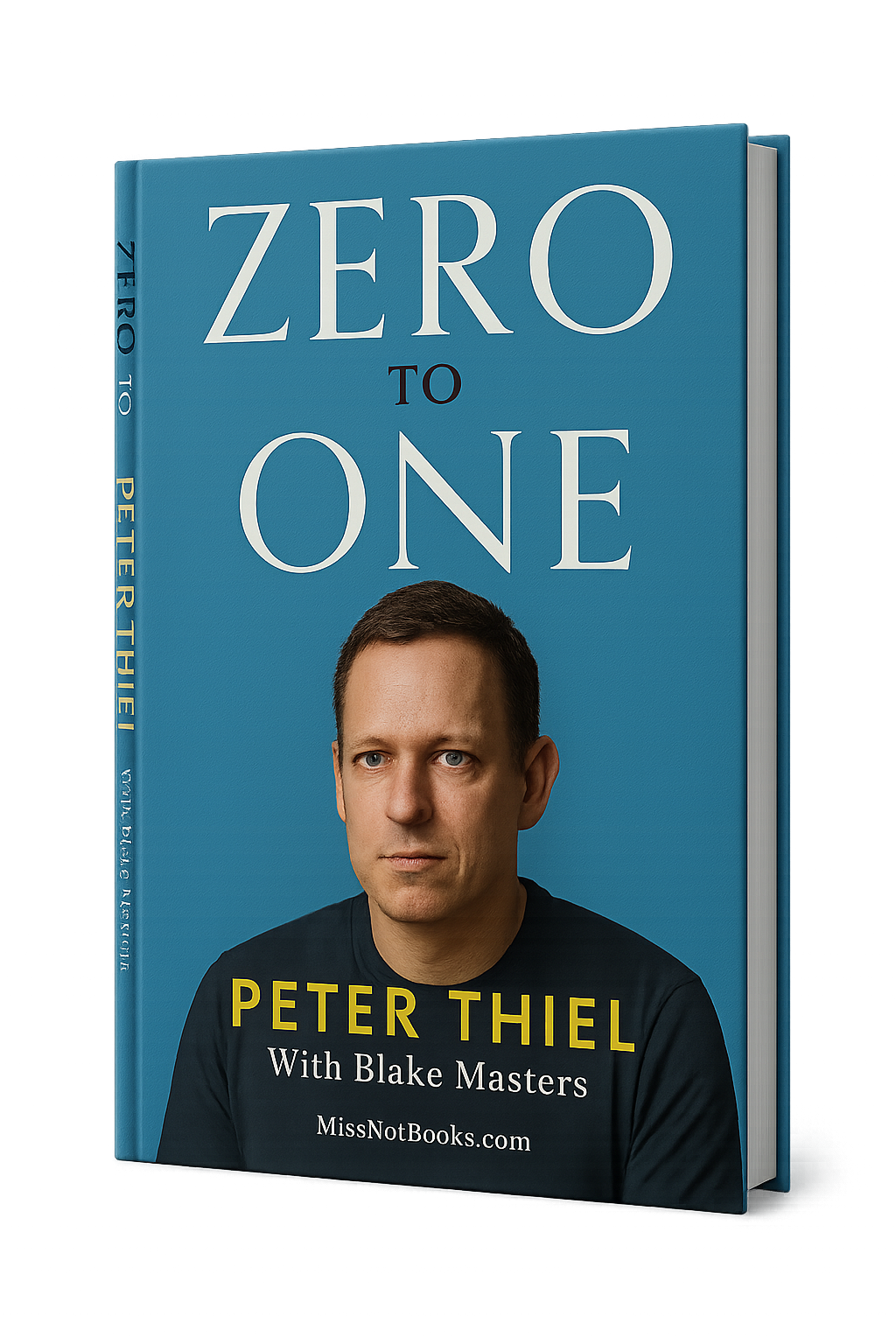
Zero to One
In an age characterized by rapid technological advancements and relentless cycles of innovation, a singular work emerges that fundamentally redefines our understanding of progress and entrepreneurship. This book challenges conventional wisdom, urging us to think differently about the nature of competition, the role of technology, and the possibilities of the future. It compels readers to confront the stark realities of innovation, presenting a vision that transcends mere repetition of the past. It emphasizes the importance of creating unique solutions rather than imitating existing ones, laying the groundwork for a revolutionary approach to building companies and driving societal growth.
Core Ideas and Main Arguments:
- Monopoly vs. Competition: The author posits that true innovation stems from monopolies that leverage technology to create new markets, rather than competing in saturated ones.
- Vertical Progress: The distinction between "going from zero to one" versus "going from one to n" is made, focusing on the importance of groundbreaking advancements over incremental improvements.
- The Power of Bold Ideas: A call to embrace audacious ideas and to think in paradigms outside conventional frameworks, encouraging entrepreneurs to envision a transformative future.
- Technology as a Catalyst: Emphasizes the critical role of technology in redefining what is possible, advocating for a future where technological advancements solve real-world problems.
- The Role of Founders: Insight into the unique mindset required for founders and innovators, highlighting the characteristics that distinguish successful entrepreneurs from others.
Author’s Intentions and Context: The author set out to inspire a new generation of entrepreneurs to break free from established norms and pursue original ideas with confidence. Written during a time of economic uncertainty and evolving technological landscapes, this book responds to a cultural climate that often emphasizes small incremental gains rather than groundbreaking innovations. By challenging the status quo, the author aims to awaken a keen awareness of the potential that lies in visionary thinking.
Structure of the Book: The book is organized into several thematic sections that build upon each other:
- The Challenge of Progress: Exploring what it means to create something new.
- Foundations of Innovation: Dissecting the elements that contribute to successful ventures.
- Contrarian Thinking: Encouraging readers to question prevalent beliefs about business and society.
- Future Perspectives: Discussing the implications of new technologies and the path forward.
Each section serves to deepen the reader's understanding of the principles behind successful innovation and entrepreneurship, ultimately leading to a cohesive argument for reevaluating how we perceive and approach progress.
Key Takeaways:
- Originality is crucial: Only by thinking differently can one achieve transformative outcomes.
- The power dynamics of monopolies foster true innovation, while competition often leads to mediocrity.
- Entrepreneurs must embrace uncertainty and be willing to take risks in pursuit of the extraordinary.
- Technology should be leveraged to create entirely new industries, not merely enhance existing markets.
Why It’s Important to Read: This book remains profoundly relevant in today's fast-paced world where the need for innovation is more pressing than ever. It speaks to entrepreneurs, business leaders, and thought leaders seeking to break boundaries and generate impactful societal change. Engaging with this work not only equips readers with a blueprint for innovative thinking but also encourages a mindset shift that can lead to significant breakthroughs in various fields.
Impactful Quotes and Analysis:
-
“Doing what we already know how to do well is the surest way to be mediocre.”
This quote underlines the mediocrity that comes with safe choices and emphasizes the necessity of striving for greatness through uncharted territories. -
“The best startups might be considered slightly less extreme forms of adult, creative, and successful people.”
Here, the author highlights the importance of individuality and creative expression in entrepreneurial success, reaffirming that success is often a reflection of personal vision and imagination. -
“Every moment in business is a moment of truth.”
This statement captures the essence of entrepreneurship, emphasizing the weight of decisions and the responsibility that founders carry in shaping their futures and the economy at large.
About the Author: Peter Thiel, born in 1967, is a prominent entrepreneur, venture capitalist, and author, known for co-founding PayPal and Palantir Technologies. His influence extends across the technology sector and investment landscape, advocating for bold innovation and new approaches to business strategy. Thiel's legacy is intertwined with his contributions to the growth of Silicon Valley, and his ideas continue to shape conversations about technology, economics, and the future of innovation.
Don’t miss the opportunity to engage with one of the most influential works of all time. Buy it today and explore the foundation of modern entrepreneurship. This monumental work is Zero to One by Peter Thiel, brought to you for educational purposes by MissNotBooks.com.