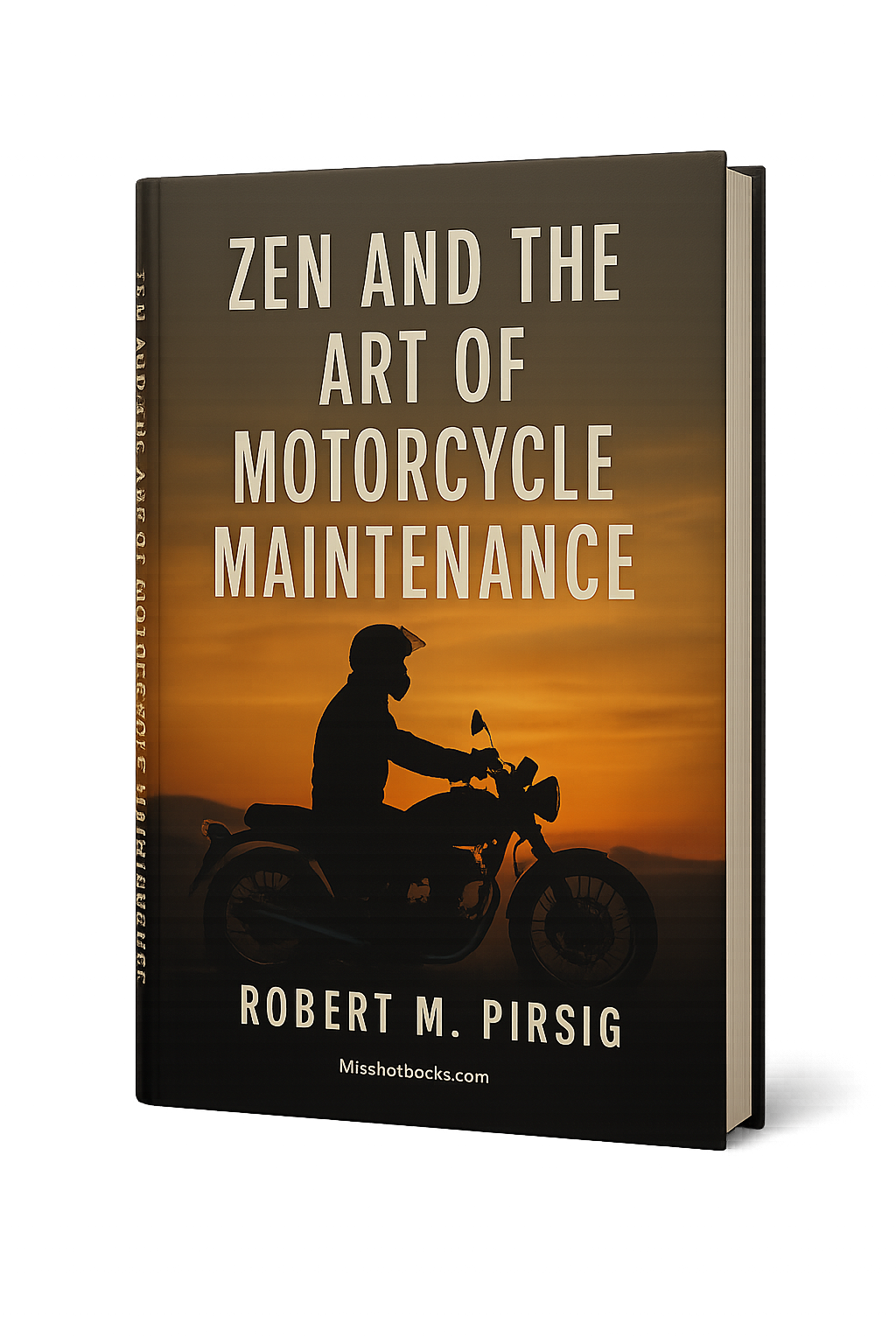
Zen and the Art of Motorcycle Maintenance
In a world often torn between the mechanical and the philosophical, one book emerged to revolutionize the dialogue surrounding the nature of quality, meaning, and the human experience. This transformative work challenges readers to rethink what it means to live a good life, pushing the boundaries of intellectual discourse to bridge the gap between technology and the human spirit. It has not only reshaped the landscape of philosophical thought but also instilled a new appreciation for the beauty of the mundane, forever altering how we perceive our relationship with the world around us. Don’t miss the opportunity to engage with one of the most influential works of all time. Buy it today and explore the intricate connections between philosophy, technology, and the art of living.
Core Ideas and Main Arguments
- Quality as a central theme: The book introduces the concept of quality as a fundamental aspect of life that transcends traditional dichotomies of subject and object, art and science.
- The dualistic nature of existence: It explores the tension between the rational and romantic modes of understanding, suggesting that both are essential to a rich, fulfilling life.
- Personal journey and self-discovery: Through a narrative of a motorcycle journey across America, the author illustrates how personal experiences can lead to profound philosophical revelations.
- Critique of modernity: The work challenges the overemphasis on logic and technology at the expense of humanistic values, advocating for a balance that honors both reason and emotion.
- Interplay between philosophy and daily life: It emphasizes that philosophical inquiries don’t belong solely in academia but are intrinsically linked to everyday activities and engagements.
Author’s Intentions and Context
The author set out to bridge the gap between philosophical thought and the lived experience of modern individuals, especially in an era marked by rapid technological advancement and a growing disconnect from traditional values. Responding to a culture increasingly focused on efficiency and mechanization, he sought to illuminate a path to genuine understanding and appreciation for quality in both life and work. This work arose in the late 20th century, a time when existential questions about meaning and human purpose resonated strongly in an increasingly fragmented world.
Structure of the Book
- Introduction: Lays out the premise of the journey—both literal and metaphorical.
- Part I - The Journey: Chronicles the motorcycle trip, detailing scenic landscapes while interspersing philosophical reflections.
- Part II - Philosophy of Quality: Introduces core philosophical ideas that anchor the narrative, including the definitions and implications of quality.
- Part III - Reflections: Offers deeper insights into the struggles of balancing rationality with emotional fulfillment, enriching the narrative's earlier themes.
- Conclusion: Ties together the experiences and lessons of the journey, leaving readers with a potent message about the significance of quality in their own lives.
Key Takeaways
- Quality is subjective and cannot be strictly defined: It varies from person to person, yet it is the cornerstone of fulfilling existence.
- Embracing duality: A successful life balances rational thinking with emotional intuition, fostering a holistic perspective.
- Personal experiences drive profound insights: Everyday activities, like motorcycle maintenance, hold deeper meanings that can unlock philosophical understanding.
- The call for reintegration of values: There is a pressing need to harmonize our relationship with technology and nature, fostering a more mindful existence.
Why It’s Important to Read
This work remains immensely relevant, inviting readers to pause and reflect on their own lives, particularly in a world increasingly dominated by technological advancement and consumerism. Those seeking deeper meaning in their existence, as well as those attempting to navigate the complexities of the modern world, will find invaluable insights between its pages. It serves as a guide to finding quality in both thought and action, ensuring that readers do not lose sight of what truly matters amid the noise.
Impactful Quotes and Analysis
-
“The place to improve the world is first in one’s own heart and head and hands.”
This quote underscores the importance of inner change as a precursor to outward transformation, emphasizing self-awareness and personal responsibility. -
“The Buddha, the essence of the self, is the essence of quality.”
This statement weaves together Eastern philosophy with Western thought, suggesting that understanding quality leads to a deeper comprehension of one’s own nature. -
“You’re not a mountain climber because you love to climb mountains. You climb mountains because you love life.”
This quote encapsulates the idea that the activities we pursue are, in essence, reflections of our inner values and desires, highlighting the intrinsic connection between actions and purpose.
About the Author
Robert M. Pirsig (1928–2017) was an American philosopher and author renowned for his exploration of the relationship between technology, philosophy, and the essence of human experience. His groundbreaking ideas have influenced not only philosophy but also the realms of psychology, education, and personal development. Through his unique narrative style and the seamless blend of fiction and deep philosophical inquiry, Pirsig leaves an enduring legacy that continues to inspire new generations of thinkers.
This monumental work is Zen and the Art of Motorcycle Maintenance by Robert M. Pirsig, brought to you for educational purposes by MissNotBooks.com.