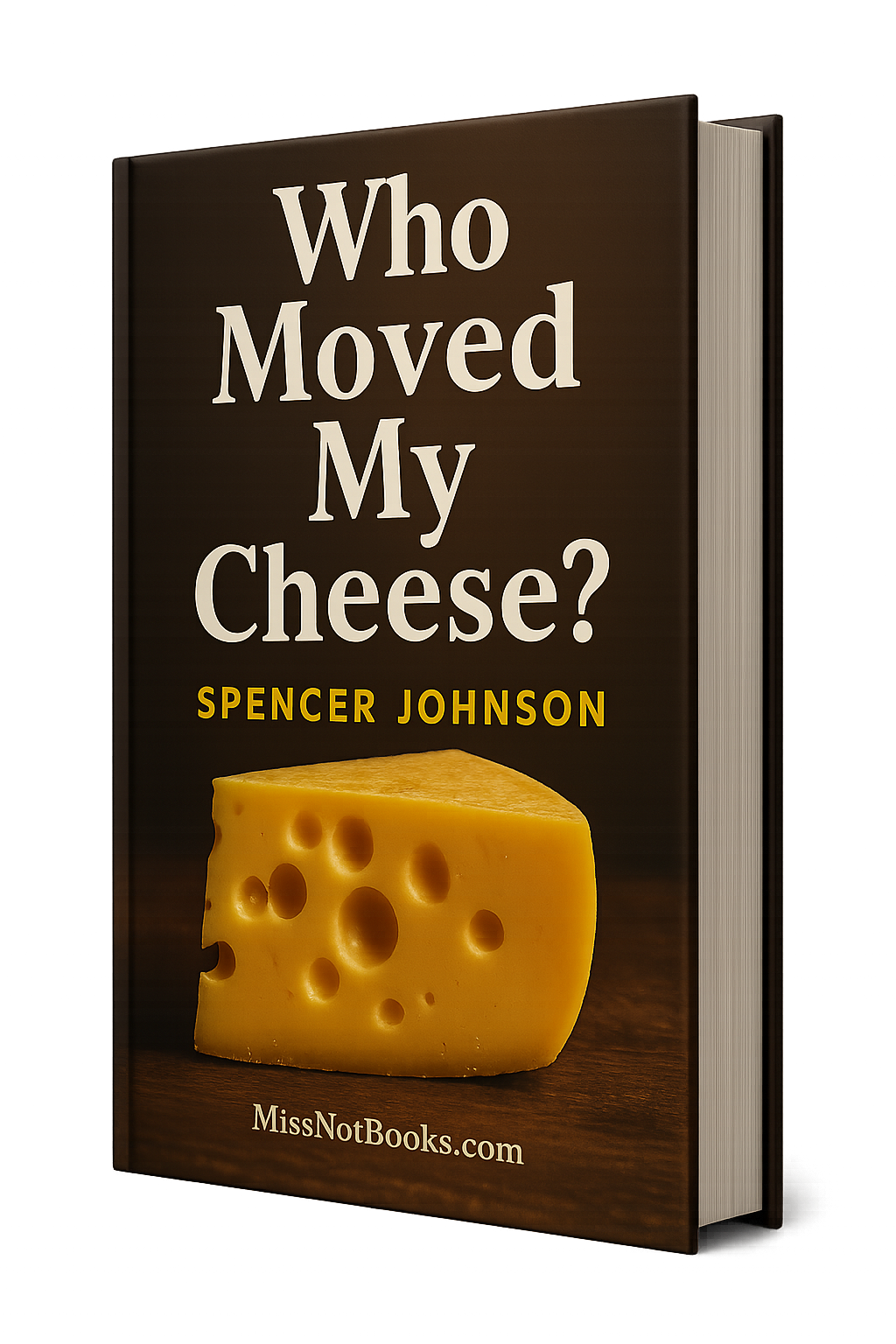
Who Moved My Cheese?
In an era marked by rapid change and uncertainty, few texts have offered the clarity and perspective needed to navigate the shifting landscapes of personal and professional life. This pioneering work has become a cornerstone in understanding human behavior in the face of upheaval, revolutionizing the approach to change management, personal growth, and organizational effectiveness. Its insights resonate across generations, providing a framework for resilience and adaptability that remains relevant today. Don't miss the opportunity to engage with one of the most influential works of all time. Buy it today and explore the dynamics of change that shape our existence.
Core Ideas and Main Arguments
- Change is Inevitable: The primary assertion of the text is that change is a natural part of life, and understanding how to effectively navigate it is crucial for success and satisfaction.
- Four Characters: The narrative features four characters representing different responses to change—two mice and two little people—each embodying distinct attitudes that serve as allegories for human behaviors.
- Readiness to Adapt: The text emphasizes the importance of being proactive about change rather than reactive, highlighting that those who anticipate change can thrive, whereas those who resist it may struggle.
- Mindset Matters: An underlying theme is the power of mindset in shaping experiences and outcomes related to change, urging readers to cultivate a positive perspective.
Author’s Intentions and Context
The author, through this work, sought to equip readers with a framework that demystifies the often distressing experience of change. Emerging in the late 20th century—a time of significant technological and societal shifts—the work addresses the apprehensions individuals face when routine is disrupted. It challenges the notion that people must either accept change passively or resist it vigorously, advocating instead for a proactive, discerning approach to navigate transitions smoothly.
Structure of the Book
The text is organized into a straightforward narrative that unfolds as a parable. It begins with an introduction to the characters living in a maze, detailing their initial circumstances. As the narrative progresses, the characters encounter various challenges that prompt them to react differently to the transformations in their environment. This structure allows readers to easily relate to the characters and internalize their lessons, culminating in practical insights applicable to real-life scenarios.
Key Takeaways
- Embrace Change: Recognizing change as an opportunity rather than a threat leads to personal and professional growth.
- Self-Reflection: The importance of self-discovery and understanding personal fears is essential in the face of change.
- Action Over Inaction: Taking decisive steps in adapting to new circumstances is crucial for achieving desired outcomes.
Why It’s Important to Read
The enduring relevance of this work lies in its ability to resonate with anyone facing transitions, be it in their careers, personal lives, or larger societal contexts. Leaders, change agents, and individuals alike will find profound insights that can empower them to approach change with confidence and agility. This book not only serves as a guide for overcoming obstacles but also fosters a deeper understanding of the emotional landscape surrounding change.
Impactful Quotes and Analysis
- "What would you do if you weren’t afraid?": This question encapsulates the core challenge of confronting change, urging readers to recognize how fear can paralyze decision-making and inhibit growth.
- "The quicker you let go of old cheese, the sooner you can enjoy new cheese.": This metaphor innovatively illustrates the necessity of relinquishing outdated beliefs or practices to embrace new opportunities, promoting a forward-thinking mindset.
- "Smell the cheese often, so you know when it is getting old.": This encourages a proactive approach to personal and professional realms, pushing individuals to regularly evaluate their situations and remain alert to impending changes.
About the Author
Spencer Johnson, born on November 24, 1937, and passing away on July 6, 2017, was an American author and motivational speaker renowned for his contributions to the fields of leadership and management. Johnson's career, which included working as a physician, advisor, and writer, has left a lasting legacy in the realm of self-help literature. His ability to distill complex life lessons into simple, accessible parables has impacted millions and continues to influence leaders around the globe.
This monumental work is Who Moved My Cheese? by Spencer Johnson, brought to you for educational purposes by MissNotBooks.com.