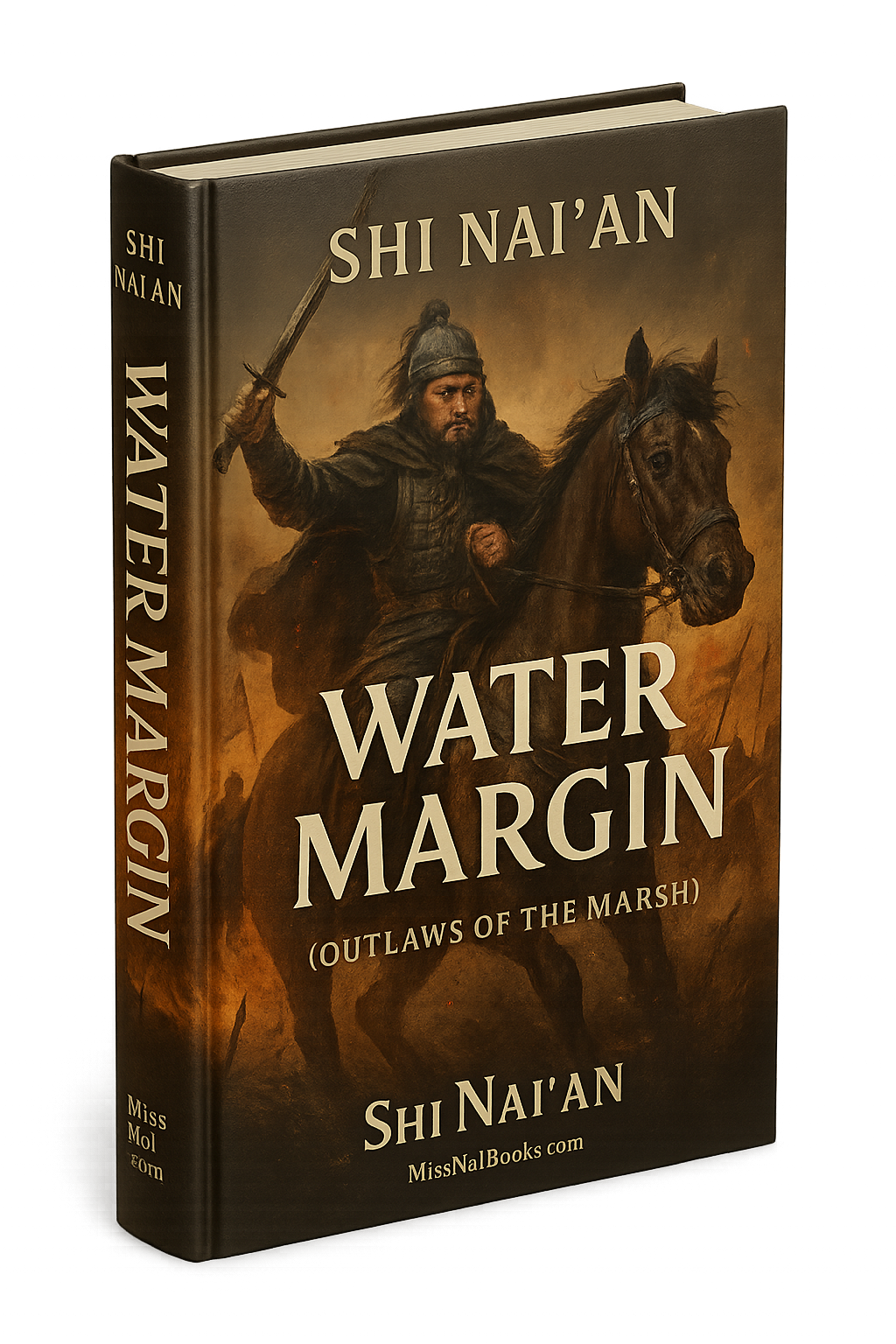
Water Margin (Outlaws of the Marsh)
In the landscape of world literature, a certain text emerges as a beacon of social commentary and a bold challenge to the status quo, revealing the intricacies of kinship, loyalty, and moral complexity in a turbulent world. Through its vivid tapestry of characters and gripping narrative, this book revolutionized the way we view justice, equity, and the human condition, inspiring revolutions in thought across centuries. Its examination of heroism and rebellion in the face of oppression has become a cornerstone in the study of collective human resilience. Don’t miss the opportunity to engage with one of the most influential works of all time. Buy it today and explore the roots of social justice.
Core Ideas and Main Arguments
- Rebellion Against Corruption: The central theme showcases the struggle against a corrupt governmental system, providing a voice to the marginalized.
- Complexity of Heroism: Characters embody a diverse spectrum of morality, prompting readers to question the nature of heroism.
- Solidarity and Brotherhood: The bonds formed among the outlaws highlight the importance of camaraderie and loyalty in times of strife.
- Critique of Class Structures: The narrative challenges the existing social hierarchies, advocating for a more equitable society.
- Cultural Heritage: Rich in folklore and historical context, the book illustrates the interplay between cultural identity and resistance.
Author’s Intentions and Context
The author crafted this work during a period of significant political instability and social upheaval in China, responding to the systemic injustices faced by ordinary citizens. Shi Nai’an sought to illuminate the plight of the oppressed and challenge the dominant narrative that upheld the ruling class. By weaving tales of rebellion and camaraderie among outlaws, he aimed to inspire a collective consciousness around social equity and justice, resonating deeply in a time when many felt disenfranchised.
Structure of the Book
The narrative is presented in a series of interconnected chapters, each focusing on different characters and storylines.
- Introduction of Characters: Early chapters establish a diverse cast, highlighting their backgrounds and motivations.
- The Call to Action: A pivotal moment where characters band together in resistance.
- Conflict and Climax: The narrative crescendos as the outlaws face monumental challenges, providing thrilling action alongside moral dilemmas.
- Resolution and Reflection: The concluding sections explore the outcomes of rebellion and what it means to live with honor in a flawed society.
Key Takeaways
- The complexity of morality leads to nuanced discussions about right and wrong.
- The importance of collective action demonstrates how united efforts can challenge oppression.
- A rich depiction of societal structures offers insight into the cultural fabric of the time.
- Valuable lessons on loyalty and betrayal serve as both a caution and a guide in personal and political arenas.
Why It’s Important to Read
This book remains crucial reading for anyone interested in the nuances of social justice, literature, and history. Its themes continue to resonate today, inspiring those who seek to challenge inequities in their own societies. Scholars, activists, and lovers of literature will find deep value in its timeless reflections on humanity’s struggles and triumphs. The narrative not only entertains but also provokes critical thought about justice, loyalty, and ethical leadership in the modern age.
Impactful Quotes and Analysis
-
“Rebellion may lead to bitterness, but it also opens doors to freedom.”
This quote encapsulates the duality of resistance, acknowledging the personal costs involved while affirming the necessity of fighting for liberation. -
“A man who has no city cannot be a true man.”
Here, the author emphasizes the importance of belonging and community, suggesting that our identities are intertwined with the places we fight for and call home. -
“Heroism is found in the hearts of those forgotten by society.”
This powerful assertion shifts the narrative of heroism from the grandiose to the ordinary, reinforcing the book's core message that true heroes emerge from the margins.
About the Author
Shi Nai’an (circa 1296 – circa 1370) was a Chinese novelist and playwright, best known for his historical fiction that reflects the realities of social injustice and rebellion. Living through the transition from the Song to the Yuan dynasty, he drew on his experiences to craft compelling narratives that resonate with common people's struggles. His legacy endures through his exploration of moral complexity and social consciousness, making his work a foundational piece in the canon of Chinese literature.
This monumental work is Water Margin by Shi Nai’an, brought to you for educational purposes by MissNotBooks.com.