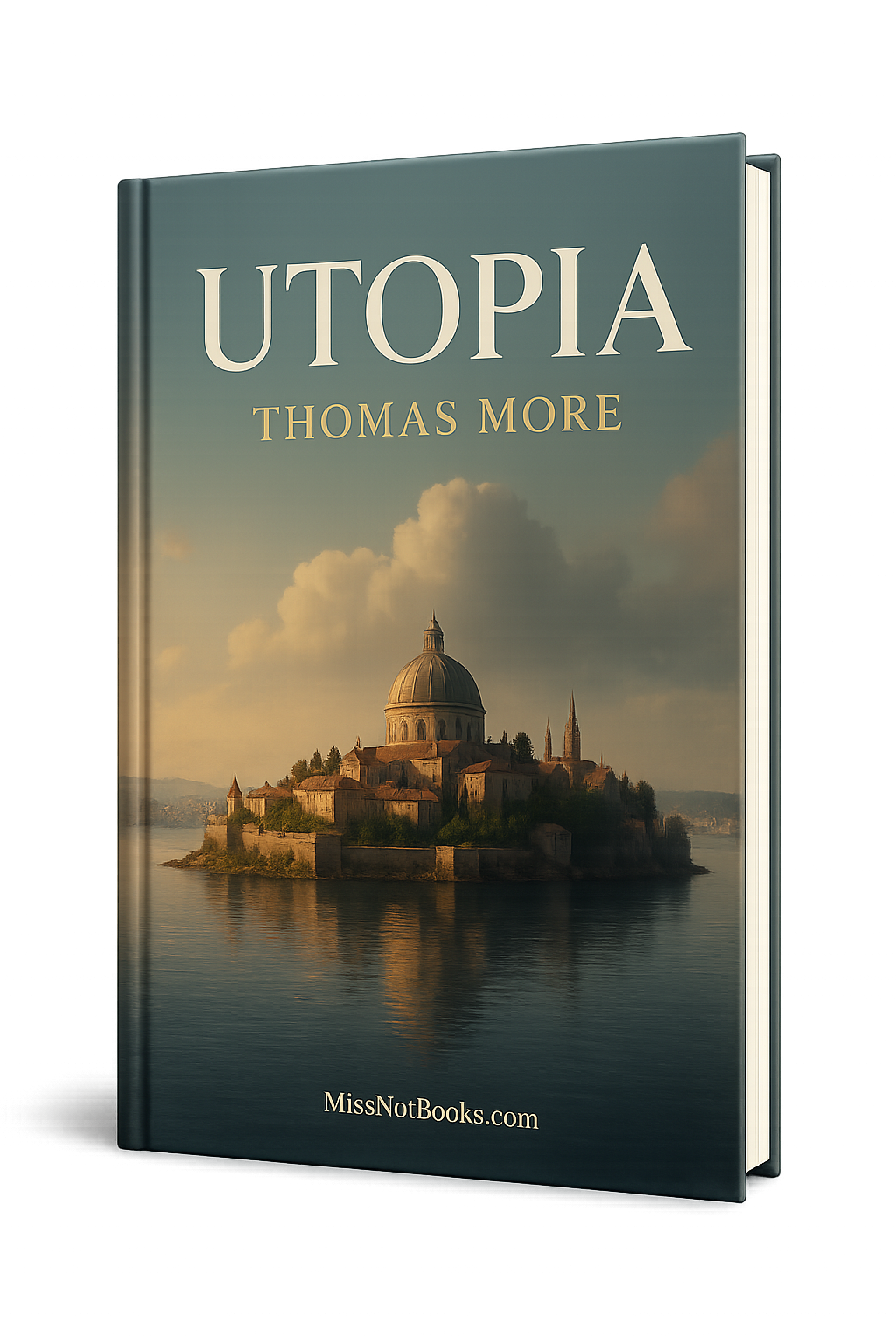
Utopia
In a world often grappling with social and political turmoil, one book stands as a beacon of transformative thought, challenging the status quo and envisioning a society grounded in equality, justice, and rational governance. This remarkable work revolutionized ideas about the ideal state, blended social criticism with imaginative narrative, and ignited discussions that continue to resonate across centuries. The book presents a vision not simply of what society could be, but provocatively interrogates what is possible within human nature and governance. Whether one perceives it as a utopian dream or a sharp critique of contemporary society, its influence permeates philosophical discourse, political theory, and literary tradition.
Core Ideas and Main Arguments:
- The Concept of Utopia: The book introduces a meticulously crafted society on a fictional island that operates on communal principles, illustrating the contrast between this ideal and contemporary European societies.
- Critique of Social Inequality: It rigorously challenges the inequities of wealth and class, suggesting that such disparities are detrimental to the fabric of society.
- Rational Governance: The text advocates for enlightened leadership, suggesting that reason and ethics should guide political decisions rather than tradition or power.
- Religious Tolerance: It emphasizes the need for a society that appreciates diversity in belief and serves as a precursor to later discussions about religious freedom.
- Human Nature: The work posits intriguing questions about humanity, suggesting that a structured society can cultivate virtue rather than vice.
Author’s Intentions and Context: Written during the early 16th century, a period marked by political upheaval and the Renaissance's intellectual fervor, the author sought to create a blueprint for a better society. His aim was to provoke thought and inspire change in a world grappling with moral decay and social injustice. The book emerged against a backdrop of rising humanism and a challenge to the established church's authority, addressing the urgency of finding ethical responses to political and social failings. Through his visionary work, he sought not only to illuminate the potential for a just society but also to pose fundamental questions about morality, governance, and the human condition.
Structure of the Book: The book is organized into distinct parts that seamlessly weave together narrative and philosophy:
- The Introduction: Sets the stage for the dialogue, introducing the protagonist and the notion of travel to an imaginary world.
- Description of Utopia: Main sections detail the social, political, and economic structures of the ideal society.
- Critique of European Societies: Interlaced discussions provide sharp insights into the flaws of contemporary political systems, urging reform and reflection.
- Philosophical Dialogues: Engages in rich debates about ethics, community, and the purpose of government, pushing readers to question and reflect on their values.
Key Takeaways:
- Visionary Thinking: Engages readers with a radical imagination of how societies could function based on equity and shared responsibility.
- Critical Analysis of Power Dynamics: Invites critique of contemporary governance and social hierarchies, prompting consideration of reform.
- Balancing Idealism with Realism: Challenges readers to reconcile dreams of utopia with the complexities of human behavior.
- Philosophical Inquiry: Encourages deep, reflective thinking about morality, ethics, and the role of individuals within the state.
Why It’s Important to Read: The relevance of this work remains profound today, offering timeless insights into issues of governance, societal values, and moral responsibility. Political theorists, philosophers, and anyone engaged in discussions about equity and justice will find inspiration and contemplation within its pages. As we navigate contemporary socio-political landscapes, this book serves as a vital reminder of the power of visionary thought and the pursuit of a more just society.
Impactful Quotes and Analysis:
- “The more one civilizes and perfects, the more one resembles a god.” This quote underscores the aspiration to elevate humanity through rational governance and ethical living, prompting reflection on the potential of human agency.
- “It is not enough to possess wealth; it is necessary to use it well.” This highlights the moral responsibility of individuals towards others, challenging contemporary ideas surrounding capitalism and self-interest.
About the Author: Thomas More (1478–1535) was an English lawyer, philosopher, and statesman best known for his role as Lord Chancellor of England. Renowned for his scholarly pursuits and devout Catholic faith, he stood against the Protestant Reformation and ultimately faced execution for his convictions. His legacy remains firmly embedded in philosophical and political discussions, particularly concerning ethics, governance, and religious tolerance.
Don’t miss the opportunity to engage with one of the most influential works of all time. Buy it today and explore the roots of political theory. This monumental work is Utopia by Thomas More, brought to you for educational purposes by MissNotBooks.com.