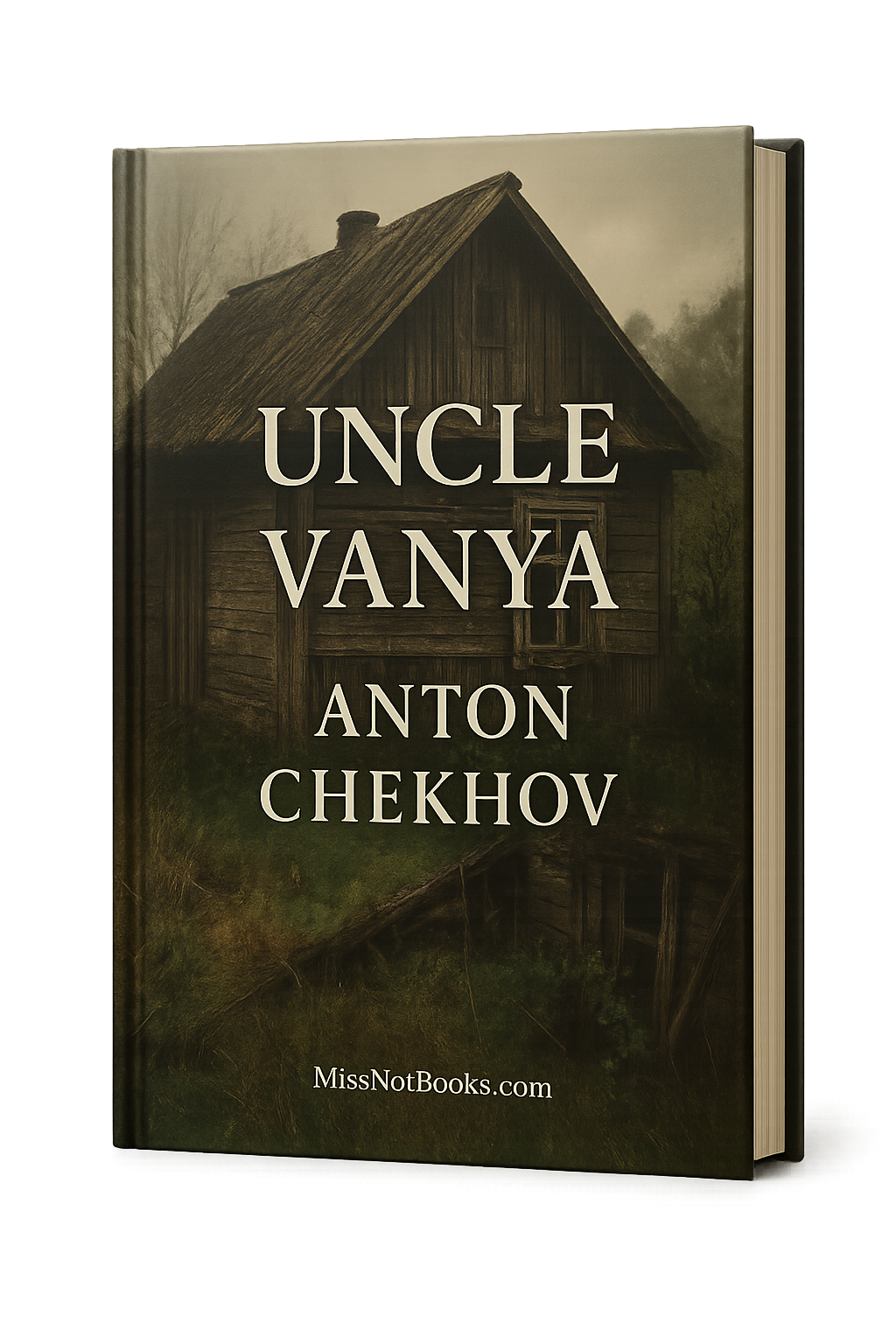
Uncle Vanya
In the realm of literature and drama, few works have so profoundly influenced the understanding of human relationships, existential despair, and the nuances of daily life as a form of art itself. This particular play, with its intricate tapestry of character-driven storytelling, revolutionized the way we perceive the ordinary and the trivial, challenging audiences and readers to face the uncomfortable truths of their own existence. It introduced a revolutionary narrative style, heralding the advent of modern drama by capturing the emotional complexities of mundane life in a way that had never been done before. Through its exploration of hope, disillusionment, and the search for meaning, this work has left an indelible mark on both the literary canon and the hearts of those who encounter it.
Core Ideas and Main Arguments:
- The Complexity of Human Relationships: The play intricately examines familial ties and romantic entanglements, revealing the often contradictory emotions they evoke.
- Existential Themes: Characters grapple with unfulfilled desires and the futility of their aspirations, raising questions about the meaning of life and the nature of happiness.
- Social Critique: Through its portrayal of the gentry and the decay of rural life, the work critiques societal norms and the illusions of progress.
- Subtle Humor and Irony: Despite its serious themes, the play employs a nuanced sense of humor and irony, which underscores the absurdity of the characters' situations.
Author’s Intentions and Context: The author envisioned a work that would transcend the traditional forms and conventions of theater at the time. Set against the backdrop of late 19th-century Russia, a period of significant social and political upheaval, the author was responding to a world in transition. The work aims to reflect the dissonance of personal dreams conflicting with the harsh realities of life, tackling philosophical questions about purpose, belonging, and the passage of time that many faced in their daily lives.
Structure of the Book:
- Act One: Introduces the main characters and the setting, establishing the emotional landscape and tensions that will unfold.
- Act Two: Delves deeper into the relationships and conflicts, showcasing the characters' inner struggles and desires.
- Act Three: Heightens the drama, leading to confrontations and revelations, culminating in a powerful resolution that encapsulates the themes of disappointment and longing.
Key Takeaways:
- Human Experience is Fragile: The play illustrates how small moments can shape the trajectory of a life, urging readers to reflect on their own experiences.
- The Illusion of Control: Characters often realize that their lives are steered by forces beyond their control, prompting a deeper understanding of fate and agency.
- The Importance of Communication: Misunderstandings abound, highlighting the necessity of honest dialogue in forming meaningful connections.
Why It’s Important to Read: This work remains a cornerstone of dramatic literature, resonating with anyone who has felt the weight of unfulfilled aspirations or the complexity of intimate relationships. It is essential for students of literature, theater, psychology, and philosophy, offering insightful reflections on the human condition that are still relevant today.
Impactful Quotes and Analysis:
-
“We shall leave our earthly home, and go to the stars. There is nowhere to hurry, and there is nowhere to go.”
This poignant line speaks to the existential themes of waiting and unfulfilled ambitions, encapsulating the characters’ struggles against a backdrop of stagnation. -
“We work, and we suffer, and we die; it is a senseless process.”
Here, the profound sense of despair echoes the human quest for meaning amid the inevitability of mortality, inviting audiences to contemplate their own lives. -
"But in life, if we don’t have our dreams, what do we have?"
This quote highlights the vital role of dreams and aspirations, encapsulating the tragic irony of the characters’ lives filled with hope yet marked by disappointment.
About the Author: Anton Chekhov (1860-1904) was a Russian playwright and short story writer who is considered one of the pivotal figures in modern literature. His innovative approach to character development and dialogue has positioned him as a foundational figure in the evolution of modern drama. Chekhov's legacy endures through his profound insights into human nature and the complexities of life, influencing countless writers and thinkers in the decades following his death.
Don’t miss the opportunity to engage with one of the most influential works of all time. Buy it today and explore the intricate tapestry of human emotion and existential questioning that defines our very existence. This monumental work is Uncle Vanya by Anton Chekhov, brought to you for educational purposes by MissNotBooks.com.