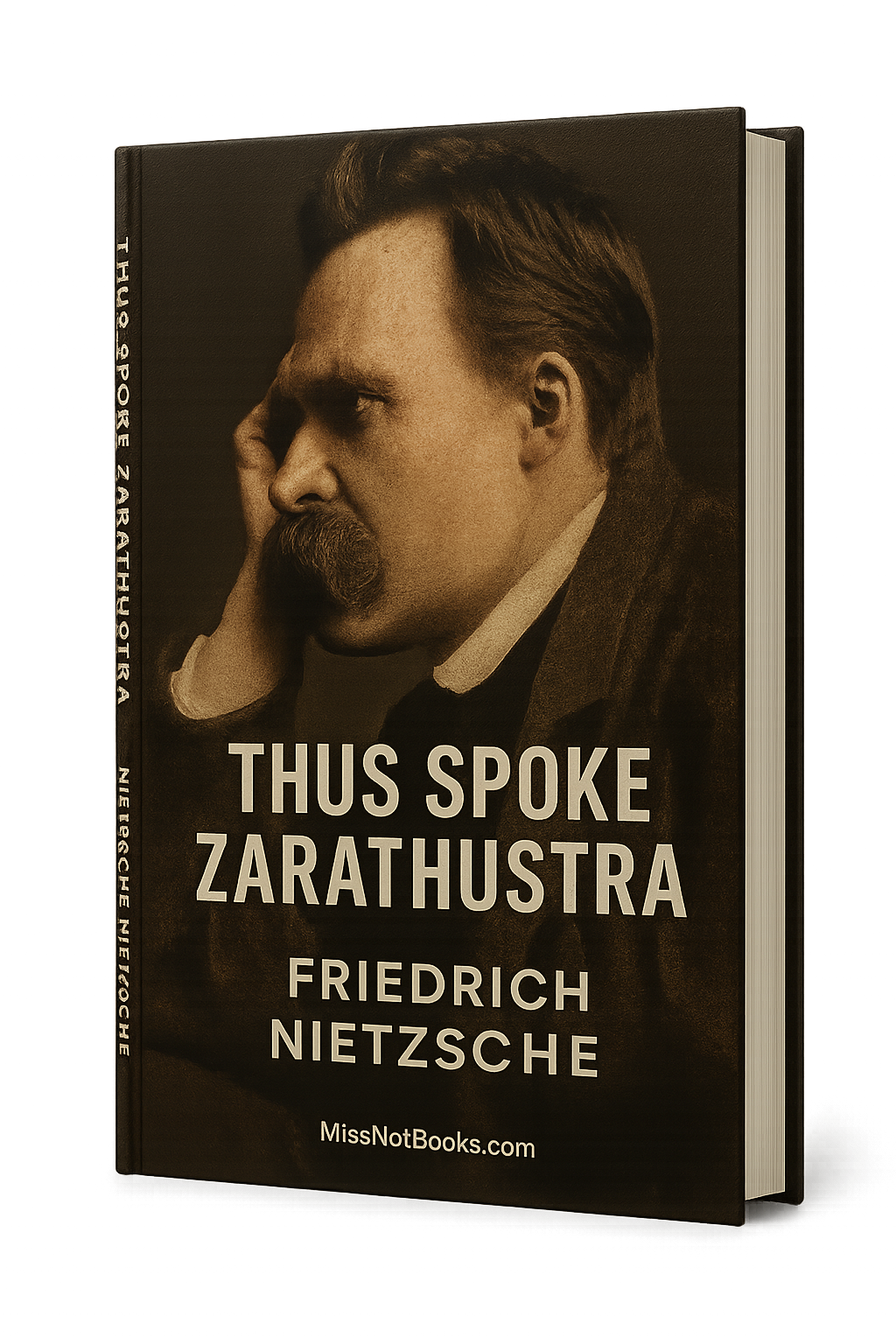
Thus Spoke Zarathustra
In an era marked by profound philosophical upheaval, one text emerged that would forever alter the landscape of thought, shaking the very foundations of morality, religion, and the conception of the self. It challenged entrenched beliefs and invited readers to abandon the familiar pathways of traditional thinking. This groundbreaking book introduced a radical vision of individuality and the human potential, inspiring generations to embrace the beauty of existential freedom and the quest for personal meaning in a seemingly indifferent universe.
Core Ideas and Main Arguments
- The Übermensch: Introduces the concept of the "Overman" or "Übermensch," advocating for a new kind of human being who transcends conventional morality and societal limitations.
- Eternal Recurrence: Proposes the notion that life repeats itself infinitely, urging individuals to evaluate their actions and choices as though they would repeat them for eternity.
- Critique of Religion: Challenges the moral and metaphysical underpinnings of Christianity, advocating for a re-evaluation of traditional beliefs and the embrace of secular humanism.
- Will to Power: Presents the idea that a fundamental driving force of human behavior is not survival or reproduction, but the intrinsic will to assert and enhance one's own power and influence.
Author’s Intentions and Context The author sought to empower individuals during a time of societal change in the late 19th century, marked by industrialization and the decline of religious authority. Amidst this backdrop, the text confronted naive optimism and the loss of meaning that arose with the decline of divine absolutism. By articulating a compelling vision of self-realization and authenticity, the author invited readers to reclaim agency over their lives in a world devoid of inherent purpose.
Structure of the Book Divided into four parts, this work unfolds as a philosophical narrative that intertwines poetry, parables, and discourses. Each section contributes to an overarching exploration of the transformation of human consciousness:
- Prologue: Sets the stage for Zarathustra's teachings and the rejection of traditional values.
- Zarathustra's Discourses: A series of poetic speeches that encapsulate the central themes of the work, exploring concepts such as the Übermensch and eternal recurrence.
- The Descent into the Mountains: Symbolizes the journey of self-discovery and the confrontation with societal norms.
- Final Teachings: Offers nuanced reflections on love, sacrifice, and the nature of existence, leading to a call for self-overcoming.
Key Takeaways
- The individual's quest for meaning is paramount, and this quest can defy conventional understandings of morality and existence.
- Embracing life's challenges can be liberating, and acceptance of the eternal recurrence can lead to a profound transformation in one's perspective.
- Rejecting dogma in favor of personal authenticity fosters genuine creativity and growth.
Why It’s Important to Read This seminal text continues to resonate deeply in contemporary society, from discussions of individualism and existentialism to critiques of established morality. It offers invaluable insights for philosophers, psychologists, artists, and anyone navigating the complexities of modern life. Engaging with this work equips readers to confront their own values and beliefs, encouraging a transformative journey toward authentic existence.
Impactful Quotes and Analysis
-
"God is dead."
- This provocative assertion encapsulates the decline of traditional religious beliefs and the subsequent moral vacuum that challenges individuals to create their own values.
-
"He who has a why to live can bear almost any how."
- Here, the emphasis on purpose reinforces the transformative power of meaning in human life, suggesting that existential struggle can yield profound strength when anchored by conviction.
-
"One must still have chaos in oneself to be able to give birth to a dancing star."
- This quote emphasizes the necessity of embracing inner turmoil as a source of creativity and rebirth, advocating for the acceptance of one's complexities as a path toward greatness.
About the Author Friedrich Nietzsche (1844–1900) was a German philosopher, cultural critic, poet, and philologist whose influential ideas have shaped modern philosophy, psychology, and art. Renowned for his probing critiques of morality and religion, Nietzsche's legacy endures as a pillar of existential thought, inspiring countless debates and interpretations in the 20th and 21st centuries.
Don’t miss the opportunity to engage with one of the most influential works of all time. Buy it today and explore the foundation of modern thought. This monumental work is Thus Spoke Zarathustra by Friedrich Nietzsche, brought to you for educational purposes by MissNotBooks.com.