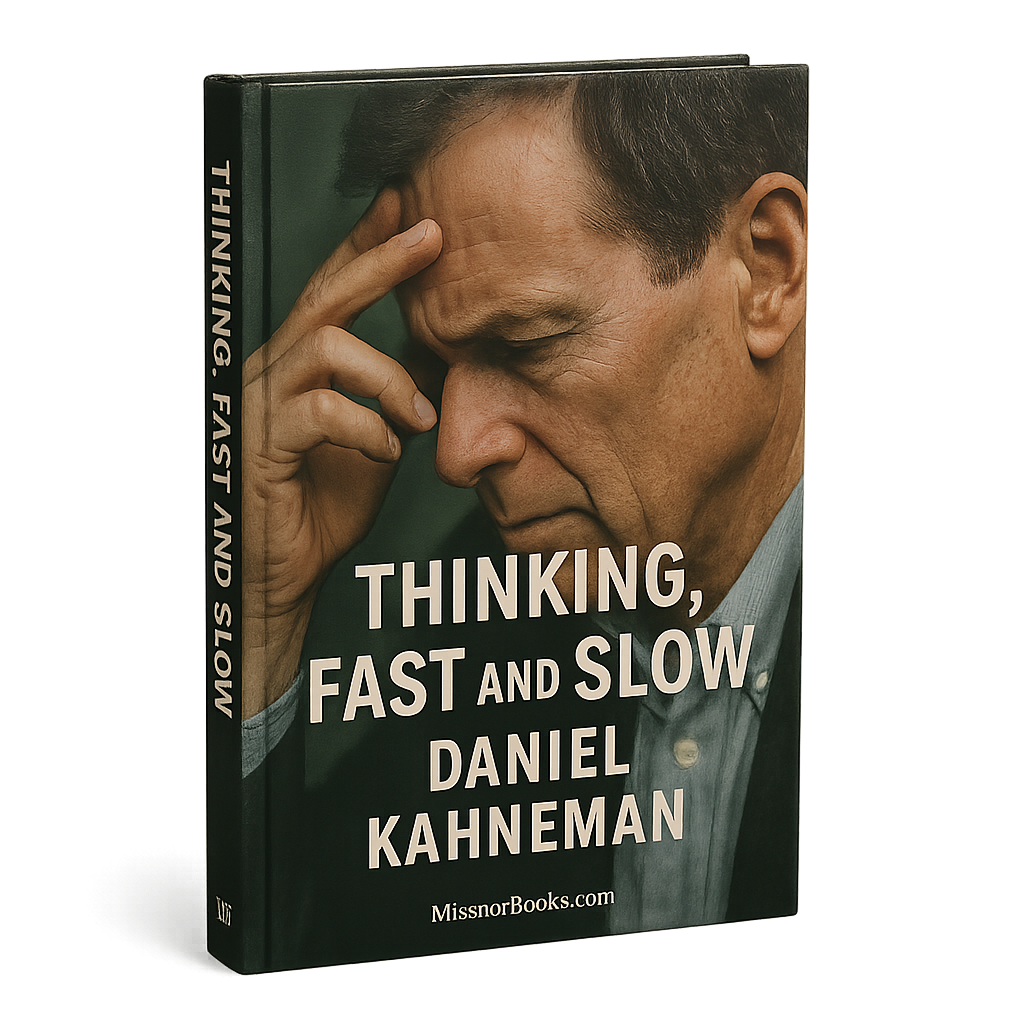
Thinking, Fast and Slow
The transformative impact of one of the most groundbreaking works in modern psychology and behavioral economics cannot be overstated. This book revolutionized the way we understand human thought processes, challenging long-held beliefs regarding decision-making, rationality, and cognitive biases. By dissecting the dual systems of thought that govern our judgments and behaviors, it has opened up new avenues for inquiry not just in psychology, but across disciplines including economics, medicine, and public policy. It invites readers to reconsider the nature of human rationality and the complexities of our choices, making it an essential text for anyone seeking to grasp the intricacies of the human mind.
Core Ideas and Main Arguments:
- Two Systems of Thought: The book introduces the concept of two distinct modes of thinking—System 1 (fast, intuitive, and emotional) and System 2 (slow, deliberate, and logical)—and explores how they interact to shape our decisions.
- Cognitive Biases: It details a variety of cognitive biases that commonly affect our judgment, such as the anchoring effect and confirmation bias, exposing the fallacies in our reasoning processes.
- Prospect Theory: The author explains the groundbreaking formulation of Prospect Theory, which illustrates how people value potential losses and gains differently, fundamentally altering the understanding of risk and reward.
- Framing Effects: The book examines how the way information is presented (framed) can significantly influence outcomes, highlighting the psychological underpinnings of persuasion and marketing.
- The Role of Emotions in Decision-Making: It emphasizes the significant impact of emotions on our everyday decisions, challenging the notion of us as purely rational beings.
Author’s Intentions and Context: The author set out to illuminate the often unseen mechanisms of thought that guide human behavior, responding to a historical moment ripe for the challenge of classical economic theories that assumed rational actors. He aimed to debunk the myth of rationality in decision-making, addressing cultural and philosophical challenges in understanding how humans navigate a complex world filled with uncertainty and risk.
Structure of the Book: The book is organized into five parts:
- Two Systems: Introduces the dual systems of thinking.
- Heuristics and Biases: Explores common mental shortcuts and their limitations.
- Overconfidence: Discusses the dangers of overestimating our knowledge and abilities.
- Choices: Delves into preferences and how they are influenced by context and framing.
- Two Selves: Examines the difference between the experiencing self and the remembering self, highlighting how memories shape our perceptions of happiness and satisfaction.
Each part builds upon the last, creating a comprehensive narrative that bridges psychological theory with practical implications.
Key Takeaways:
- Understanding the dual systems of thought can lead to better decision-making.
- Recognizing cognitive biases is crucial in both personal and professional realms to mitigate errors in judgment.
- The insights gained from interpreting economic behavior through psychological principles can enhance policy-making and business practices.
Why It’s Important to Read: This work holds ongoing relevance in an age where understanding human behavior is essential for addressing contemporary challenges in various fields. Students of psychology, business professionals, policy makers, and anyone interested in the decision-making process will benefit immensely from the profound insights presented in this book. It not only enhances individual decision-making but also invites readers to reflect on broader societal implications.
Impactful Quotes and Analysis:
-
“Nothing in life is as important as you think it is, while you are thinking about it.”
- This quote underscores our tendency to overemphasize the significance of immediate concerns, reminding us to maintain perspective in our decision-making.
-
“We can be blind to the obvious, and we are also blind to our blindness.”
- Here, the author emphasizes the limitations of human perception, challenging us to question our assumptions about knowledge and certainty.
About the Author: Daniel Kahneman, born March 5, 1934, is an Israeli-American psychologist renowned for his work in behavioral economics and cognitive biases. He was awarded the Nobel Prize in Economic Sciences in 2002, acknowledging his contributions to understanding human judgment and decision-making. Kahneman’s legacy continues to influence academia, shaping a new generation of interdisciplinary thinkers.
Don’t miss the opportunity to engage with one of the most influential works of all time. Buy it today and explore the depths of human reasoning and the dynamics of choice. This monumental work is Thinking, Fast and Slow by Daniel Kahneman, brought to you for educational purposes by MissNotBooks.com.