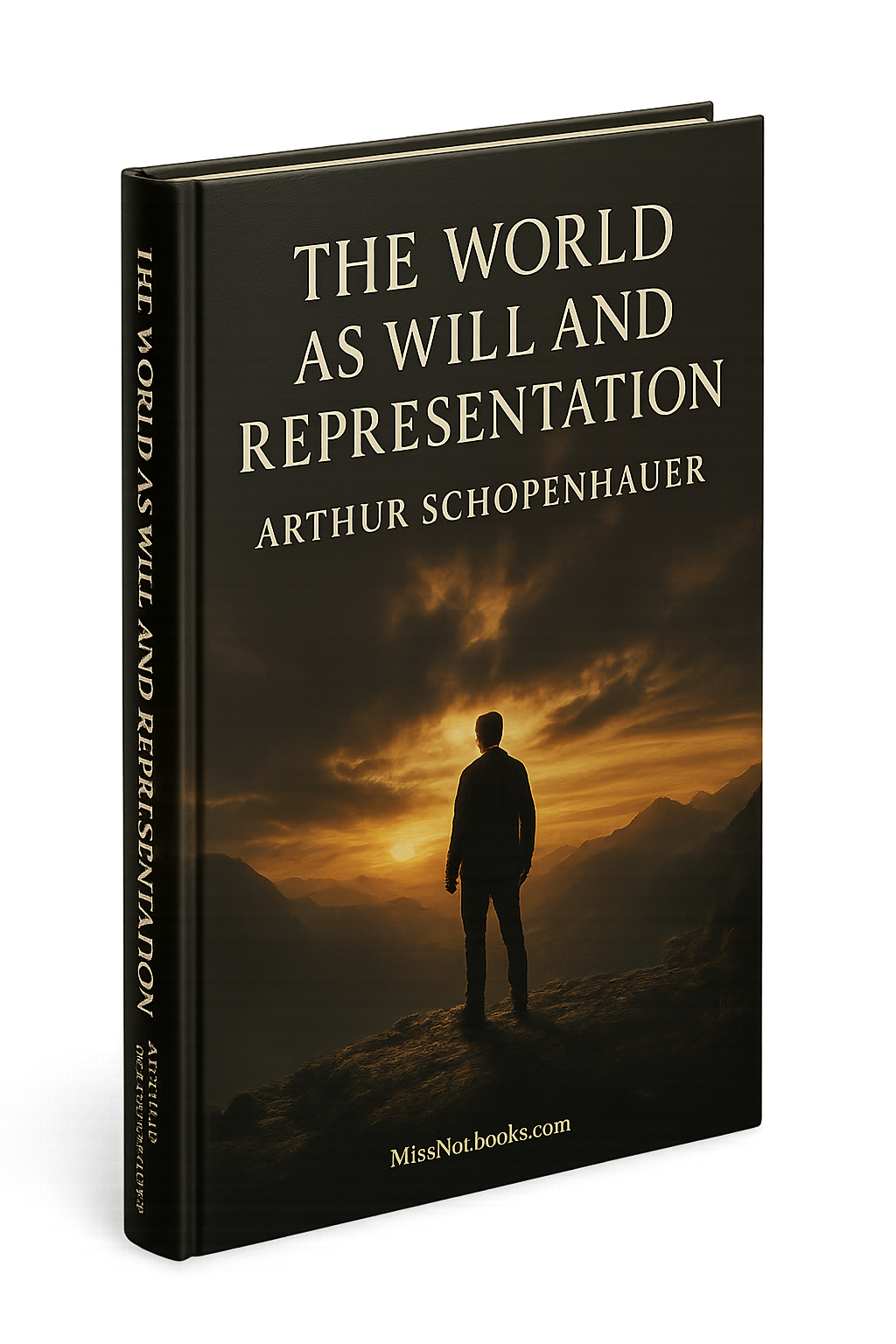
The World as Will and Representation
In a world that often seems dictated by mere appearances and fleeting pleasures, one profound work compels readers to confront the underlying essence of existence itself. This transformative book revolutionized philosophical discourse by daring to assert that our fundamental drives are rooted not in rational thought but in an enigmatic and often relentless will. Through its bold examination of human desire, suffering, and the depth of experience, it challenged long-held beliefs, thereby laying the groundwork for future existential and psychological inquiry.
Don’t miss the opportunity to engage with one of the most influential works of all time. Buy it today and explore the intricate interplay between the self, consciousness, and the world around us.
Core Ideas and Main Arguments
- The Concept of Will: Central to the text is the idea that the will is the driving force behind all existence, operating beneath the surface of rational thought, influencing actions and desires in profound ways.
- Representation vs. Reality: The author distinguishes between how the world appears to us (representation) and the true nature of reality (the will), urging readers to look beyond superficial perceptions.
- Suffering and Desire: The inevitability of suffering is emphasized, as the unquenchable desire stemming from the will leads to a cycle of dissatisfaction and toil.
- Aesthetic Experience: The book posits that art and beauty function as temporary escapes from the relentless will, offering moments of transcendence that allow for a brief reprieve from suffering.
- Ethics and Compassion: It suggests that understanding the shared plight of existence through the lens of will fosters compassion and ethical behavior towards others.
Author’s Intentions and Context
The author embarked on an intellectual journey to elucidate the complexities of human nature during a time characterized by rapid scientific advancements and philosophical upheavals in 19th-century Europe. Facing the growing influence of rationalism and empiricism, he sought to counterbalance these perspectives by incorporating metaphysical elements to glean a deeper understanding of life’s intrinsic struggles. His contemplations were responses not only to his personal experiences but also to the larger existential questions that resonated with the zeitgeist of his era.
Structure of the Book
The work unfolds in a multi-part format:
- Part I: The World as Will: Discusses the nature of the will and its manifestations in human experience and desire.
- Part II: The World as Representation: Explores perception, knowledge, and how the subjective experience shapes our understanding of reality.
- Part III: Aesthetics and Compassion: Highlights the role of art and ethical considerations in navigating the turmoil caused by the will, offering avenues for transcendence.
Each section builds upon the previous, enhancing the reader's grasp of the interwoven themes of will, representation, and the potential for liberation through art and ethical insight.
Key Takeaways
- The will drives human existence, often manifesting as suffering and endless desire.
- Distinguishing between appearance and reality is essential for deeper philosophical understanding.
- Art serves as a vital escape from the burdens of existence by providing transient moments of enlightenment.
- Acknowledging our shared suffering can lead to greater compassion and ethical living.
Why It’s Important to Read
This book holds ongoing relevance in contemporary discourse on psychology, philosophy, and ethics. Its insights into the nature of desire and suffering are particularly resonant in modern society, where individuals grapple with existential questions amidst rapid change. Readers who seek a deeper understanding of human motivation, emotional complexity, and the power of art will find this work profoundly illuminating.
Impactful Quotes and Analysis
-
“A man can do what he wants, but not want what he wants.”
This quote encapsulates the essence of freedom and constraint, highlighting the paradox of human existence where desire operates often outside of conscious control, inviting readers to reflect on their own impulses. -
“Suffering is the condition of life.”
Here, the author emphasizes the universality of suffering, challenging readers to confront difficult truths about existence and the shared human experience that binds us all. -
“Art is the most beautiful of all lies.”
This statement underscores the dual nature of art as both a deceptive representation of reality and a profound truth that offers an escape from life's harsh realities, serving as a refuge for the soul.
About the Author
Arthur Schopenhauer (1788–1860) was a German philosopher widely recognized for his profound influence on later existential and psychoanalytic thought. Often heralded as a precursor to modern philosophy, his emphasis on the will as the foundational force of human existence resonated throughout the intellectual landscape of the 19th century and beyond, shaping the work of thinkers such as Nietzsche and Freud. Schopenhauer's legacy endures through his exploration of aesthetic experience, ethics, and the human condition.
This monumental work is The World as Will and Representation by Arthur Schopenhauer, brought to you for educational purposes by MissNotBooks.com.