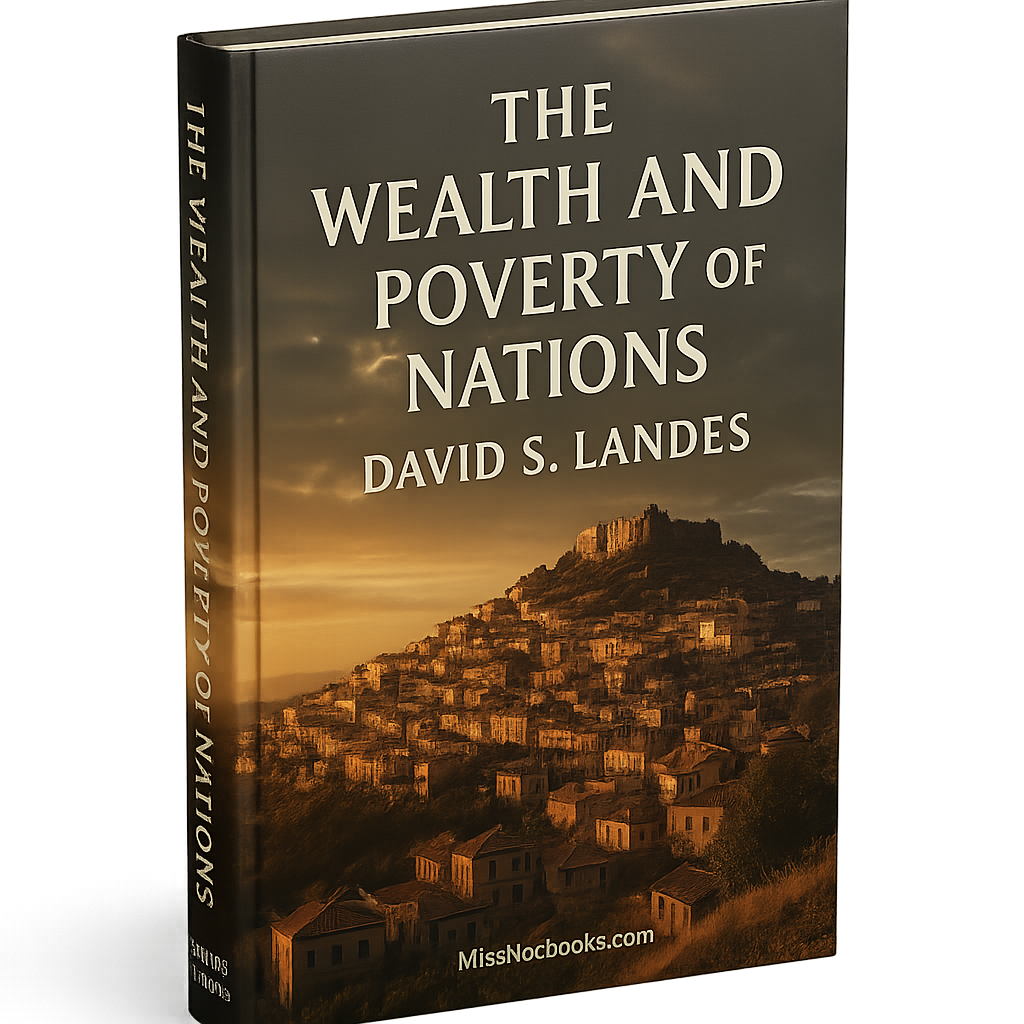
The Wealth and Poverty of Nations
Throughout history, few works have so profoundly reshaped our understanding of economic development, cultural influences, and national prosperity as this transformative book. It challenges conventional narratives and introduces a nuanced exploration of the factors that contribute to wealth generation and poverty across nations. Engaging with this text has the potential to revolutionize how we think about economics, culture, and the intricate dance between the two, ultimately fostering a deeper realization of the socio-economic complexities that shape our world.
Don’t miss the opportunity to engage with one of the most influential works of all time. Buy it today and explore the roots of global economic disparities and successes.
Core Ideas and Main Arguments
- Cultural Foundations of Economics: The book posits that cultural attitudes toward work, innovation, and authority significantly influence a nation’s economic outcomes.
- Role of Geography: It presents geography as a vital factor affecting economic development, illustrating how natural resources and location shape prosperity.
- Historical Context: By examining historical trajectories, the work emphasizes the importance of historical events and decisions in shaping contemporary economic landscapes.
- Institutions and Governance: It discusses the impact of political institutions, governance, and policies on economic success, advocating for effective institutions as a bedrock of wealth.
- Technological Innovation: The book argues for the pivotal role of technological advancement in driving economic growth and shaping modern economies.
Author’s Intentions and Context
The author set out to uncover the complexities behind economic disparities between nations, responding to a growing body of literature that often simplified or overlooked critical cultural and historical contexts. Writing during a time of significant globalization and economic change, the book aimed to provide a framework for understanding why certain nations flourish while others languish, foregrounding the interconnectedness of history, culture, and economics.
Structure of the Book
- Introduction: Establishes the fundamental thesis regarding wealth and poverty.
- Chapters on Culture: Explores how different cultural practices can hinder or propel economic success.
- Geographical Analysis: Delves into how geographical factors contribute to national wealth.
- Historical Perspectives: Provides a chronological examination of different nations and their economic paths.
- Institutional Frameworks: Discusses the critical role of governance and policies in creating wealthy or impoverished nations.
- Conclusion: Synthesizes the arguments and reflects on future implications.
Key Takeaways
- The interplay of culture, geography, and governance is essential in understanding economic disparities.
- Historical context cannot be ignored; it shapes the present economic landscapes of nations.
- Effective institutions are not merely beneficial but foundational for sustaining economic growth.
- Innovation and technology play a transformative role in the wealth generation process.
Why It’s Important to Read
This work remains essential for economists, historians, policy-makers, and anyone interested in the dynamics of global wealth and poverty. Its insights are not only applicable to understanding historical trends but also to tackling contemporary issues of economic inequality. Readers will benefit from a broader perspective on the interplay of culture and economics, providing tools to critically evaluate current economic policies and their cultural ramifications.
Impactful Quotes and Analysis
-
"Wealth cannot be understood without grasping the cultural foundations upon which it is built."
This statement encapsulates the book’s central premise, underscoring the argument that economic systems are deeply intertwined with the values and beliefs of a society. -
"Geography is not destiny, but it certainly shapes opportunity."
This quote highlights the dual role of geography in creating both challenges and opportunities, asserting that while location influences outcomes, it does not seal a nation's fate. -
"The past is a prologue to the present, and yet so often it is ignored."
Here, the author emphasizes the importance of historical awareness in understanding present socio-economic conditions, urging readers to consider history’s lessons.
About the Author
David S. Landes (1924–2013) was an influential economic historian widely known for his work on the intersection of culture and economics. His research spanned topics such as technology, economic history, and cultural development. Landes' exploration of how nations develop economically in the context of their historical and cultural backgrounds has left a lasting intellectual legacy, making him a prominent figure in understanding the complexities of wealth and poverty.
This monumental work is The Wealth and Poverty of Nations by David S. Landes, brought to you for educational purposes by MissNotBooks.com.