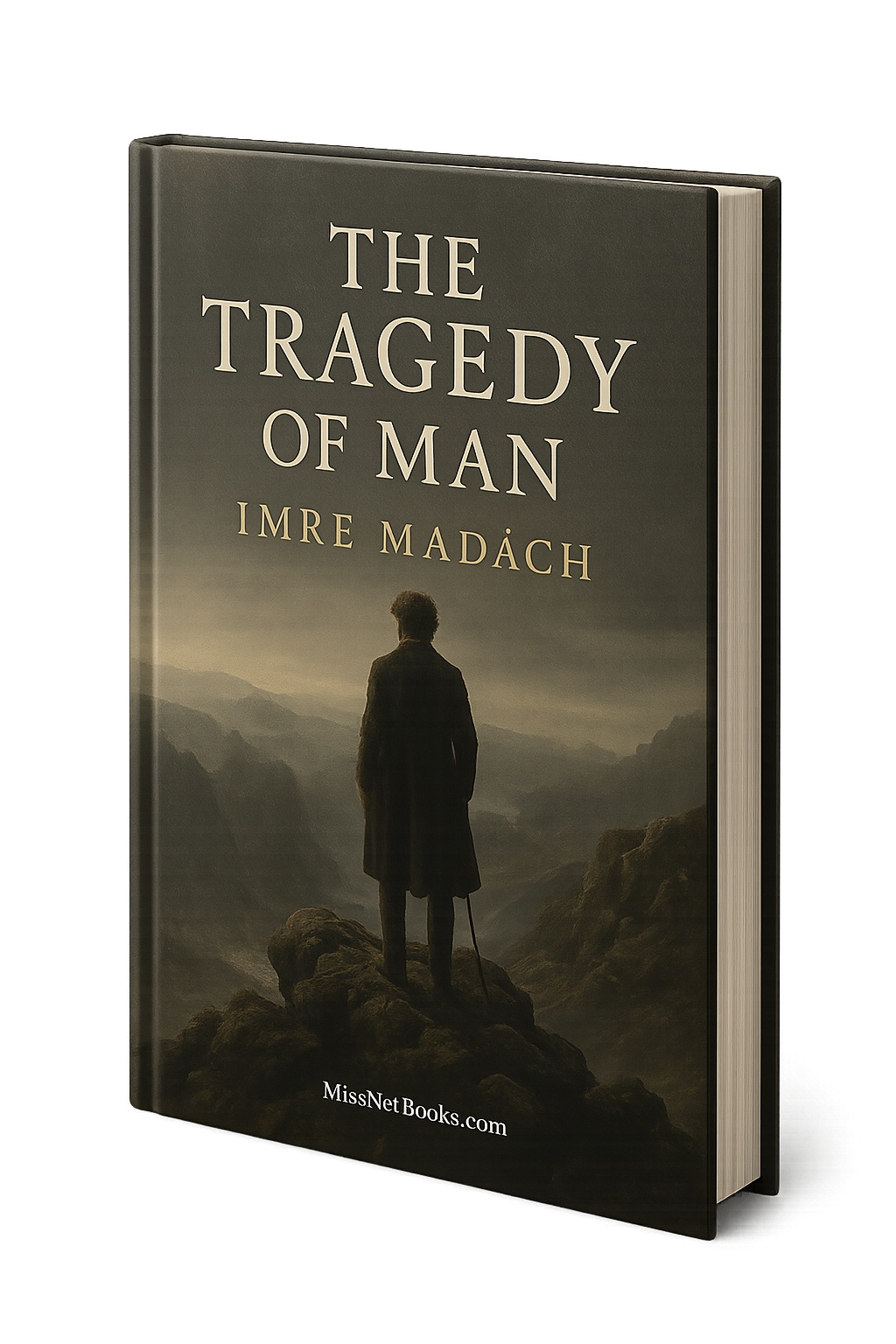
The Tragedy of Man
In a world often dominated by despair and existential questioning, a remarkable work has risen to challenge our perceptions of humanity, destiny, and the eternal struggle between hope and futility. This book revolutionizes the way we think about existence itself, delving deep into the philosophical underpinnings of life, free will, and the nature of human striving. It serves as both a poignant exploration of individual potential and a grand reflection on the collective journey of mankind, striking at the hearts of readers by boldly asserting that our choices, even amidst inevitable suffering, shape the path of our existence.
Core Ideas and Main Arguments
- Human Struggle and Redemption: The text explores the duality of human experience, emphasizing that while suffering is universal, the pursuit of meaning through that suffering is what defines humanity.
- Philosophical Reflections on Existence: It presents a dialogue between historical and mythological figures that embodies the human quest for knowledge and understanding in an often chaotic world.
- The Illusion of Control: Through allegorical narratives, the book challenges the notion of free will against the backdrop of a predetermined universe, prompting readers to contemplate the balance between fate and autonomy.
- Cultural and Temporal Transitions: The work articulates the trials and triumphs of human civilization, illustrating the cyclical nature of history and its impact on the present.
Author’s Intentions and Context The author crafted this profound piece during a time of significant upheaval and philosophical inquiry in the mid-19th century. The societal shifts following the Enlightenment and the birth of modern thought provided fertile ground for this exploration of human destiny. Responding to the existential crises of his era, the author sought to articulate a vision that acknowledges the depths of human despair while simultaneously championing the indomitable spirit that compels individuals to strive for greatness, understanding, and connection.
Structure of the Book The structure is meticulously designed to reflect the thematic complexity of its arguments. Divided into multiple acts that interweave narrative exploration with philosophical discourse, each section serves to build upon the overarching thesis about the nature of human existence:
- Act One: Establishes the groundwork of the human condition and the timeless quest for meaning.
- Act Two: Introduces key figures from history and mythology, each representing various aspects of human experience and thought.
- Act Three and Beyond: Explores the cyclical nature of success and failure in history, ultimately culminating in a hopeful vision of human resilience.
Key Takeaways
- The essence of humanity lies in the struggle for understanding amidst suffering.
- Choices, though seemingly trivial at times, play a critical role in shaping one’s destiny.
- History is a testament to the recurring themes of conflict and reconciliation in human experience.
Why It’s Important to Read This work remains profoundly relevant in contemporary discourse around existentialism, human rights, and the nature of progress. Scholars, philosophers, and general readers alike will discover invaluable insights into the human condition, and the context of societal challenges today. It invites a deep examination of one's beliefs regarding fate, responsibility, and the perpetual quest for meaning, making it a necessary addition to any thoughtful reader's library.
Impactful Quotes and Analysis
- “The greatest tragedy does not lie in suffering, but in the failure to rise above it.” This quote encapsulates the central theme of resilience and the human capacity for hope, affirming that struggles are fundamental to the journey of life.
- “Man is the master of his own fate, yet he is tethered to the whims of time.” This profound observation invites reflection on the delicate balance between autonomy and determinism, challenging readers to reconsider the impact of larger forces on individual choices.
About the Author Imre Madách (1823–1864) was a Hungarian poet, playwright, and philosopher whose literary contributions helped shape Hungarian culture and thought. His works reflect an intricate understanding of human psychology and societal issues, leaving a lasting legacy that continues to influence literature and philosophy today.
Don’t miss the opportunity to engage with one of the most influential works of all time. Buy it today and explore the tragedy and beauty of human existence as captured in this monumental work: The Tragedy of Man by Imre Madách, brought to you for educational purposes by MissNotBooks.com.