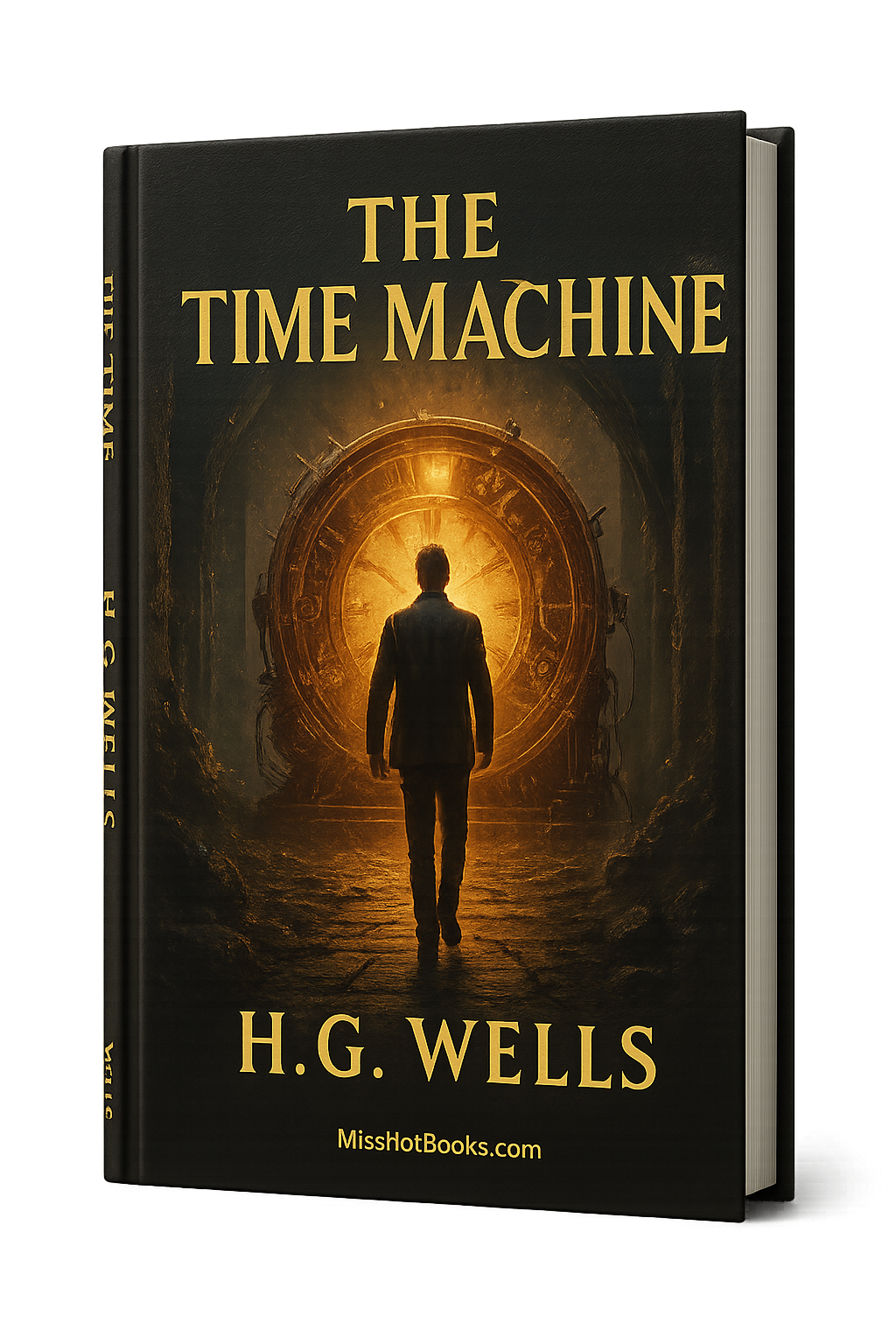
The Time Machine
In an age defined by rapid technological progress and social change, a certain literary creation emerged that irrevocably transformed the discourse surrounding time, society, and human existence. This groundbreaking book introduced readers to a concept that would reverberate through science fiction and philosophical inquiry: the exploration of time as a dimension, a medium in which not just travel but fundamental human notions of progress, morality, and evolution could be examined and critiqued. It challenged the straight line of historical progress, inviting intellectual engagement with the implications of humanity's choices and the future they forge. Through its audacious narrative, it set the stage for a re-examination of humanity’s relationship with time itself.
Core Ideas and Main Arguments
- Time as a Dimension: The book articulates a vision of time not as a mere sequence of events but as a spatial entity that can be navigated.
- Social Commentary: Central to the narrative is a critical observation of social hierarchies and the consequences of unchecked progress and division.
- Evolutionary Perspectives: It presents a speculative view on the future of humanity, contrasting the potential of technological advancements with the threat of societal decay.
- Cyclic Nature of History: The text argues for a cyclical reading of history versus a linear one, suggesting that human folly can repeat endlessly.
Author’s Intentions and Context
The author aimed to provoke thought about the implications of contemporary scientific advances and their potential futures. Penultimate to the industrial age, the book was birthed from the awareness of societal transitions during the late 19th century, a time brimming with optimism about technology but also rife with class struggles and ethical dilemmas. The author sought to reflect upon these tensions, challenging readers to confront the consequences of their actions and the trajectory of civilization.
Structure of the Book
- Introduction to the Time Machine: Here, readers are acquainted with the protagonist's theory and invention, setting the stage for the extraordinary adventure.
- The Journey into the Future: This section depicts the protagonist's travels to distant times, showcasing radically transformed societies.
- Encounters and Reflections: Through his experiences with future beings, the protagonist wrestles with deeper philosophical questions, offering commentary on evolution and society.
- Conclusion and Implications: The final discourse brings all revelations into focus, posing critical questions about humanity's choices and responsibilities.
Key Takeaways
- Reconceptualization of Time: A new way to look at the passage of time changes the reader's perspective on history and existence.
- The Double-Edged Sword of Progress: Advancements can lead to both enlightenment and devastation, a duality that remains pertinent today.
- Understanding Human Nature: The text compels reflection on the essence of humanity, duty, and the cyclical patterns of history.
Why It’s Important to Read
This book's relevance continues to transcend generations, as its examination of human behavior, societal structures, and technological implications resonates with contemporary readers. It offers insights for those interested in philosophy, science, literature, and socio-political dynamics. Students, educators, and thinkers alike will find a wealth of knowledge and provocation in its pages, inviting critical dialogue about the path forward for humanity.
Impactful Quotes and Analysis
-
“We must strive to have a better future for ourselves.”
This quote emphasizes the responsibility inherent in human agency, underscoring the book's central theme of choice and its consequences. -
“The Earth had become a strange new world, a paradox of beauty and decay.”
Here, the author captures the essence of transformation, posing questions about the permanence of civilization and the fragility of progress. -
“Time is a kind of river; it flows, it sweeps us along.”
This metaphor reflects the central theme of time's continuity and our struggle to navigate its currents, urging reflection on one's place within the grand narrative of existence.
About the Author
H.G. Wells (1866-1946) was a British author and social commentator widely recognized for his pioneering role in science fiction. A keen observer of the cultural shifts in his time, he explored themes of technology, society, and human nature in works that captivated and influenced readers around the globe. His legacy endures as he courageously challenged conventional thought, giving rise to an expansive body of literature that continues to inspire.
This monumental work is The Time Machine by H.G. Wells, brought to you for educational purposes by MissNotBooks.com.