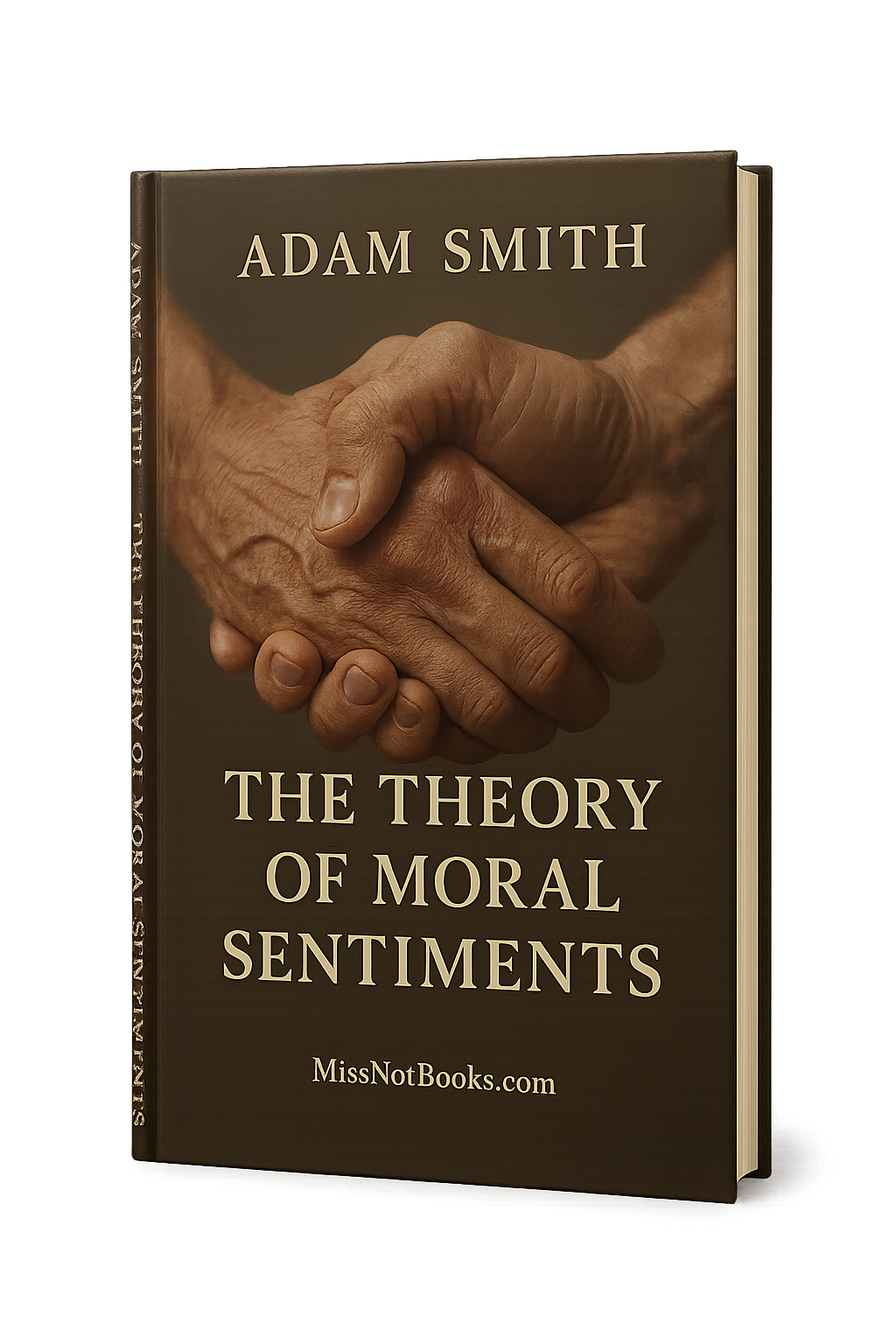
The Theory of Moral Sentiments
In the landscape of moral philosophy, few works have wielded the transformative power of introspection and ethical inquiry like the one we explore here. This pioneering text not only revolutionized the understanding of human interactions and moral reasoning but also laid the groundwork for what would evolve into modern economics and social science. By delving into the intricacies of empathy, virtue, and the social fabric that binds humanity, this work challenges us to reevaluate our motivations and relationships within the context of a changing world.
Don’t miss the opportunity to engage with one of the most influential works of all time. Buy it today and explore the foundation of moral philosophy and human ethics.
Core Ideas and Main Arguments
- Sympathy as a Foundation: The text posits that our moral judgments are largely rooted in our ability to feel sympathy for others, establishing a basis for moral reasoning grounded in human emotion.
- The Impartial Spectator: Smith introduces the concept of an impartial spectator, a hypothetical figure through whom we can evaluate our actions and the actions of others, facilitating moral judgment without bias.
- Virtue and Moral Sentiments: The work examines various virtues—justice, beneficence, and benevolence—arguing for their importance in both personal conduct and societal well-being.
- The Role of Self-Interest: While often seen as a proponent of self-interest in economic terms, Smith highlights the necessity of balancing self-interest with moral considerations for a prosperous society.
Author’s Intentions and Context
Adam Smith wrote this seminal work during the 18th century, a time ripe for intellectual exploration and reform. Responding to the traditional moral philosophies of his predecessors, Smith aimed to illuminate the intricacies of human nature and community dynamics. The Enlightenment period was characterized by burgeoning ideas about reason, individualism, and societal structures, and Smith sought to challenge and enrich the dialogue surrounding these themes. His objective was to create a framework for understanding morality that recognized the complexity of human emotions and actions within a social context.
Structure of the Book
The text is structured in multiple sections that intricately weave together themes of morality, social relations, and human behavior. Key divisions include:
- Introduction of Sympathy: Explores the fundamental capacity for empathy as the root of moral judgments.
- Understanding Virtue: Dissects different moral qualities and virtues, establishing their relevance in ethical discourse.
- The Role of Society: Examines how social constructs influence personal morality and ethical behavior.
- Application of Moral Sentiment: Concludes with discussions on how these moral insights apply to governance, commerce, and community living.
Key Takeaways
- Empathy is central to moral judgment and the fabric of society.
- The existence of an impartial spectator serves as a guide for ethical behavior.
- Virtue transcends personal gain and is essential for societal flourishing.
- Understanding human motives involves balancing self-interest with moral considerations.
Why It’s Important to Read
This work remains profoundly relevant today, as it invites readers to reflect on the nature of our interactions and ethical responsibilities in a rapidly transforming world. Its insights resonate in contemporary discussions about morality in politics, economics, and personal relationships. Students of philosophy, ethics, sociology, and psychology will find immense value in Smith’s exploration of human behavior, equipping them to navigate complexities in modern society more effectively.
Impactful Quotes and Analysis
-
"How selfish soever man may be supposed, there are evidently some principles in his nature, which interest him in the fortunes of others..."
- This quote underscores the innate human capacity for empathy, suggesting that despite our individualistic tendencies, a shared concern for one another is fundamental to moral society.
-
"The impartial spectator... is the figure with whom we make our moral judgments."
- Here, Smith articulates his groundbreaking idea that moral reasoning requires a perspective that transcends personal bias, a concept that continues to inform ethical debates today.
-
"Justice is the main pillar that upholds the whole edifice of society."
- This assertion highlights the critical role justice plays in maintaining social order and harmony, reflecting concerns that remain urgent in contemporary discourse on law and ethics.
About the Author
Adam Smith (1723-1790) was a Scottish philosopher and economist whose writings laid the foundations for modern economic theory and the study of moral philosophy. Often hailed as the father of economics, Smith’s intellectual legacy extends far beyond economics; he is revered for his profound insights into human behavior, morality, and the workings of society. His works continue to inspire and provoke thought across multiple disciplines, illustrating the enduring nature of his contributions to our understanding of the human condition.
This monumental work is The Theory of Moral Sentiments by Adam Smith, brought to you for educational purposes by MissNotBooks.com.