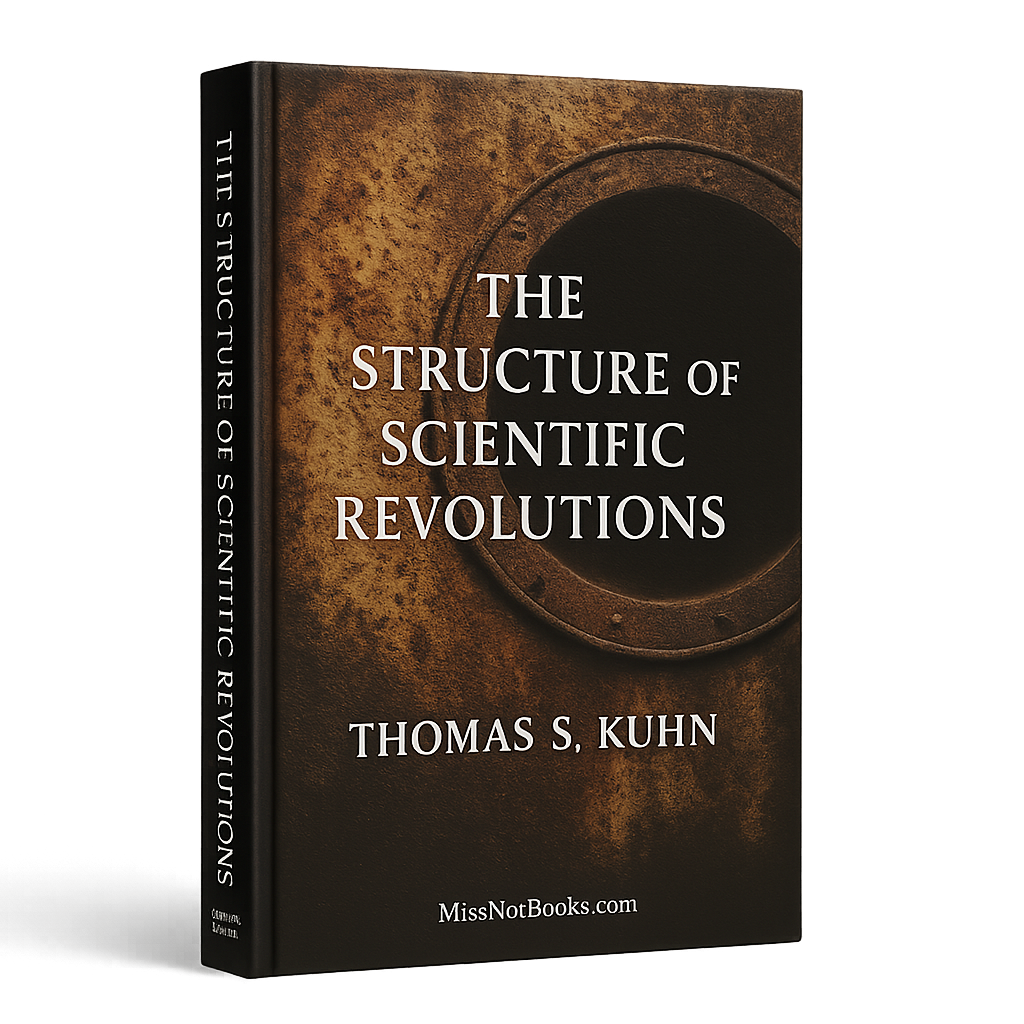
The Structure of Scientific Revolutions
In an era defined by rapid scientific advancement and shifting paradigms, one book emerged that irrevocably changed the way we understand scientific progress. This seminal work challenged the prevailing notion of a linear accumulation of knowledge, arguing instead for the cyclical nature of scientific paradigms and the revolutionary shifts that punctuate this process. By daring to suggest that scientific fields undergo profound transformations, the book provided a framework for understanding not just science but the very nature of progress in human thought. The impact of this work resonates through time, shaping discussions across various disciplines, making it an essential read for anyone seeking to grasp the intricate nature of knowledge itself. Don’t miss the opportunity to engage with one of the most influential works of all time. Buy it today and explore the foundation of modern scientific thought.
Core Ideas and Main Arguments
- Paradigm Shifts: Introduces the concept of "paradigms" as overarching frameworks within which scientific inquiry takes place, and details how shifts in these paradigms fundamentally alter the scientific landscape.
- Normal Science vs. Revolutionary Science: Distinguishes between ‘normal science’, which operates within an existing paradigm, and ‘revolutionary science’, which challenges these norms and brings about significant change.
- Incommensurability: Discusses the idea that competing paradigms are often incommensurable, leading to difficulties in comparison and communication between scientists working within different frameworks.
- Historical Context of Scientific Change: Provides historical case studies that illustrate how significant paradigm shifts have occurred, such as the Copernican Revolution and the shift from Newtonian physics to Einstein's theories.
Author’s Intentions and Context
The author sought to articulate a vision of scientific development that acknowledged the messy, often nonlinear progression of knowledge. Writing in the 1960s during a time of great turmoil and change in both science and broader society, the author was responding to the rigid, cumulative models of scientific advancement prevalent in mid-20th century philosophy and science. His aim was to shed light on the complexities of scientific discovery and to validate the revolutionary moments that often lead to significant advancements in understanding.
Structure of the Book
- Introduction: Sets the stage for the examination of scientific progress and the role of paradigms.
- Chapter 1: The Historicity of Science: Discusses the historical evolution of scientific practices and thought.
- Subsequent Chapters: Delve into detailed case studies of various scientific disciplines, illustrating the process of normal science and its eventual overturning by revolutionary science.
- Conclusion: Summarizes the implications of paradigm shifts for the philosophy of science and argues for the necessity of acknowledging these transformations.
Key Takeaways
- Paradigms shape the scientific endeavor in profound ways, influencing what questions are asked and how they are answered.
- Scientific progress is not merely additive; it is punctuated by deep, transformative shifts that redefine entire fields.
- Recognizing and critically evaluating competing paradigms is essential for a complete understanding of science.
Why It’s Important to Read
This work remains crucial for anyone interested in the philosophy of science, history, or sociology. Scholars, scientists, and thinkers will find that it challenges them to reconsider their assumptions about how scientific progress occurs. The notions presented continue to stimulate discussions about knowledge, belief, and the evolution of thought across disciplines, making it a vital component of any intellectual library.
Impactful Quotes and Analysis
-
"Scientific progress occurs, in this view, through a series of peaceful interludes punctuated by intellectually violent revolutions."
This quote underlines the central thesis of the book, emphasizing the dual nature of scientific progress that balances stability with upheaval, serving as a reminder of the dynamic nature of inquiry. -
"All significant branches of science have undergone one or more changes in their paradigms."
Here, the author asserts the universality of paradigm shifts, suggesting that no field is immune to transformation, which compels the reader to consider the implications of change within their own disciplines.
About the Author
Thomas Samuel Kuhn (1922-1996) was an American physicist, historian, and philosopher of science whose work has become highly influential in the understanding of scientific development. He is best known for this revolutionary contribution, which profoundly impacted not only the philosophy of science but also influenced fields such as sociology, history, and even the humanities. Kuhn's legacy endures as a pivotal figure in the discourse surrounding how we comprehend the development of scientific knowledge and the nature of progress itself.
This monumental work is The Structure of Scientific Revolutions by Thomas S. Kuhn, brought to you for educational purposes by MissNotBooks.com.