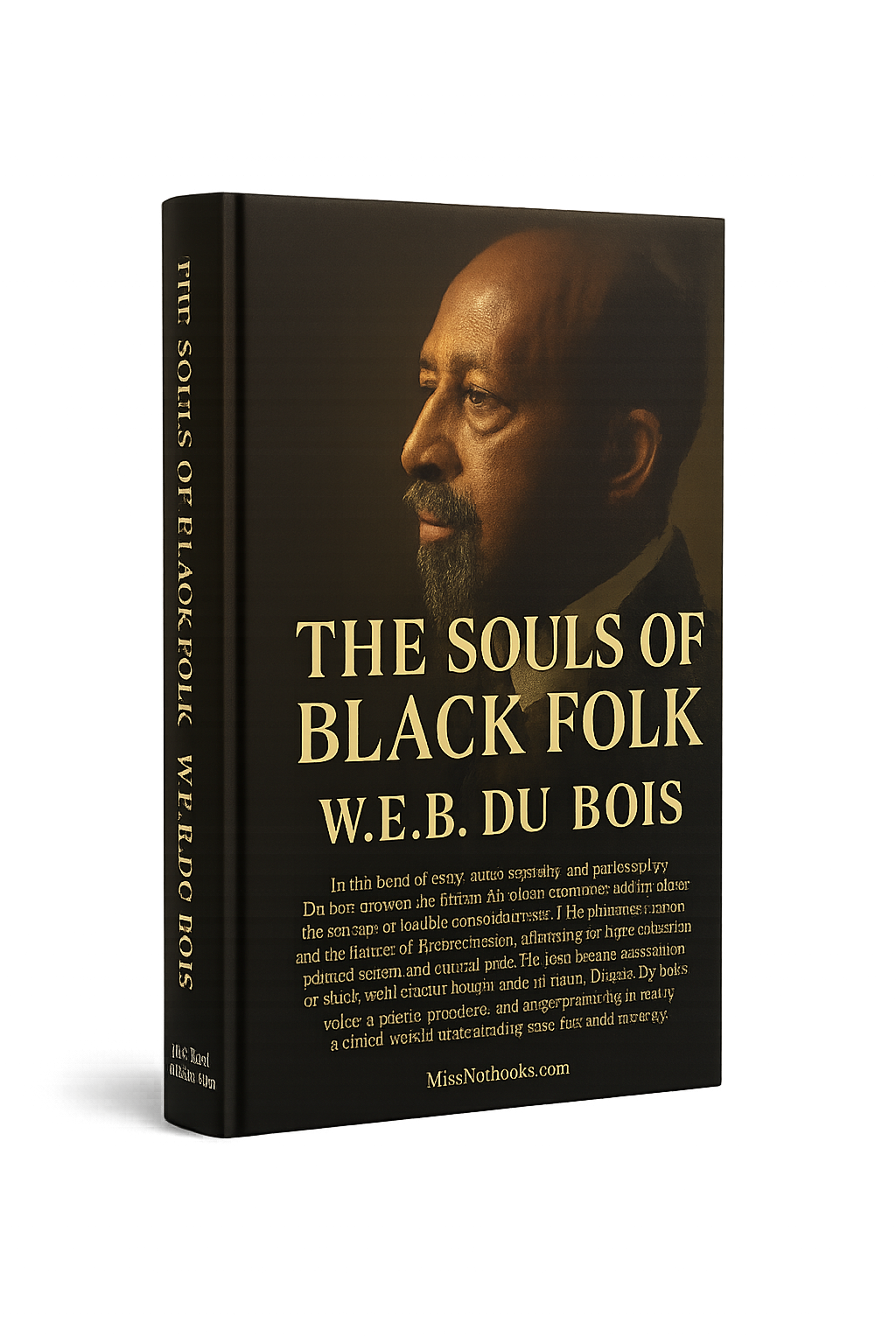
The Souls of Black Folk
In an era defined by struggle and transformation, one work stands as a powerful beacon of thought, illuminating the profound complexities of race, identity, and societal change. This book revolutionized the discourse surrounding race relations in America, challenging the prevailing narratives of its time and presenting an intricate tapestry of the African American experience. It introduced the concept of double consciousness while advocating for civil rights and igniting critical discussions that resonate deeply in our contemporary society. As a monumental text, it continues to inspire, educate, and provoke, making its profound insights essential for anyone seeking to understand the fabric of American culture and identity.
Core Ideas and Main Arguments:
- Double Consciousness: The author introduces the provocative idea of living with a dual identity—seeing oneself through one’s own eyes and through the prejudice of a dominant society.
- The Veil: This metaphor represents the separation between black Americans and white society, illustrating the social and economic barriers faced by African Americans.
- Cultural Contributions: The text emphasizes the rich cultural contributions of African Americans, arguing for their recognition and celebration as integral to American identity.
- Critique of Washington: The author presents a counter-narrative to the philosophy of accommodation espoused by prominent contemporaries, advocating instead for aggressive activism and equal rights.
- Social Justice and Activism: A call to action for both black and white Americans to engage in the fight for equality and justice is woven throughout the narrative.
Author’s Intentions and Context: The author sought to illuminate the struggles and aspirations of African Americans in the early 20th century, a period marked by Jim Crow laws and rampant racial discrimination. Responding to both the historical injustices of slavery and the prevailing attitudes of his time, the author intended to articulate a vision for a more equitable society. His work aimed not only to document the African American experience but to challenge the systemic barriers to equality, advocating for a proactive stance in the struggle for civil rights.
Structure of the Book: The book is structured into several essays, each addressing different facets of African American life. Key sections include:
- An exploration of the historical context and legacy of slavery.
- Personal narratives that offer a poignant glimpse into the daily lives of African Americans.
- An analysis of the role of the church and education in the struggle for rights.
- A vision for the future, calling for increased activism and engagement.
Each section builds upon the last, creating a comprehensive narrative that captures the urgency of the argument and the depth of the experience.
Key Takeaways:
- Understanding the duality of identity that African Americans navigate in a racially divided society.
- Recognition of the importance of cultural heritage and contributions to American life.
- A critical perspective on the necessity of activism in the face of systemic injustice.
- An appreciation for the intricate relationships between race, class, and political power.
Why It’s Important to Read: This book remains profoundly relevant as America grapples with its racial history and ongoing inequalities. Scholars, activists, students, and anyone interested in social justice will find that its insights provide a necessary framework for understanding contemporary racial dynamics. Engaging with this work fosters a deeper awareness of the past while inspiring action toward a more just future.
Impactful Quotes and Analysis:
-
“The problem of the twentieth century is the problem of the color line.”
This quote succinctly encapsulates the central challenge of racial inequality in American society, emphasizing the urgency of addressing these divisions as a fundamental aspect of democracy. -
“I sit with Shakespeare and he winces not.”
Here, the author highlights the shared humanity of all people, emphasizing the universality of literary expression and the power of art to transcend racial barriers. It serves as a reminder of the need for recognition and inclusion in the cultural narrative. -
“To be a poor man is hard, but to be a poor race in a land of dollars is the very bottom of hardship.”
This poignant observation underscores the added layer of struggle faced by African Americans, where economic disadvantage is compounded by systemic racism, making clear the interconnectedness of socioeconomic and racial issues.
About the Author: William Edward Burghardt Du Bois (1868-1963) was a pioneering sociologist, historian, civil rights activist, and writer. A prominent figure in the fight for African American rights, he co-founded the NAACP and was instrumental in the establishment of the Niagara Movement, advocating for civil and political rights. Du Bois’s intellectual legacy includes numerous contributions to sociology and African American literature, making him a pivotal figure in the Harlem Renaissance and shaping the course of civil rights activism.
This monumental work is The Souls of Black Folk by W.E.B. Du Bois, brought to you for educational purposes by MissNotBooks.com.