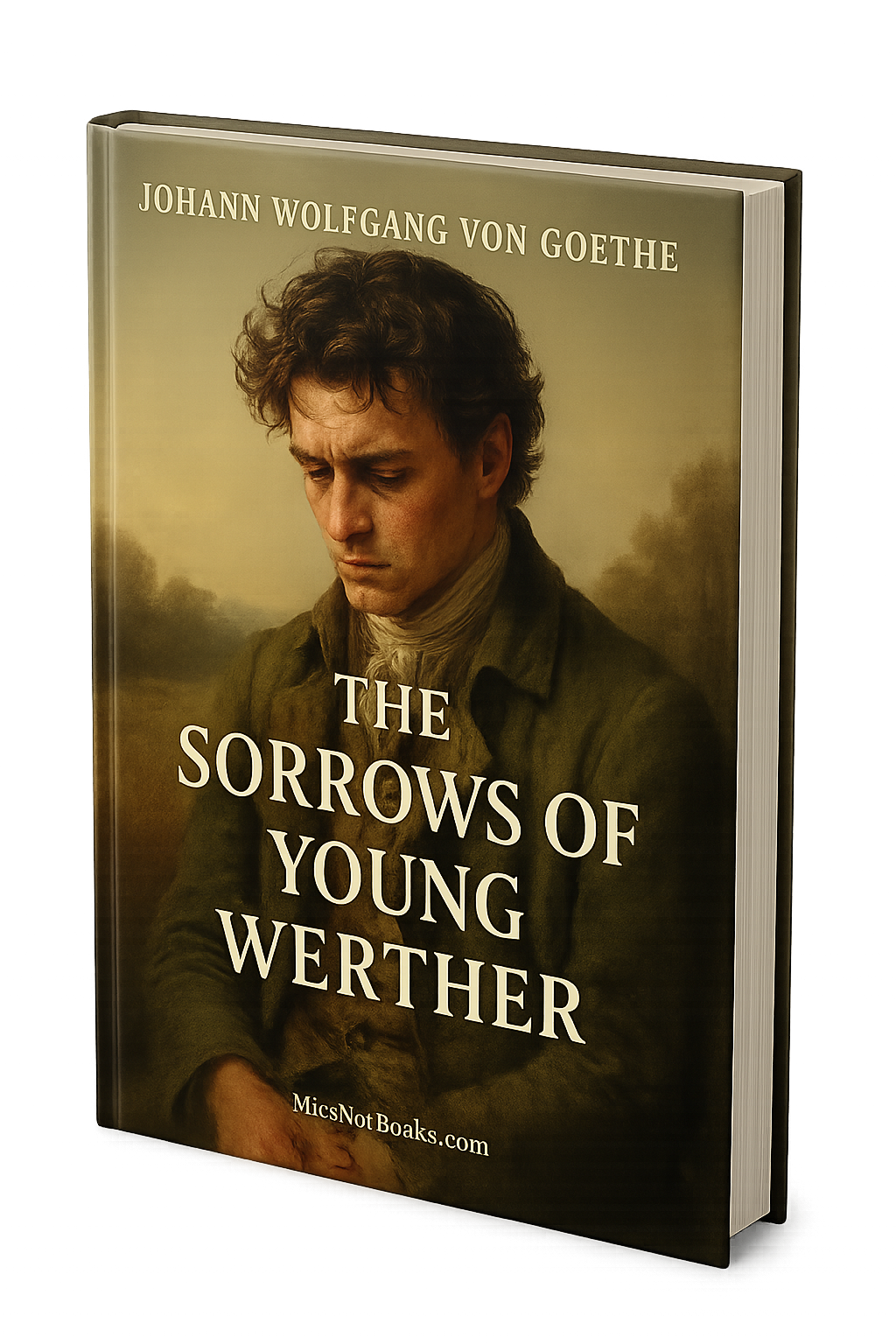
The Sorrows of Young Werther
In the landscape of literary history, few works have profoundly altered the way we understand emotion and individuality as the text that explores the tumultuous depths of human desire and despair. This revolutionary book not only captured the essence of a generation's sentiments but also gave rise to a cultural movement that influenced literature, art, and philosophy. By deftly intertwining the personal struggles of its protagonist with broader themes of love, alienation, and the quest for authenticity, it established a new paradigm of artistic expression that challenged the conventions of its time.
Don’t miss the opportunity to engage with one of the most influential works of all time. Buy it today and explore the foundation of modern emotional complexity and the profound depths of unfulfilled longing.
Core Ideas and Main Arguments:
- The Nature of Passion: The book presents love as a potent and often destructive force, illustrating its psychological impact on the individual.
- Individuality vs. Society: It examines the tension between personal desires and societal expectations, challenging the norms of conventional behavior.
- Romanticism's Birth: The text is a cornerstone of the Romantic movement, emphasizing emotion over reason and the significance of personal experience.
- The Tragic Hero: The protagonist embodies the archetype of the tragic hero, whose internal conflicts lead to profound realizations about existence and the human condition.
Author’s Intentions and Context:
Written during a time when the Enlightenment's rationalism was being questioned, the author sought to capture the tumult of human emotions that defined the late 18th century. Johann Wolfgang von Goethe responded to the emerging Romantic movement by creating a narrative that prioritized inner feelings and the complexities of love, making it a mirror to the struggles faced by the youth of his era. The book was aimed at articulating the deep-seated angst of individuals grappling with their identities in the face of societal constraints.
Structure of the Book:
The work is organized as a series of letters, which allows for an intimate exploration of the protagonist's thoughts and feelings. Key sections include:
- Introduction of the Protagonist: Establishes Werther’s character and setting, effectively drawing the reader into his world.
- Ascending Passion: Charts the progression of Werther's feelings for Lotte, illustrating the beauty and tragedy of love.
- Conflict and Crisis: Highlights the escalating tensions both within Werther and in his relationships, culminating in emotional turmoil.
- Resolution and Conclusion: Concludes with Werther’s ultimate resolution to his suffering, opening discussions on themes of despair and self-determination.
Key Takeaways:
- Emotional depth is paramount in understanding the human experience.
- The conflict between individual desires and societal pressures can lead to tragic outcomes.
- The exploration of unrequited love serves as a timeless reflection of the human condition.
- The book emphasizes the importance of personal experience in shaping one’s identity.
Why It’s Important to Read:
This book remains critically relevant today as it encapsulates the struggles of human emotion and the often-painful quest for meaning. Readers will find value not only in its psychological insights but also in its aesthetic beauty and philosophical undertones. It resonates with anyone who has experienced intense love, sorrow, or existential questioning—be it in the realm of art, literature, or personal growth. Its examination of the human heart continues to inform contemporary discussions about mental health and the complexities of relationships.
Impactful Quotes and Analysis:
-
“The feelings which come over me at this moment are so powerful, so absorbing, that I do not know what to do.”
- This quote encapsulates Werther’s intense emotional state, representing the overwhelming nature of passion and desire that is central to the narrative, and speaks to the universal experience of love and longing.
-
“What is hell? It is a place where one is alone.”
- This poignant reflection on solitude highlights the essence of human connection as critical to our existence, resonating deeply with those who have felt isolated in their struggles.
-
“With you, I can be myself; without you, I am nothing.”
- This insight emphasizes the existential dependency on love and companionship, illustrating how relationships shape our identities.
About the Author:
Johann Wolfgang von Goethe (1749-1832) was a prominent German writer, statesman, and naturalist, whose work spans several genres including poetry, drama, and philosophy. Goethe's contributions to literature and science cemented his legacy as a central figure in the German Romantic movement. His exploration of subjectivity, emotion, and nature influenced countless writers and artists throughout the 19th and 20th centuries, earning him a place among the greatest literary figures in history.
This monumental work is The Sorrows of Young Werther by Johann Wolfgang von Goethe, brought to you for educational purposes by MissNotBooks.com.