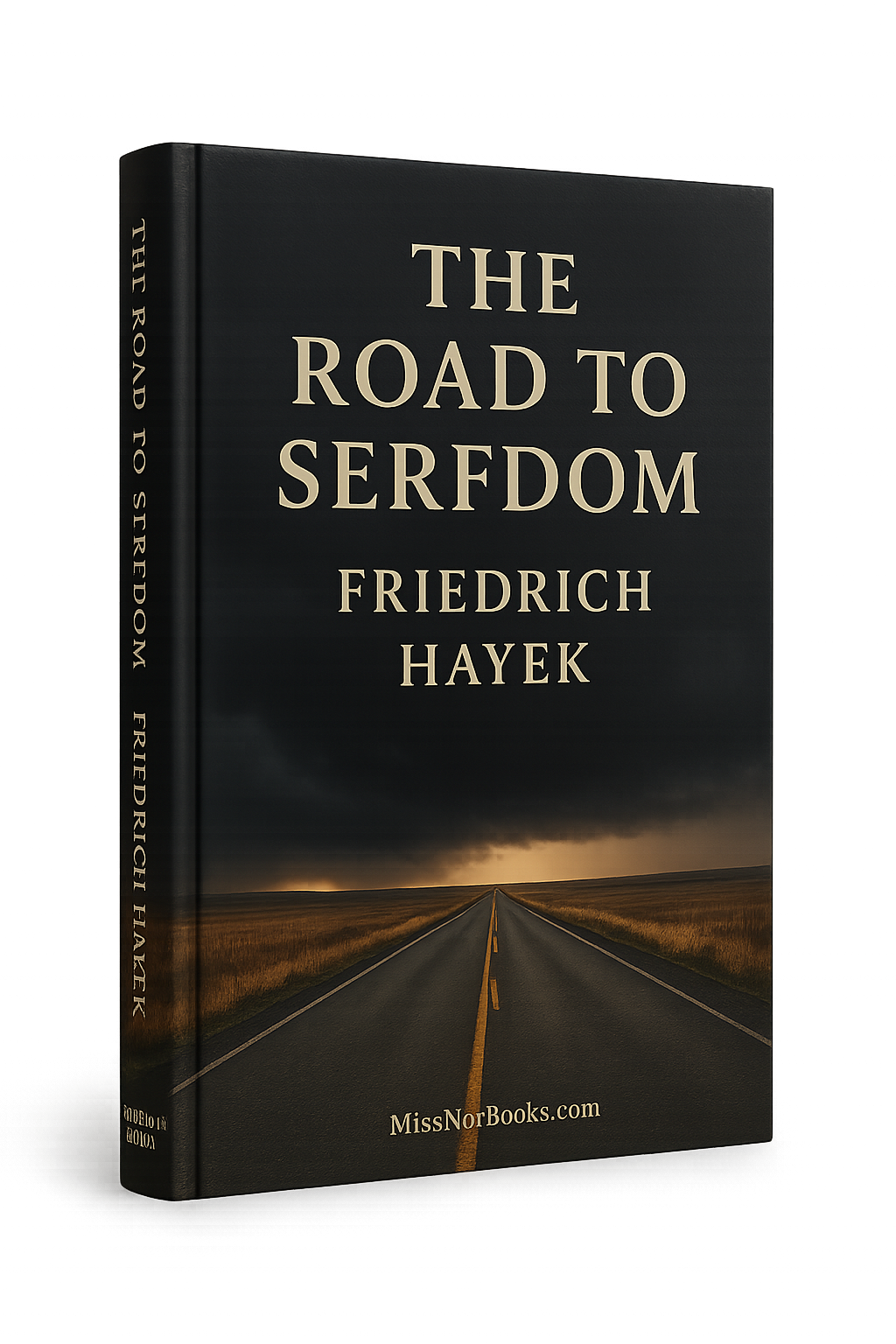
The Road to Serfdom
In an era marked by the clash of ideologies and the search for individual freedom, one book emerged with a thunderous call to defend liberty against the creeping specter of totalitarianism. This text not only changed the course of economic thought but also ignited debates across political, social, and intellectual spheres. Its revolutionary ideas concerning the relationship between economic control and personal freedom continue to resonate today, urging readers to critically evaluate the systems that govern their lives. Don’t miss the opportunity to engage with one of the most influential works of all time. Buy it today and explore the roots of political theory.
Core Ideas and Main Arguments
- Economic Planning vs. Liberty: The text argues that central economic planning inevitably leads to the erosion of individual liberties.
- The Dangers of Collectivism: It critiques collectivist ideologies, illustrating how they can lead to authoritarian governance.
- Spontaneous Order: The author introduces the concept of spontaneous order in free markets, highlighting how individual actions can lead to collective benefits without central direction.
- Complexity of Human Society: It emphasizes the complexity of human society and the limitations of human planning in managing social outcomes.
- Lessons from History: The text draws historical parallels, warning that past societies that prioritized state control over individual freedom faced dire consequences.
Author’s Intentions and Context
The author penned this work in the aftermath of World War II, a period fraught with political upheaval and the rise of totalitarian regimes. Responding to the pervasive ideologies that threatened freedom and democracy, he sought to illuminate the perils of government overreach and economic regulation. His goal was to reinvigorate the discussion about personal liberty and the moral imperatives of a free society. The book challenges the prevailing trends of the time, advocating for a return to classical liberal principles in the face of growing state power.
Structure of the Book
The book is structured into several key parts:
- Introduction to the Concept: Establishes the foundational principle that economic freedom is essential for political freedom.
- The Case Against Central Planning: Delves into the mechanisms through which planning disrupts both economic productivity and civil liberties.
- Historical Analysis: Offers a critique of the historical instances where government control led to oppressive regimes.
- The Future of Freedom: Proposes a vision for a society founded on individual rights, market economies, and voluntary cooperation.
Each section builds upon the previous arguments, offering a comprehensive exploration of how freedom and economic systems are intertwined.
Key Takeaways
- Freedom is Essential: Individual freedom is not merely a value, but essential for human flourishing and societal progress.
- The Incompatibility of Totalitarianism and Freedom: Governments that impose control over the economy usually suppress personal liberties.
- Market Dynamics: Free markets operate through complex, self-organizing systems that can better allocate resources than central authority.
- Cautionary Historical Lessons: History shows a troubling pattern; societies that have surrendered freedom for security have often ended in tyranny.
Why It’s Important to Read
The ongoing relevance of this book is undeniable, as contemporary debates about the role of government in the economy echo its central themes. Politicians, economists, students of political science, and activists will find value in its timeless wisdom about the delicate balance between state power and individual liberty. Whether one is considering social policies or engaging in philosophical discourse, understanding the arguments presented in this book is crucial for navigating today’s political landscape.
Impactful Quotes and Analysis
-
"Emergencies have always been the pretext on which the safeguards of individual liberty have been eroded."
- This powerful assertion serves as a warning against sacrificing freedom for security, a principle that remains pertinent in political discussions today.
-
"There is all the difference in the world between treating people equally and attempting to make them equal."
- This quote encapsulates the tension between equality of opportunity and equality of outcome, challenging readers to reconsider their views on social justice.
-
"The road to serfdom is paved with good intentions."
- A striking reminder that well-meaning policies can lead to disastrous outcomes when liberties are compromised for utopian ideals.
About the Author
Friedrich August von Hayek (1899–1992) was an Austrian economist and political philosopher renowned for his defense of classical liberalism and free-market capitalism. A key figure in the Austrian School of Economics, Hayek's insights were pivotal during the mid-20th century, particularly in opposing socialist doctrines. His work has had a lasting impact on economic theory and political philosophy, influencing policymakers and thinkers around the globe.
This monumental work is The Road to Serfdom by Friedrich Hayek, brought to you for educational purposes by MissNotBooks.com.