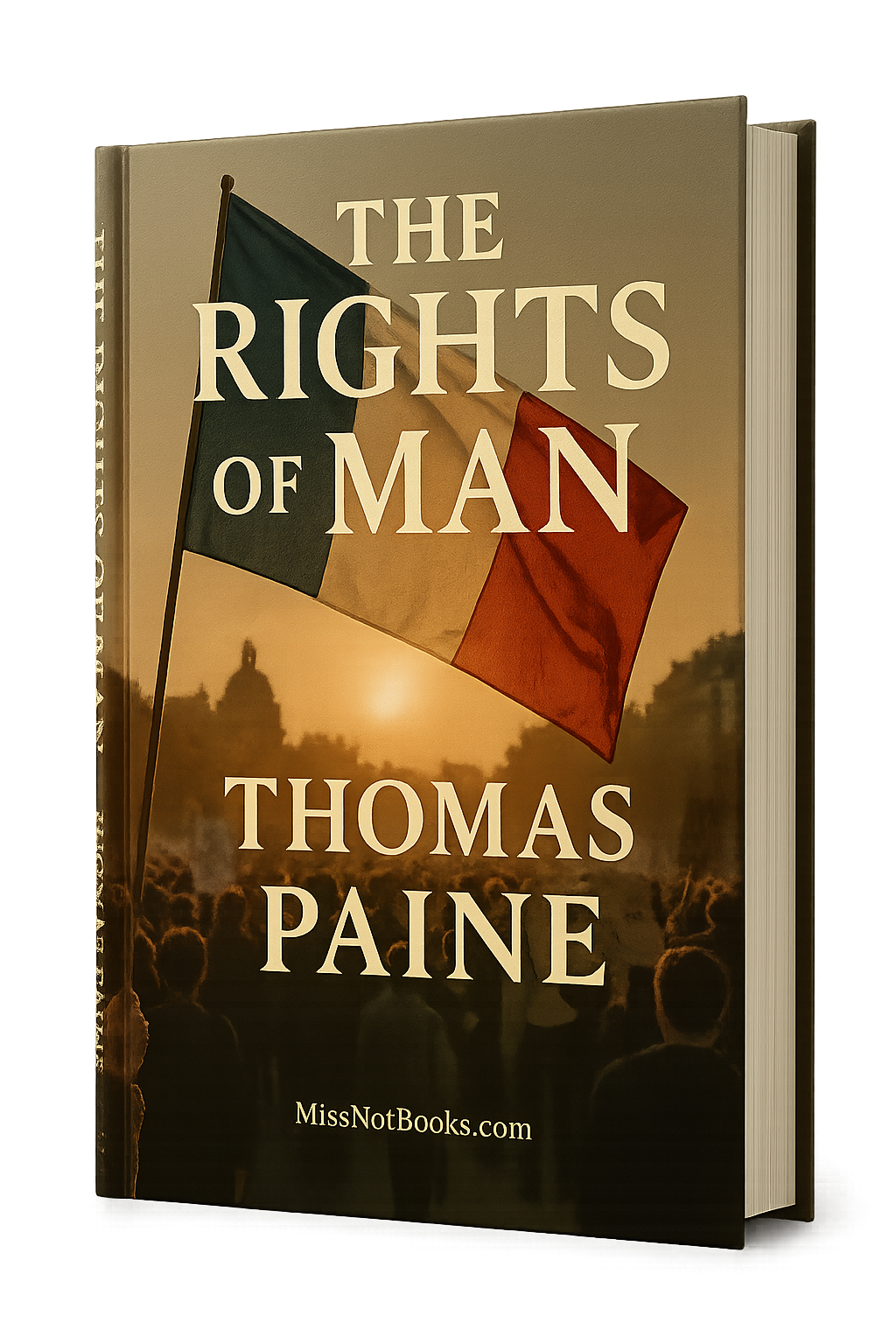
The Rights of Man
In an age marked by upheaval and revolution, one work emerged as a beacon of hope, challenging the status quo and advocating for the rights and dignity of all individuals. This book transformed political thought by boldly proposing that governments should be established by the consent of the governed and stand accountable to them. It introduced powerful ideas about human rights, equality, and the necessary conditions for societal progress that continue to resonate deeply in contemporary discourse. The challenges it presented to tyranny and oppression reverberated throughout history, inspiring movements for democracy and justice around the world. Don't miss the opportunity to engage with one of the most influential works of all time. Buy it today and explore the roots of modern political theory.
Core Ideas and Main Arguments
- Natural Rights: The text argues that all individuals inherently possess rights that cannot be infringed upon by government or society.
- Critique of Monarchy: It deconstructs the legitimacy of hereditary monarchy, arguing that political power should not be passed through lineage but through the consent of the people.
- Social Contract: The author asserts that governments are a construct based on social agreement aimed at protecting the rights of individuals, emphasizing the idea that people should shape their societies.
- Call to Action: A strong appeal is made for individuals to stand up against oppression and advocate for justice and equality in their societies.
Author’s Intentions and Context
Written during the late 18th century, this work arose at a time when absolute monarchies were being challenged across Europe and the American colonies. The author aimed to respond to the pressing needs of revolutionary movements and to articulate a vision of a society built on democratic principles and individual freedoms. His goal was not only to inform but to galvanize ordinary people to demand their rights and seek radical political change. The tumult of the French and American Revolutions provided a fertile backdrop for these revolutionary ideas, which sought to empower citizens and dismantle oppressive structures.
Structure of the Book
The book is organized into a series of cogent essays that each build upon key themes:
- Introduction to Human Rights: Establishes the foundation for the arguments that follow.
- Critique of Monarchical Authority: Dismantles the justification for kingship and authoritarian rule.
- The Foundation of Government: Defines the role and responsibility of governments to their citizens.
- Call for Reform: Concludes with a powerful exhortation for the need to reevaluate and reform societal structures to align with democratic ideals.
Key Takeaways
- The inalienable rights of individuals are paramount and must be protected by any legitimate government.
- The idea of consent is central to the legitimacy of political authority.
- Revolution against tyranny is a necessary step towards achieving freedom and justice.
- Understanding the historical context of rights can empower individuals today in their fight for equality.
Why It’s Important to Read
This work remains incredibly relevant as contemporary issues of governance, civil rights, and social justice continue to evolve. It offers readers critical insights into the origins of modern democracy and the philosophical underpinnings of human rights. Activists, scholars, and anyone interested in understanding the dynamics of power and resistance will find this book an invaluable resource that informs current social and political movements.
Impactful Quotes and Analysis
- "The cause of America is in a great measure the cause of all mankind." This statement captures the universal aspiration for freedom and serves as a rallying cry for justice beyond borders. It highlights the interconnectedness of struggles for rights and liberties.
- "Government is a necessary evil." This quote encapsulates the author's view that while government is essential for order, it often poses a risk of intrusion into individual liberties. This idea remains pivotal in debates regarding the role of government in society today.
- "Those who expect to reap the blessings of freedom, must, like men, undergo the fatigue of supporting it." This emphasizes the need for active participation and vigilance in maintaining rights and freedoms, a message that resonates with any generation striving for justice.
About the Author
Thomas Paine (1737–1809) was an influential political philosopher and writer whose works inspired revolutionary movements and shaped modern political thought. Born in England, Paine emigrated to America, where his writings played a pivotal role in galvanizing support for independence from Britain. His later works, advocating for reason and humanitarian principles, solidified his legacy as a foundational figure in the history of democratic ideals and human rights.
This monumental work is The Rights of Man by Thomas Paine, brought to you for educational purposes by MissNotBooks.com.