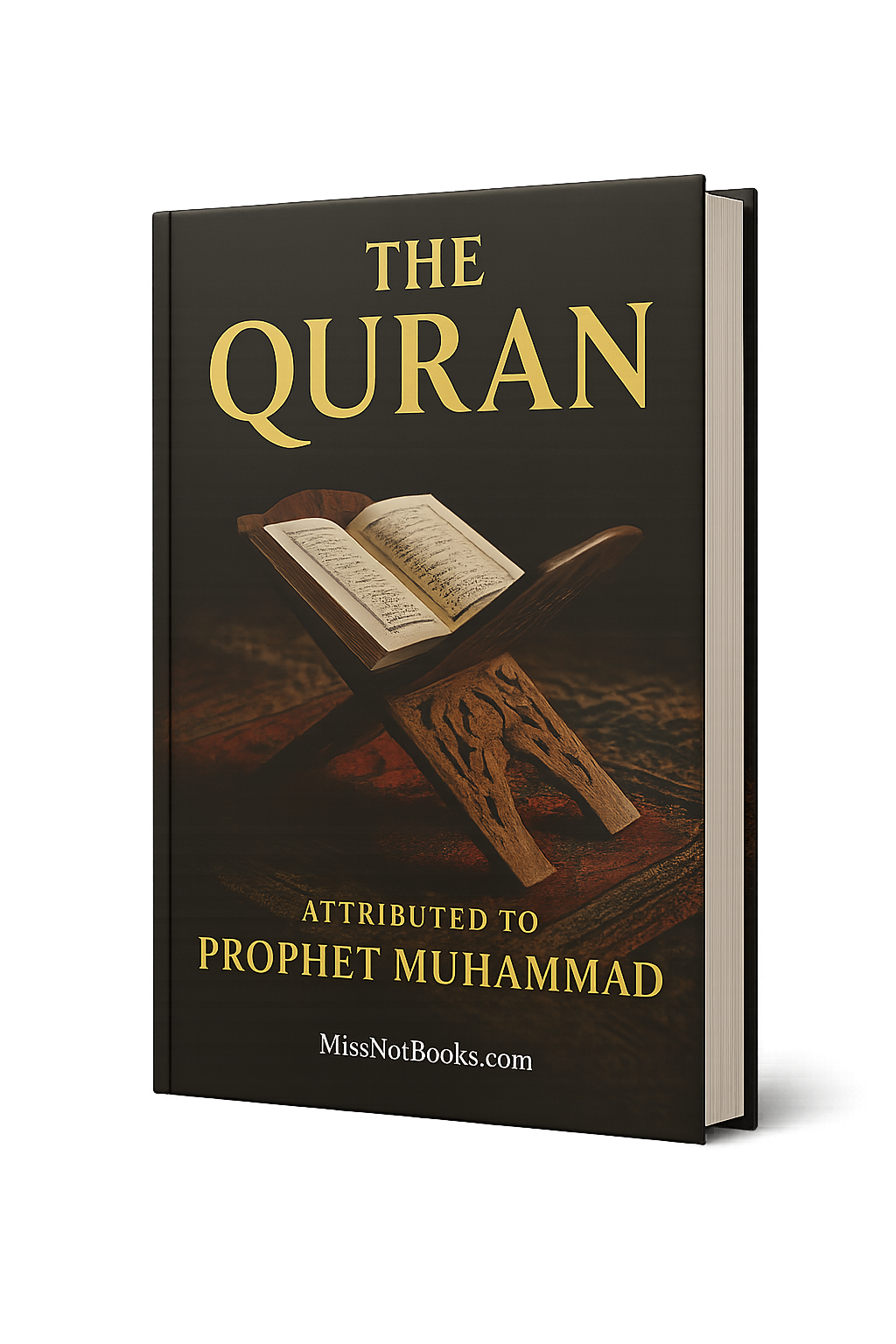
The Quran
In the vast landscape of human history, few texts have wielded as transformative an influence on civilization as one profound book that has shaped religious, ethical, and social thought for centuries. This book revolutionized spirituality and laid the foundations for a holistic worldview that transcends individual nations and cultures, presenting a framework for both personal conduct and communal governance. It challenges readers to reflect deeply on their existence and their relationship with the divine, encapsulating a profound understanding of life's purpose that resonates across time and space.
Core Ideas and Main Arguments
- Monotheism: The book proclaims an unyielding belief in the oneness of God, presenting a clear and powerful foundation for faith that centralizes the human experience around worship and submission.
- Moral Guidance: It offers a comprehensive system of ethics encompassing personal behavior, social justice, and community responsibility, emphasizing compassion, charity, and integrity.
- Revelation and Humanity: The text serves as a record of divine guidance, addressing the human condition and the challenges of moral integrity in diverse social settings.
- Justice and Equality: It advocates for fairness and social equity, emphasizing the importance of community welfare and accountability among individuals, leaders, and institutions.
- Spirituality and Practice: With detailed instructions on ritual practices, it connects the spiritual life with everyday activities, fostering a deep sense of devotion in daily routines.
Author’s Intentions and Context
The author set out to convey a message of divine revelation at a time marked by tribal divisions, rampant injustice, and spiritual malaise in 7th century Arabia. Responding to the chaos and moral uncertainty of the era, the intent was to establish a cohesive, ethical community grounded in spiritual awareness and accountability. This work aimed to address the philosophical voids and existential questions plaguing humanity and to provide answers that were applicable for all time, transcending cultural and geographical boundaries.
Structure of the Book
The book is organized into chapters, known as surahs, each addressing various aspects of life, spirituality, law, and ethics.
- Introduction of Key Doctrines: Early chapters focus on the fundamental beliefs, establishing a clear vision of monotheism and divine authority.
- Legal and Social Regulations: Subsequent sections provide guidelines on personal conduct, family law, and social justice, illustrating a comprehensive approach to regulating life in accordance with divine principles.
- Narratives and Reflection: Interspersed throughout are narratives that reflect on the lives of earlier prophets, serving as allegories for moral lessons and spiritual growth.
Key Takeaways
- The imperative of monotheism shapes the moral landscape and interacts profoundly with human identity and purpose.
- Ethical principles are intricately linked to one’s understanding of duty and community within both a spiritual and societal context.
- The call to justice and equality serves as a timeless reminder of the responsibility each individual bears in fostering a just society.
- Rituals and spirituality provide a meaningful structure to daily life, engaging believers in a continuous reflection on values.
Why It’s Important to Read
The ongoing relevance of this work cannot be overstated; its teachings resonate with anyone seeking truth, morality, and purpose in a complex world. The intersection of spirituality, ethics, and social responsibility makes it essential reading for individuals of all backgrounds—whether scholars, practitioners, or those seeking deeper meaning in their spiritual journeys. In understanding this work, one not only gains insights into a rich cultural history but also discovers universal truths applicable to contemporary challenges.
Impactful Quotes and Analysis
-
“Indeed, Allah does not change the condition of a people until they change what is in themselves.”
This profound insight emphasizes personal responsibility as a gateway to social transformation, highlighting that collective change begins with the individual’s inner life. -
“And We have not sent you, [O Muhammad], except as a mercy to the worlds.”
This quote underscores the central role of compassion in the teachings, indicating that the message is fundamentally about fostering mercy and kindness in human interactions. -
“There is no compulsion in religion.”
This powerful declaration speaks to the freedom of belief, highlighting the importance of personal conviction and the respect for individual choice—an essential aspect of authentic faith.
About the Author
Muhammad ibn Abdullah (c. 570-632 CE) was a religious leader and the founder of Islam. Born in Mecca, he received revelations that would become the cornerstone of a major world religion. His legacy is not only reflected in spiritual guidance but also in the ethical and social frameworks that govern millions of lives today. His influence extends beyond religious doctrine into law, culture, and identity, making him one of history’s most transformative figures.
This monumental work is The Quran by Prophet Muhammad, brought to you for educational purposes by MissNotBooks.com.