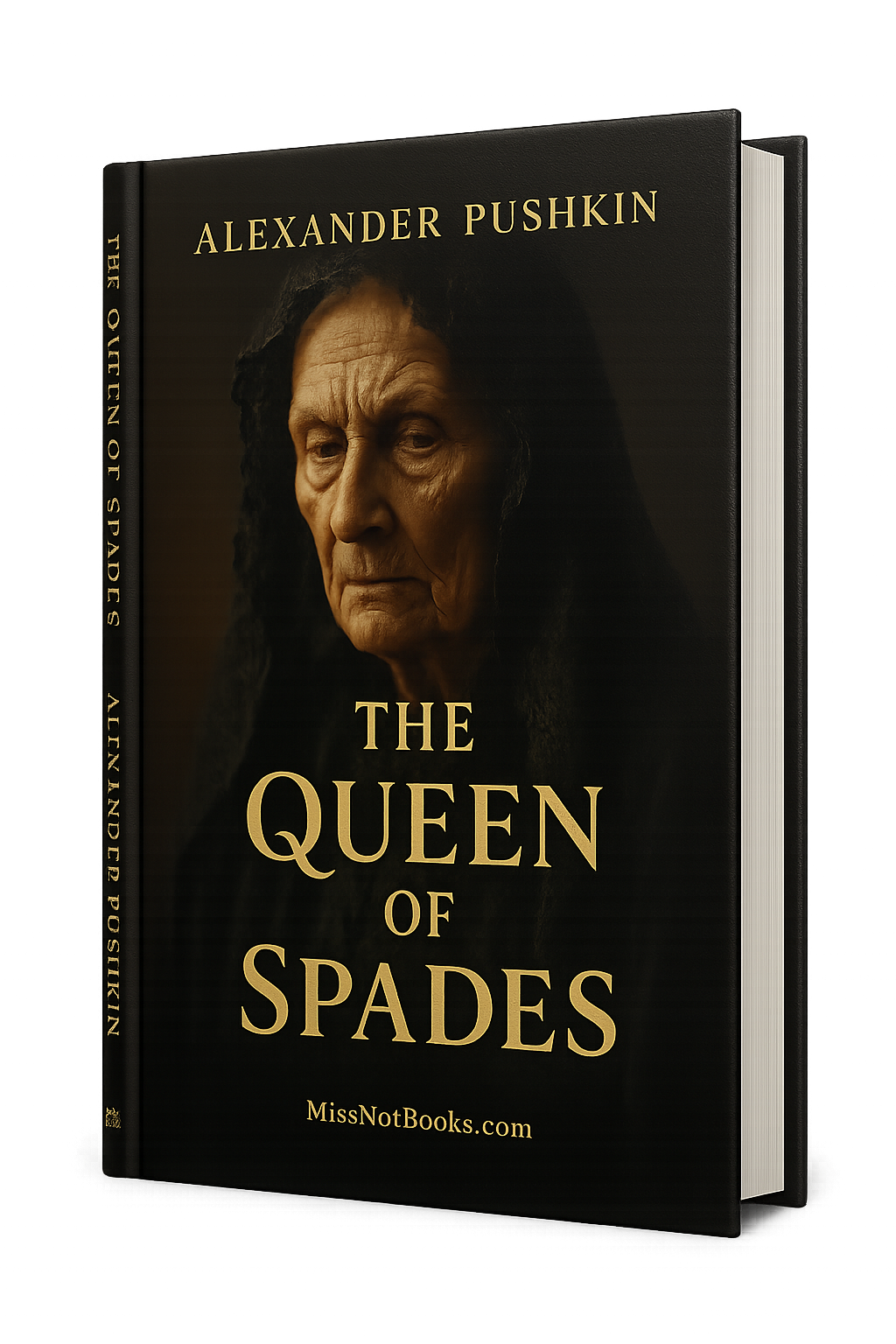
The Queen of Spades
In the grand tapestry of literature, few works possess the power to redefine genre conventions and explore the depths of human ambition and folly. This particular narrative immerses readers in the murky waters of obsession, greed, and the supernatural, unraveling the intricate relationships between chance and fate. Its profound insights into the human psyche and its consequences resonate across generations, reshaping our understanding of morality and destiny. With this work, readers are invited to confront the age-old struggle between desire and inevitability, a theme that continues to reverberate through the annals of literary history.
Core Ideas and Main Arguments:
- Folly of Obsession: The book delves deeply into the perilous path of obsession, illustrating how the pursuit of wealth and power can lead to one's moral decline and ultimate doom.
- Interplay of Chance and Fate: It intricately weaves the themes of luck and destiny, posing philosophical questions about whether our choices are genuinely free or rather predetermined by unseen forces.
- Psychological Depth: The characters within the narrative exemplify the complexities of human motivation, showcasing a range of emotions from desperation to ambition, revealing the fragile nature of sanity under pressure.
- Critique of Social Hierarchies: It presents a scathing analysis of the societal structures pertaining to wealth and class, examining how these dynamics corrupt relationships and lead to tragic outcomes.
Author’s Intentions and Context: The author sought to illuminate the darker aspects of human nature during a time of significant social and political change in Russia. The early 19th century was marked by rising tensions between traditional values and burgeoning modernity, with profound questions surrounding morality and ethics coming to the forefront. By exposing the tragic consequences of unchecked ambition and the moral vacuity of the elite, the author aimed to challenge readers to reflect on their values and the societal norms dictating ambition and success.
Structure of the Book:
- Exposition: Introduces the protagonist's desires and sets the foundation for their character.
- Rising Action: Developments lead the protagonist deeper into obsession, expanding the narrative's tension.
- Climax: A peak moment where the consequences of ambition become starkly evident, forcing a confrontation with fate.
- Resolution: Concludes with a powerful reflection on the outcomes of choices made, leaving readers to ponder the moral implications.
Key Takeaways:
- The pursuit of wealth can lead to deep personal ruin.
- Human desires often blind individuals to the repercussions of their actions.
- Understanding the role of chance in life can inspire humility and caution.
- Social commentary on the destructive nature of the elite's obsession with power and status.
Why It’s Important to Read: This work remains a pivotal exploration of human ambition, resonating with anyone dealing with the complexities of desire and ethics in contemporary society. Those engaged in psychological studies, literature, philosophy, or socio-economic discussions will find profound insights that provoke personal reflection and societal critique. Its timeless themes make it essential reading for anyone seeking to navigate the intricate interplay between personal aspirations and the moral landscape.
Impactful Quotes and Analysis:
-
“The greatest happiness is to know the source of unhappiness.”
This line encapsulates the profound realization that understanding our own motivations can lead to a more profound engagement with our lives and choices, urging readers to seek self-awareness amidst their pursuits. -
“Luck is a mistress that may be wooed but never won.”
This poignant reflection on the capricious nature of fortune emphasizes the futility of trying to control luck, underscoring the book’s central theme of the unpredictable forces that govern our lives. -
“Obsession is the most potent form of magic.”
This quote powerfully conveys how fixation can distort reality and lead to ruin, reminding readers of the treacherous depths of desire that can ensnare even the most rational individuals.
About the Author:
Alexander Pushkin (1799–1837) is often hailed as the father of Russian literature, renowned for his poetic prowess and narrative innovation. His works laid the foundation for modern Russian literature, fusing folklore with deep psychological insight. Pushkin's legacy lives on through his exploration of themes such as love, betrayal, and the human condition, influencing countless writers and artists both in Russia and across the world.
This monumental work is The Queen of Spades by Alexander Pushkin, brought to you for educational purposes by MissNotBooks.com.