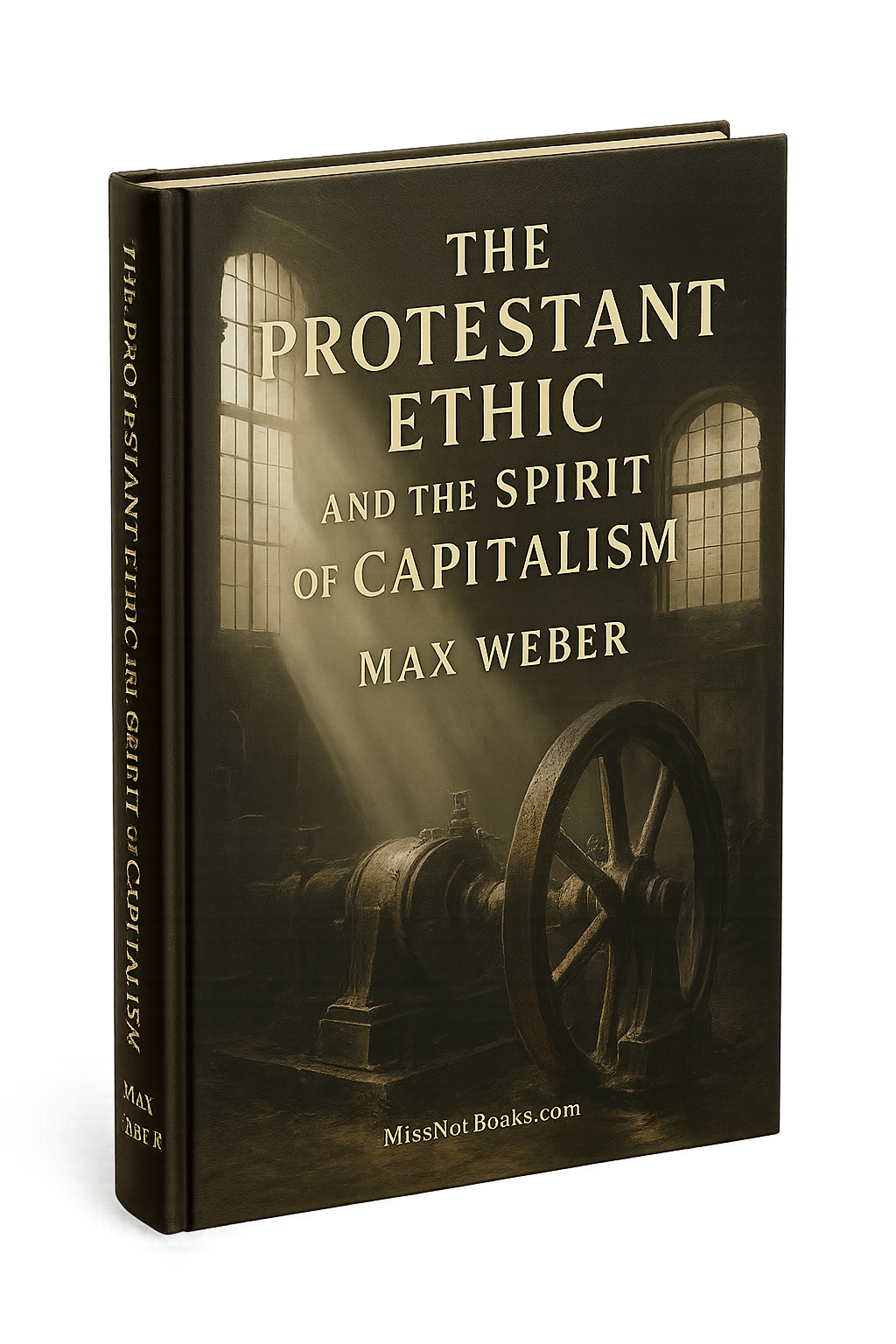
The Protestant Ethic and the Spirit of Capitalism
In the pantheon of transformative literature, few works have so profoundly reshaped the landscape of sociology, economics, and cultural studies as the book in question. It revolutionized our understanding of how cultural forces influence economic behavior, ardently challenging the prevailing paradigms of the late 19th and early 20th centuries. Against the backdrop of an industrializing world, this book scrutinizes the complex relationship between spirituality and material success, positing that certain values inherent in Protestantism not only fostered capitalism but ultimately shaped modern Western society itself. Its bold insights invite readers to reflect on the very foundations of economic activity and its moral implications.
Core Ideas and Main Arguments:
- The Relationship Between Religion and Economic Behavior: The book argues that the Protestant ethic, particularly Puritanism, encouraged traits like hard work, frugality, and efficiency, which are fundamental to capitalist enterprise.
- The Idea of the 'Calling': It posits that the concept of a 'calling' transforms everyday labor into a divine pursuit, making work a means of demonstrating faith.
- Rationalization: It discusses the shift from traditional, emotionally driven practices to a rational approach to work and life that characterizes capitalist societies.
- Cultural Context of Economic Systems: The book challenges the notion that economic systems are purely materialistic by linking them deeply with cultural and religious beliefs.
Author’s Intentions and Context: The author set out to elucidate the social and cultural underpinnings of capitalism at a time when Europe faced unprecedented economic transformation and sociopolitical upheaval. He navigated the duality of religion's ascendance in public life and its role in shaping modern economic practices. By situating his arguments in the context of industrialization and the decline of traditional authority, he aimed to articulate a framework for understanding how deeply ingrained cultural values impact economic realities.
Structure of the Book: The book is meticulously organized into distinct sections, each developing a specific thesis:
- Introduction to the Problem: Sets the tone for the discussion on capitalism and religion.
- The Protestant Asceticism: Explores how ascetic practices fostered a capitalistic spirit.
- The Idea of the Calling: Digs into how religious convictions about work shape attitudes towards economic success.
- Consequences of the Protestant Ethic: Examines the broader implications of these values on society and culture. Each section builds a cumulative argument that reaches an insightful conclusion about the intricate relationship between faith and the rise of capitalist society.
Key Takeaways:
- Economic Behavior is Culturally Rooted: Readers will recognize that our economic choices are often influenced by cultural and religious beliefs.
- Work as Worship: The transformative notion that labor can be a sacred pursuit highlights the moral dimensions of economic activity.
- Rationalization and Modernity: Understanding rationalization opens a discussion about modernity and how cultural values drive social progress.
Why It’s Important to Read: This work remains vital in today's society, where discussions around ethics in capitalism are ever more pressing. Readers from various fields—sociology, economics, cultural studies, and religious studies—will find immense value in examining how historical beliefs shape contemporary practices. The insights provided serve not only as a historical account but as a lens through which to understand our modern economic landscapes and their ethical ramifications.
Impactful Quotes and Analysis:
-
"The spirit of capitalism is inseparable from the religion of modernity."
This quote encapsulates the central thesis of the work, reflecting how intertwined economic systems are with cultural narratives. -
"Duty is a more essential factor in the protestant ethic than happiness."
Here, the author underscores how the weight of responsibility and moral obligation prevails in shaping labor values over personal fulfillment. -
"Work is a calling, and to work well is to live well."
This profound statement emphasizes the sanctity of labor, suggesting a deep moral undertone to economic participation.
About the Author: Max Weber (1864-1920) was a German sociologist, philosopher, and political economist, considered one of the founding figures of modern social science. His interdisciplinary approach combined sociology, history, and psychology, leading to influential theories in bureaucracy, authority, and capitalism. Weber's intellectual legacy endures, deeply influencing contemporary thought in various fields, particularly in the understanding of societal structures and cultural nuances.
Don’t miss the opportunity to engage with one of the most influential works of all time. Buy it today and explore the foundation of modern capitalism and its cultural roots. This monumental work is The Protestant Ethic and the Spirit of Capitalism by Max Weber, brought to you for educational purposes by MissNotBooks.com.