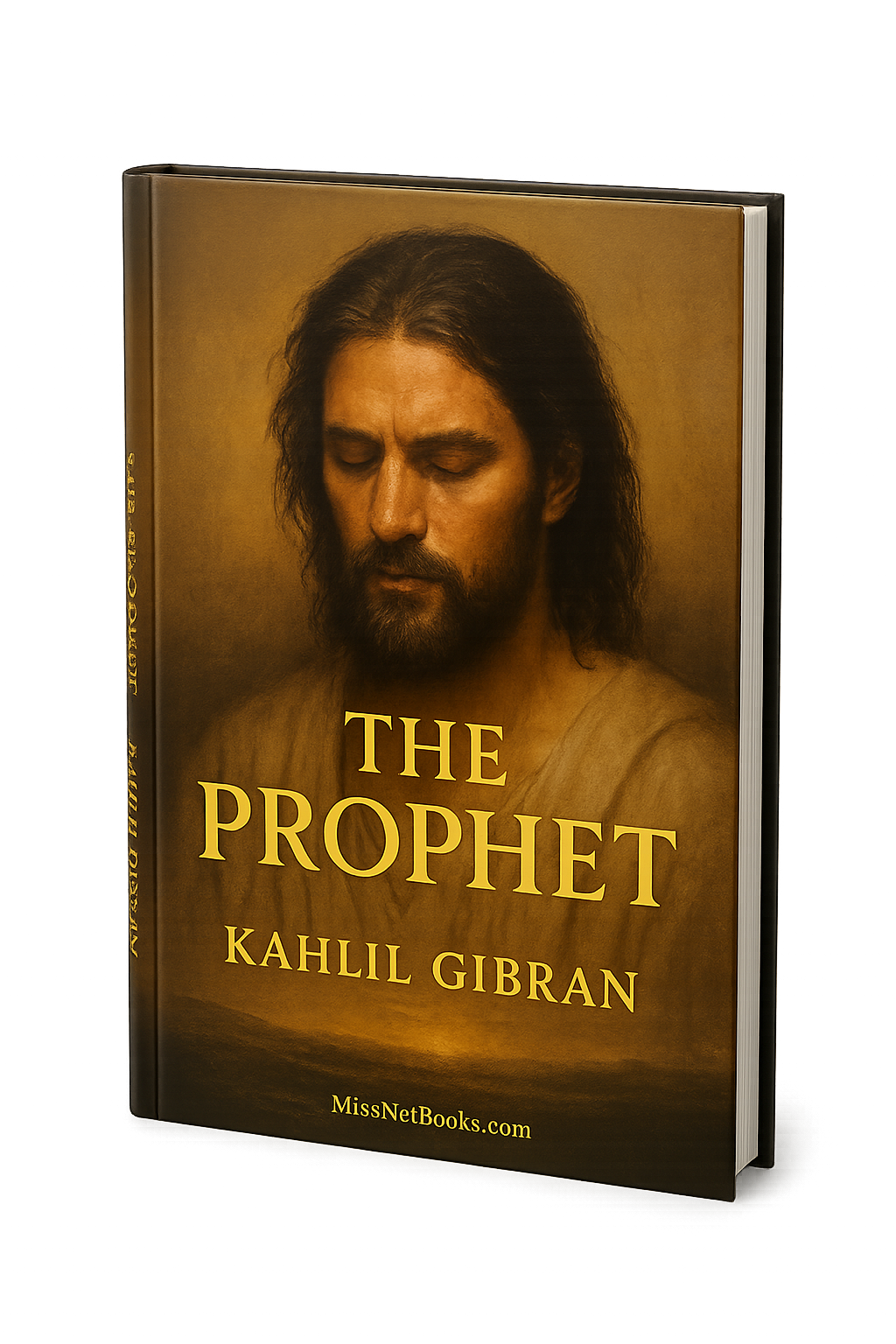
The Prophet
In an era marked by disconnection and apathy, one work transcended boundaries to foster a profound dialogue on the human condition, love, and spirituality. This book emerged as a beacon of philosophical thought and poetic beauty, revolutionizing the way we engage with our greatest existential questions. Its lyrical prose and timeless insights challenge conventional beliefs, inviting readers to reflect on life's most cherished experiences and the complexities of human existence. Its impact has been felt across cultures and generations, making it an essential cornerstone of literary and spiritual exploration.
Core Ideas and Main Arguments:
- Love and Relationships: This work offers deep reflections on love, presenting it as the driving force of existence, emphasizing its dual nature of joy and suffering.
- Existence and Purpose: It challenges readers to ponder the meaning of life, encouraging them to find personal purpose within the grand tapestry of existence.
- Social Critique: The book critiques societal norms and conventions, urging individuals to rise above materialism and embrace spiritual fulfillment.
- Unity of Humanity: A unifying thread throughout is the interconnectedness of all human experiences, advocating for compassion and understanding among individuals.
- Nature and Spirituality: The narrative celebrates the beauty of nature, presenting it as a reflection of the divine and a source of inspiration.
Author’s Intentions and Context:
Written during a time of social change and personal upheaval in early 20th-century America, the author aimed to articulate the struggles of the human spirit while offering guidance and solace. He sought to address profound philosophical questions challenging conventional thought, influenced by both Eastern and Western philosophies, as well as his own spiritual journey. The work encapsulates the longing for understanding and connection during a period of rapid modernization and existential uncertainty.
Structure of the Book:
The book is elegantly organized into 26 poetic essays, each focusing on a different aspect of life—love, marriage, work, joy, sorrow, and freedom, among others. Each essay stands alone yet contributes to a cohesive exploration of the human experience. The narrative flows like a conversation, allowing readers to absorb the wisdom of each topic while encouraging personal reflection.
Key Takeaways:
- Love is both a source of joy and a potential source of pain, teaching us resilience.
- The search for meaning enriches our lives and fosters personal growth.
- Our shared humanity transcends cultural differences, advocating the need for compassion and understanding.
- Embracing nature can illuminate the path to spiritual awakening and insight.
Why It’s Important to Read:
This book remains remarkably relevant, resonating with anyone who seeks deeper understanding in love, spirituality, and human connection. It speaks to philosophers, poets, and everyday readers alike, offering insights that can guide actions and shape perspectives in an increasingly fragmented world. Engaging with its profound messages fosters empathy and introspection, enriching one’s journey through life.
Impactful Quotes and Analysis:
-
"Your children are not your children. They are the sons and daughters of Life’s longing for itself."
This quote speaks profoundly to notions of individuality and the importance of nurturing independence rather than ownership in parent-child relationships. -
"Love knows not its own depth until the hour of separation."
Here, the author captures the bittersweet essence of love, illustrating how true appreciation often emerges through loss and longing, a sentiment universally recognized. -
"The most alive moment comes when we believe in a person."
This assertion underscores the transformative power of belief in others, illustrating how faith in our connections fuels our vitality and sense of purpose.
About the Author:
Kahlil Gibran (1883–1931) was a Lebanese-American poet, writer, and philosopher. Gibran is best remembered for his profound explorations of spirituality and humanity interwoven with poetic elegance. His enduring legacy rests in the capacity of his work to traverse cultural divides, attracting readers worldwide. His contributions to literature have established him as a pivotal figure in the realm of philosophical poetry.
Don’t miss the opportunity to engage with one of the most influential works of all time. Buy it today and explore the beauty of human language and the interconnectedness of life. This monumental work is The Prophet by Kahlil Gibran, brought to you for educational purposes by MissNotBooks.com.