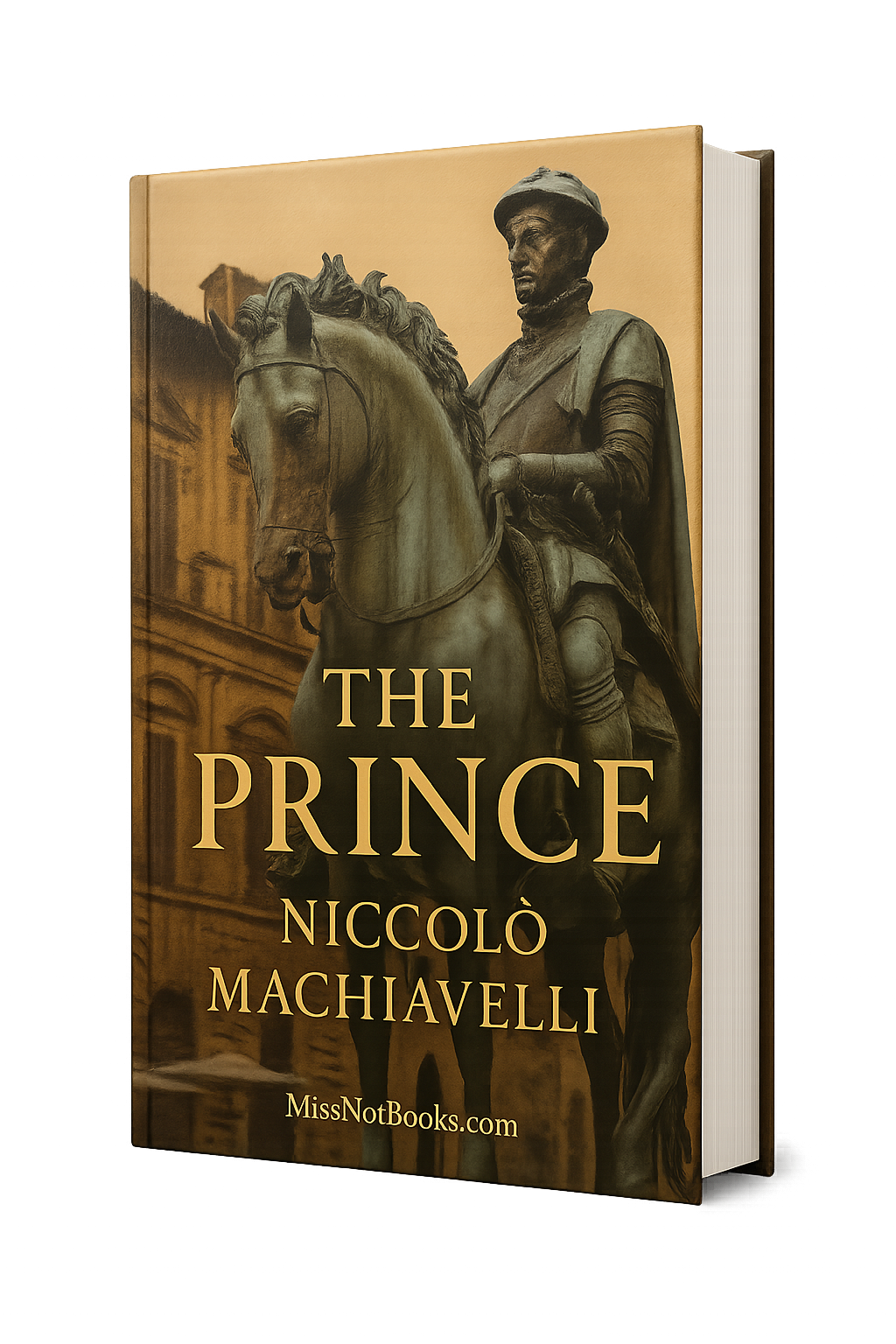
The Prince
In an age of political upheaval and shifting power dynamics, a seminal text emerged that would forever alter the landscape of political theory. Its insights challenged traditional notions of morality in governance, reshaping how leaders approached the art of ruling and the nature of statecraft. This groundbreaking work introduced pragmatic realism into the dialogue about power, suggesting that the often harsh realities of human nature necessitate a departure from idealism. The text continues to reverberate through modern political thought, making it essential for anyone seeking to understand the intricacies of leadership and authority.
Core Ideas and Main Arguments
- Realism over Idealism: The author argues that effective governance often requires actions that may not align with traditional moral values, emphasizing practicality over ethical considerations.
- The Role of Fear and Love: He famously posits that it is better for a ruler to be feared than loved, as fear maintains order and respect, even amid distrust.
- The Importance of Adaptability: The text reinforces the idea that leaders must be adaptable, able to change their methods and approaches in response to unpredictable circumstances.
- Human Nature: A key tenet is the belief that humans are inherently self-interested, and rulers must understand and navigate this reality to maintain control.
- Civic Virtue vs. Political Necessity: The tension between the ideals of civic virtue and the pragmatic necessities of power continues to be a focal point in discussions on governance.
Author’s Intentions and Context
Written during a tumultuous period in Renaissance Italy, the author sought to provide practical guidance for rulers facing the chaotic interplay of political factions, foreign invasions, and internal strife. He aimed to distill the lessons of history and classical philosophy into actionable advice, addressing the specific cultural and political challenges of his time, marked by the fragility of city-states and constant threats to stability. By elevating political realism and strategic cunning, the author hoped to forge a new understanding of leadership that resonated with the needs of contemporary rulers.
Structure of the Book
The work is organized into several concise chapters, each addressing specific themes related to power and governance:
- Different Types of Principalities: An exploration of how various forms of states are governed.
- Military Matters: A discussion on the importance of a strong military presence and strategies.
- The Role of Fortune: An analysis of the unpredictable nature of fortune and its impact on political success.
- Advisors and Ministers: Insights into the necessity and peril of selecting trustworthy advisors.
This structure methodically guides the reader through a comprehensive framework of effective rule, illustrating how each element contributes to the overarching thesis that power must be understood and wielded with both caution and cunning.
Key Takeaways
- Effective leadership often requires morally ambiguous actions.
- The balance between fear and love is vital for political stability.
- Adaptability is a key trait for successful rulers.
- Understanding human nature is fundamental to maintaining power.
- The conflict between ethical governance and political strategy is a perennial debate.
Why It’s Important to Read
This text is not merely a historical artifact; it serves as a foundational work for understanding the complexities of political power that resonate to this day. Politicians, students of political science, and anyone interested in leadership will benefit from engaging with its insights, as it prompts reflections on modern governance, ethical dilemmas, and the human experience. By delving into the stark realities presented in this book, readers can better grasp the nuances of leadership and the implications of their decisions in a continually evolving sociopolitical landscape.
Impactful Quotes and Analysis
-
“The ends justify the means.”
This succinct assertion encapsulates the core of Machiavelli's philosophy, provoking thoughtful consideration of moral compromise in the quest for power and stability. -
“It is better to be feared than loved, if you cannot be both.”
This powerful dichotomy reflects a profound understanding of human psychology, suggesting that fear can be a more reliable tool for governance than affection. -
“Fortune is a woman, and if you want to keep her down, you have to beat her.”
This metaphor highlights the unpredictable and often tumultuous nature of fortune and success, urging leaders to proactively confront challenges rather than passively wait for luck.
About the Author
Niccolò Machiavelli (1469–1527) was an Italian diplomat, philosopher, and historian, renowned for his contributions to political theory. His insights have shaped modern understandings of statecraft and leadership, establishing him as a pivotal figure of the Renaissance. His legacy endures in the discussions surrounding ethics, power, and human behavior, cementing his status as a crucial thinker whose ideas continue to challenge and inspire.
Don’t miss the opportunity to engage with one of the most influential works of all time. Buy it today and explore the roots of political theory. This monumental work is The Prince by Niccolò Machiavelli, brought to you for educational purposes by MissNotBooks.com.