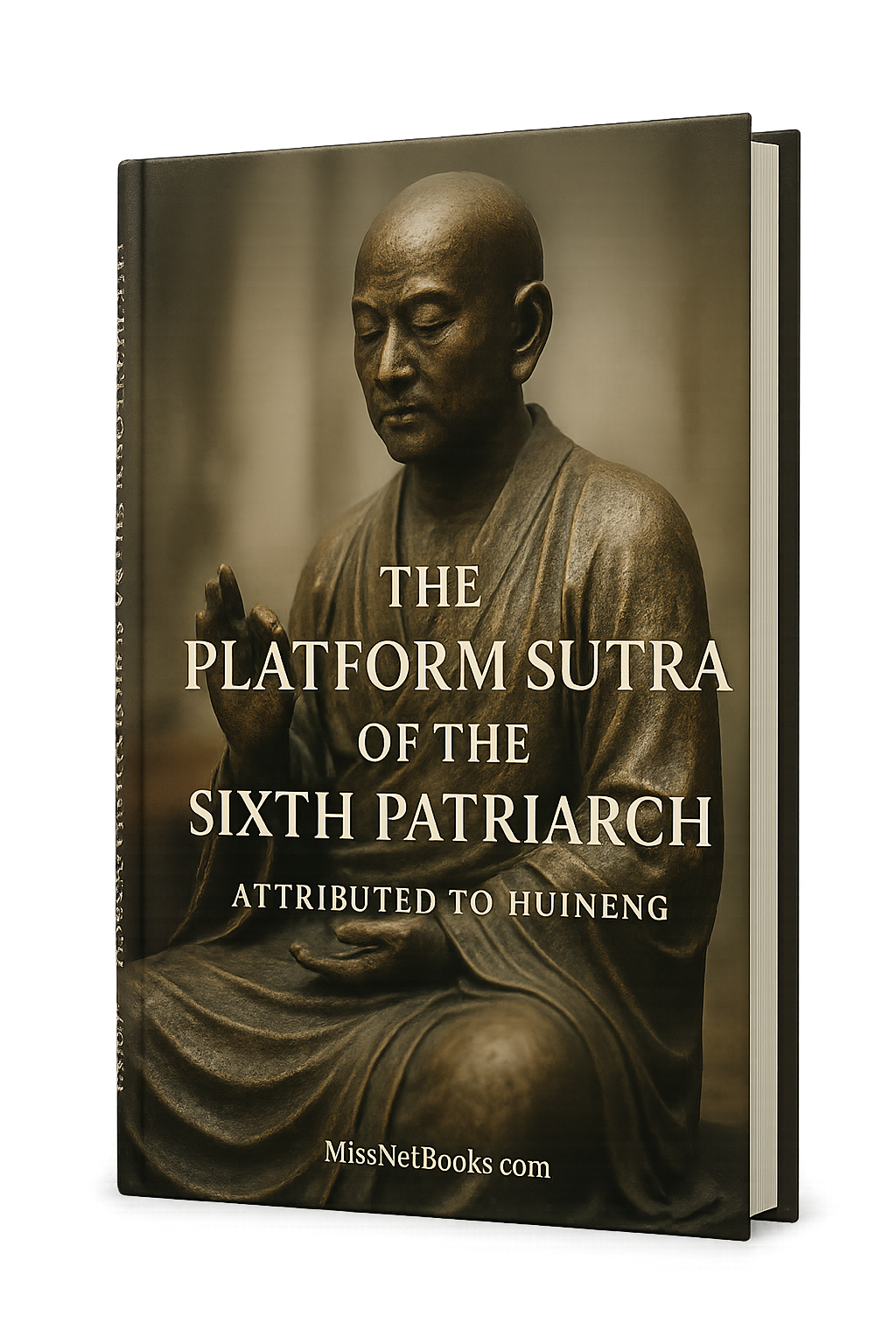
The Platform Sutra of the Sixth Patriarch
In an age where spiritual and philosophical dogmas often dictated the course of human thought, a transformative text emerged, challenging the status quo of Buddhist teachings and reshaping the landscape of Eastern philosophy. This groundbreaking work did not merely serve as a religious scripture but became a beacon for those seeking enlightenment through direct experience rather than rigorous ritualism or elite lineage. By emphasizing the inherent potential within every individual, this text revolutionized the principles of Zen Buddhism, advocating for a personal and intimate approach to understanding the self and attaining enlightenment.
Core Ideas and Main Arguments:
- Non-Duality: The text explores the idea that form and emptiness are interconnected, offering insights into the nature of reality and perception.
- Direct Experience: It emphasizes that true understanding comes from personal experience rather than second-hand teachings, empowering practitioners to seek their own enlightenment.
- Bodhi Mind: The principle of recognizing one's inherent "Bodhi mind" promotes awareness and clarity, noting that enlightenment is accessible to all.
- Critique of Ritualism: The work challenges traditional Buddhist practices that rely heavily on rituals and doctrines, advocating instead for a more intuitive and personal approach to spirituality.
- Transformation Through Insight: It presents the notion that true transformation and liberation are possible through insight into one’s own nature.
Author’s Intentions and Context: Attributed to a seminal figure in Zen Buddhism during the 7th century, this text responds to a burgeoning need for spiritual authenticity at a time when monastic rule and scholarly debate dominated Buddhist practice. The author endeavored to demystify enlightenment by stripping away layers of institutionalized teachings, encouraging followers to chart their own paths in the pursuit of wisdom and clarity. Amidst a richly diverse landscape of Buddhist thought, this work aimed to address the philosophical and cultural challenges of its time, asserting the primacy of direct, personal experience in understanding spiritual truths.
Structure of the Book: The text is organized into several key sections that each build upon the core themes:
- Introduction to Direct Teachings: Opening discussions clarify the intention behind Zen practice and the transformative potential of inner awareness.
- Discourses and Parables: This section contains dialogues and stories that illustrate profound spiritual truths, engaging readers in the transformative process.
- Guidance on Practice: Practical advice on meditation and self-inquiry is offered, emphasizing simplicity and authenticity over complexity and formality.
- Reflections on Enlightenment: Concluding passages reflect on the nature of enlightenment and the Bodhi mind, encouraging readers to engage deeply with their own experiences.
Key Takeaways:
- Understanding is rooted in personal experience and cannot be transferred solely through teachings.
- Enlightenment is attainable by recognizing one’s own mind, rather than through ritualistic practices or intellect alone.
- The ability to question and reflect on individual understanding is crucial to spiritual growth.
Why It’s Important to Read: The lasting relevance of this work transcends cultural and temporal barriers, appealing to anyone seeking greater awareness and clarity in their spiritual journey. It holds particular value for practitioners of Buddhism, seekers of personal growth, and scholars interested in Eastern philosophy. By reading this text, one can gain insight into a profound and straightforward approach to enlightenment that liberates the mind from the constraints of traditional religious practice.
Impactful Quotes and Analysis:
-
"The mind is the Buddha."
- This profound assertion encapsulates the essence of self-realization in Buddhism, illustrating that enlightenment is not found externally but resides within each individual.
-
"To see your nature is to be your nature."
- This quote highlights the transformative power of self-awareness, suggesting that understanding and embodying one's true nature is the path to liberation.
-
"Every day is a good day, and every moment is a precious moment."
- This simple yet striking statement encourages mindfulness and appreciation for the present, challenging readers to find value in the now rather than pursuing distant ideals.
About the Author: The author, Huineng (638–713 CE), is renowned as the Sixth Patriarch of Chan (Zen) Buddhism in China. His contributions to the development of Zen philosophy are invaluable, as he advocated for practices grounded in direct experience and personal insight. Huineng's teachings have had a lasting influence on countless practitioners, as his ideas became foundational in the evolution of Buddhist thought, shaping perceptions of enlightenment in profound ways.
Don’t miss the opportunity to engage with one of the most influential works of all time. Buy it today and explore the roots of Zen thought and enlightenment. This monumental work is The Platform Sutra of the Sixth Patriarch by Huineng, brought to you for educational purposes by MissNotBooks.com.