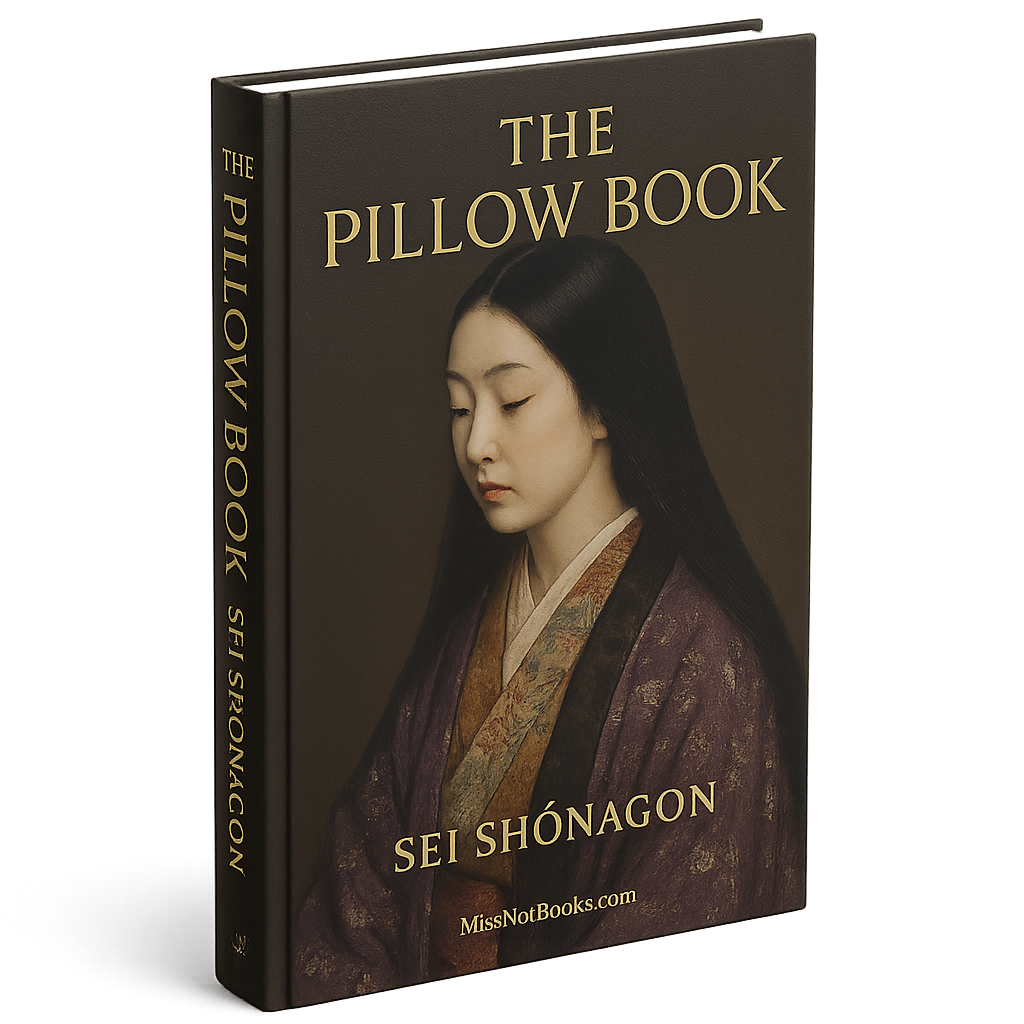
The Pillow Book
In a world where the minutiae of daily life often go unnoticed, one remarkable work illuminates the richness of existence through a lens of keen observation and vivid detail. This transformative book revolutionizes the appreciation of personal reflection and cultural critique, challenging readers to contemplate beauty and impermanence in their own lives. It introduces an innovative blend of memoir, poetry, and essay, encouraging a richer understanding of Japan's Heian period and its nuanced aesthetics. Its insights and observations continue to resonate across centuries, inspiring contemporary readers to find depth in the ordinary.
Don’t miss the opportunity to engage with one of the most influential works of all time. Buy it today and explore the profound connection between personal experience and universal themes in life.
Core Ideas and Main Arguments
- Ephemeral Beauty: Celebrates the fleeting moments of beauty in life, advocating for an appreciation of the transient.
- Social Commentary: Provides insights into the court life of the Heian period, revealing the complexities of social interactions and hierarchies.
- Personal Experience: Blends memoir with observation, inviting readers into the author's intimate thoughts and feelings.
- Cultural Observations: Examines the aesthetic values of the period, encouraging a deeper appreciation of nature, art, and eloquent discourse.
Author’s Intentions and Context
Written in a time characterized by an intricate court culture and burgeoning artistic expression, the author sought to capture the essence of her society through personal reflections and observations. The Heian period was defined by a rich literary tradition, yet it was also a time when women’s voices were often marginalized. By articulating her experiences and thoughts, the author aimed to elevate women's perspectives, bringing attention to their emotional and intellectual lives in a patriarchal setting.
Structure of the Book
The book is organized into a series of vignettes that can be read independently, each filled with evocative descriptions, lists, and anecdotes. This structure allows for both thematic exploration and a tapestry of experiences—each vignette contributes to a broader understanding of life at court, often linking back to central themes of beauty, love, and the fleeting nature of existence.
Key Takeaways
- Value of the Moment: Recognizes the importance of savoring transient beauty in everyday life.
- Individual Perspective: Highlights the significance of personal narrative in understanding cultural history.
- Artistry of Language: Engages with the beauty of language itself, showcasing how words can evoke rich imagery and emotion.
- Societal Reflection: Encourages readers to reflect on their own social dynamics and cultural values.
Why It’s Important to Read
This work is significant not only for its historical context but also for its exploration of themes that are timeless and universal. It provides insight into the complexities of human emotion and social interaction, making it an invaluable read for anyone interested in literature, history, or the intricacies of cultural identity. Students, scholars, and casual readers alike will find that the author’s observations provoke thoughtful questions about their own lives, relationships, and the nature of beauty.
Impactful Quotes and Analysis
-
“The things that make the heart flutter are often the simplest.”
- This observation encapsulates the book's core message about finding joy and surprise in the everyday, reminding readers to embrace modest joys.
-
“In the silence of the night, the whisper of the wind carries the most poignant truths.”
- This line emphasizes the importance of reflection and listening, suggesting that in quiet moments, profound insights can be gleaned from nature and one’s own thoughts.
-
“To be surrounded by beauty is to understand the fleeting nature of life.”
- Here, the author eloquently captures the essence of impermanence, urging readers to fully engage with their surroundings while they last.
About the Author
Sei Shōnagon (c. 966–1017/1025) was a Japanese author, poet, and court lady who served at the Heian court during a time of vibrant artistic expression. Renowned for her sharp wit and keen observations, Shōnagon left an indelible mark on Japanese literature. Her unique perspective as a woman in a male-dominated society continues to resonate today, influencing countless writers and thinkers with her exploration of personal and cultural identity.
This monumental work is The Pillow Book by Sei Shōnagon, brought to you for educational purposes by MissNotBooks.com.