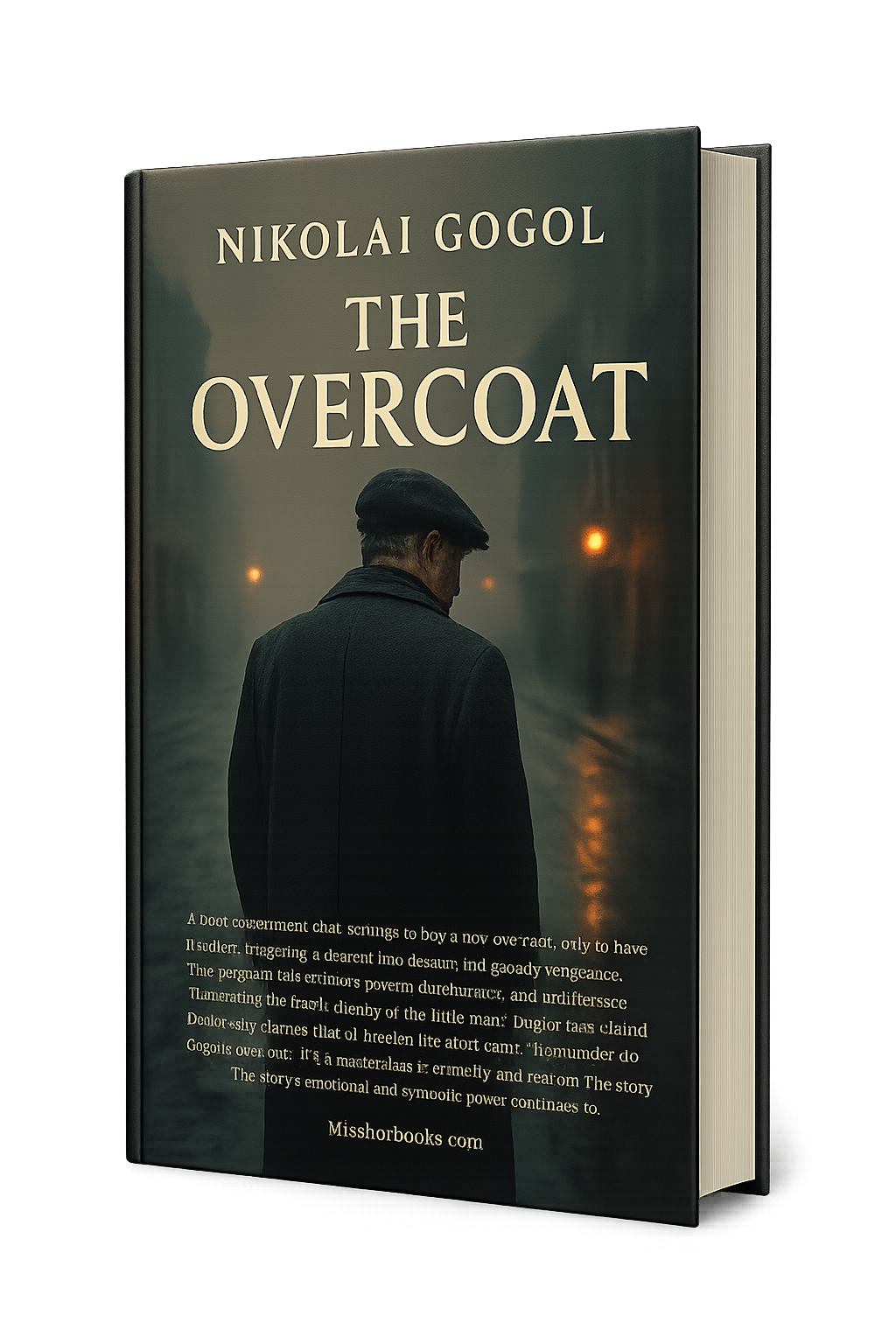
The Overcoat
In a world where the banal often masks the profound, one literary masterpiece dares to peel away the layers of social indifference to reveal the haunting struggles of the human spirit. This work has revolutionized not only the landscape of literature itself but has also challenged societal norms, defining the existential plight of the individual against the unforgiving machinery of bureaucracy. Its unforgettable narrative and deep psychological insight have cemented its status as a cornerstone of modern narrative fiction and social commentary, echoing the struggles and aspirations of countless generations. Don’t miss the opportunity to engage with one of the most influential works of all time. Buy it today and explore the poignant depths of human experience.
Core Ideas and Main Arguments:
- Existential Humanism: The text profoundly examines the isolation of individuals in a morally ambiguous society, emphasizing the protagonist's need for identity and recognition.
- Critique of Bureaucracy: It dissects the cold, dehumanizing nature of bureaucracy and how it stifles creativity and individuality, transforming people into mere numbers.
- Social Satire: Through its dark humor and absurdity, it criticizes social hierarchies and the superficiality prevalent in society, exposing the folly of material pursuits.
- Transformation and Identity: The transformation of the protagonist symbolizes profound changes in personal identity spurred by external perceptions and societal pressures.
Author’s Intentions and Context: Written during a period of intense social change in 19th-century Russia, the author aimed to articulate the struggles of the common man amidst the growing power of a dehumanizing bureaucratic state. Responding to the bleak nature of social realities, the narrative serves as a mirror reflecting the psychological turmoil faced by individuals stripped of their humanity. The author's intention was to ignite empathy and provoke thought regarding the implications of anonymity and societal rejection, positioning the protagonist's experience as a critical commentary on the times.
Structure of the Book:
- Introduction: Sets the stage for the protagonist’s mundane existence and struggles within a callous society.
- Rising Action: Chronicles the protagonist's quest for recognition, culminating in the pivotal moment that transforms his life.
- Climax: Portrays the tragic consequences of bureaucratic apathy and social neglect.
- Conclusion: Resolves with a chilling reminder of the protagonist's fate, leaving readers pondering the larger themes of identity and societal indifference.
Key Takeaways:
- The visceral depiction of alienation resonated with readers, revealing the impact of societal neglect on the individual psyche.
- An exploration of materialism raises critical questions about the values we hold and their implications for our societal structures.
- The work serves as an early example of existential literature, laying the groundwork for future generations of writers.
Why It’s Important to Read: The relevance of this book remains undiminished in contemporary discussions surrounding identity, bureaucracy, and humanity's quest for meaning in a rapidly changing world. Readers from all walks of life, particularly those interested in literature, psychology, and social sciences, will find value in its timely exploration of enduring issues. This brilliant work invites reflection on our own roles within society and encourages a deeper understanding of the shared human experience.
Impactful Quotes and Analysis:
- “Overcoat? What overcoat?” – This despairing query encapsulates the protagonist’s ultimate loss of identity and recognition in a society that values material possessions over humanity, leaving readers to grapple with the implications of such a loss.
- “We are all but cogs in the machinery of fate.” – This poignant remark highlights the inexorable mechanisms of society that can crush the individual spirit, inviting readers to reflect on their own positions within the societal framework.
About the Author: Born in 1809 and passing in 1852, Nikolai Gogol was a prominent Russian writer known for his unique blend of realism, satire, and fantasy. His works have had a profound impact on literature, influencing generations of authors and shaping the development of modern narrative forms. Gogol is regarded as a pioneer who deftly illuminated the complexities of Russian society and the human condition, leaving an indelible legacy in literary history.
This monumental work is The Overcoat by Nikolai Gogol, brought to you for educational purposes by MissNotBooks.com.