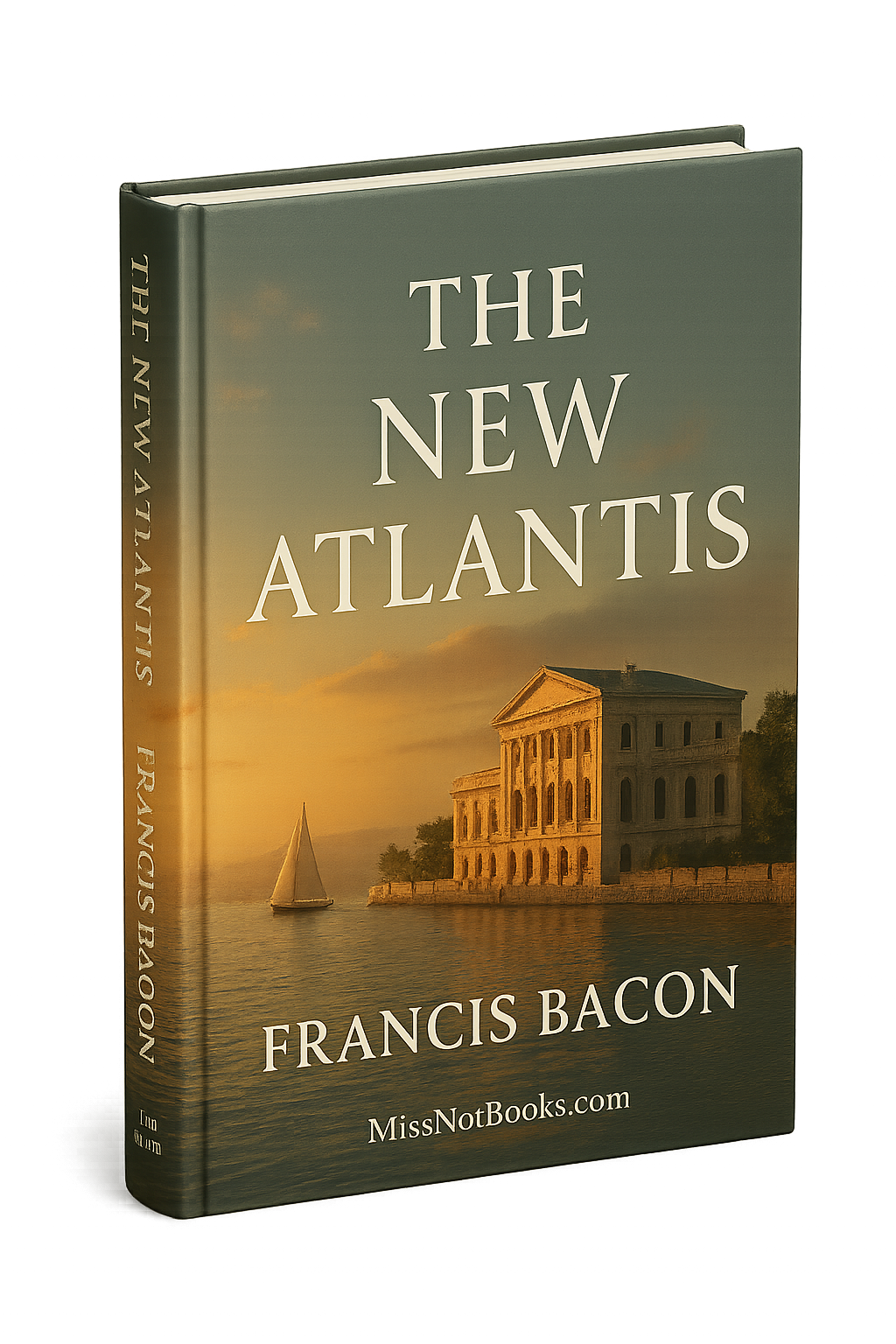
The New Atlantis
In a world where the pursuit of knowledge and understanding has often dictated the course of history, one book stands as a groundbreaking manifesto, challenging the very foundations of science, philosophy, and society. This masterful work reimagines the potential of human inquiry and the scientific method, igniting a revolution in how we perceive the interconnectedness of knowledge and human progress. Its transformative impact laid the groundwork for modern empirical research and philosophical thought, fundamentally altering intellectual landscapes across centuries.
Don’t miss the opportunity to engage with one of the most influential works of all time. Buy it today and explore the roots of scientific inquiry and the ideal of societal advancement.
Core Ideas and Main Arguments
- The Ideal Society: The narrative presents a vision of a utopian society where knowledge and moral integrity govern human relationships, showcasing an advanced community devoted to scientific exploration.
- Empirical Methodology: The work advocates for a systematic approach to gaining knowledge through observation and experimentation, challenging the reliance on dogma and speculation prevalent in earlier thought.
- The Role of Science: It emphasizes the importance of scientific inquiry as essential for improving human life, positing that advancements in technology and understanding lead to societal improvements.
- Interdisciplinary Knowledge: The text argues for a holistic integration of various fields of study, urging readers to recognize the interconnectedness of knowledge across disciplines.
Author’s Intentions and Context
The author set out to articulate a visionary ideal in response to an era shaped by rigid scholasticism and the limitations of traditional learning. During a time of burgeoning exploration and scientific inquiry in the late 16th and early 17th centuries, the author sought to challenge the conventions of academia and promote a new approach to understanding the natural world. Through this work, they aimed to inspire a spirit of collaboration among scholars and to advocate for societal reforms based on enlightened principles, addressing the philosophical and cultural challenges of their time.
Structure of the Book
The organization of the book is carefully crafted to guide readers through its complex ideas. It typically unfolds in descriptive sections that detail the societal structure, scientific practices, and philosophical underpinnings of the envisioned community. Each chapter delves into different aspects of this utopia, including governance, education, and the role of the sciences. This structured approach allows the reader to build a comprehensive understanding of the author's vision, progressing logically from theoretical foundations to practical implications.
Key Takeaways
- Knowledge is power: The advancement of science leads directly to societal improvement and human flourishing.
- Embrace empirical research: Trusting in observation and experimentation as foundational methods for inquiry is essential for progress.
- Utopian vision as blueprints: The ideal society serves as a blueprint for future generations to strive toward, emphasizing ethical responsibilities alongside scientific advancement.
Why It’s Important to Read
This work remains pivotal in understanding the evolution of modern science and societal organization. Its principles resonate strongly in today’s world, where the quest for knowledge continues to challenge norms and drive progress. Scholars, scientists, and anyone interested in the interplay between knowledge and society will find profound insights that echo through contemporary debates on ethics, governance, and the role of science in public life.
Impactful Quotes and Analysis
-
"Knowledge is power."
- This classic assertion distills the essence of the author’s argument: that the possession and application of knowledge can lead to societal transformation and personal empowerment.
-
"The nature of man is to seek knowledge."
- This phrase underscores an intrinsic human drive, suggesting that the pursuit of knowledge is not merely a personal journey but a collective imperative that shapes civilizations.
-
"There is no wealth but life."
- Here, the author eloquently frames well-being and intellectual growth as the true measures of a society’s value, challenging materialistic notions of success.
About the Author
Francis Bacon (1561-1626) was an English philosopher, statesman, and essayist, widely known for developing the empirical method that laid the groundwork for modern scientific inquiry. His legacy is marked by a profound influence on both the philosophy of science and the political landscape of his time. As a pioneer of the Renaissance, Bacon's ideas contributed significantly to the Enlightenment and continue to resonate in discussions surrounding knowledge and governance today.
This monumental work is The New Atlantis by Francis Bacon, brought to you for educational purposes by MissNotBooks.com.