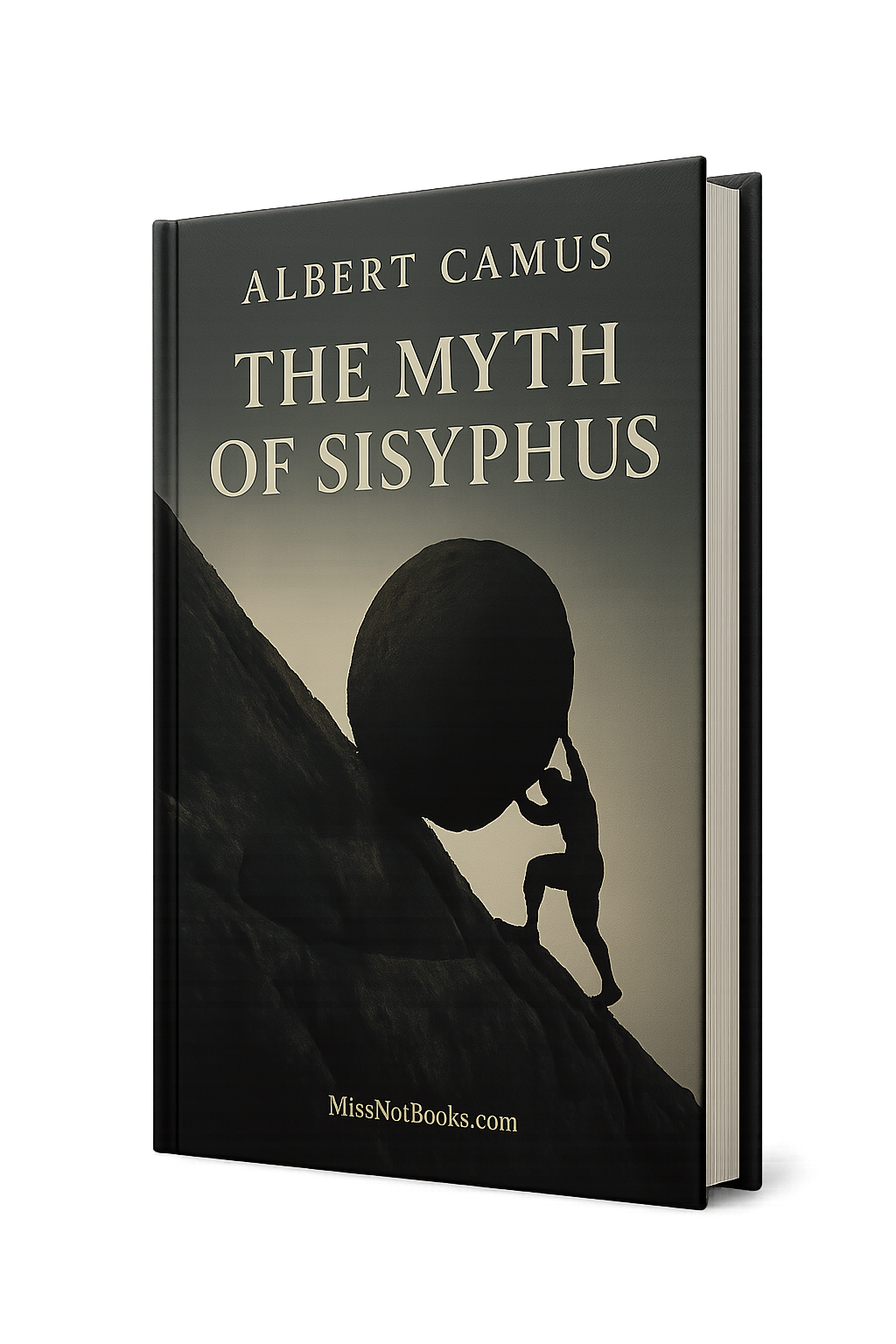
The Myth of Sisyphus
Throughout history, few literary works have dared to grapple with the profound questions of human existence as boldly as this one. This transformative text has revolutionized existential thought, challenging readers to confront the absurdity of life and the futility inherent in human endeavor. It introduces existentialism not merely as a philosophical inquiry, but as a lens through which to perceive the struggle of existence. By engaging with the dilemmas posed in this work, readers are compelled to reevaluate what it means to live authentically in a world devoid of inherent meaning.
Core Ideas and Main Arguments
- Absurdity of Existence: The text proposes that life is inherently meaningless and that humans naturally seek to impose order and meaning upon an indifferent universe.
- Rebellion Against Absurdity: Rather than succumbing to despair, the author advocates for a stance of defiance, suggesting that one must embrace the absurd while continuing to live fully and passionately.
- Personal Responsibility: Emphasizing individual choice, the work argues that each person must create their own meaning and purpose in a chaotic world.
- Philosophical Inquiry: The book serves as a reflective meditation on questions surrounding suicide, the quest for meaning, and the role of consciousness in framing human experience.
Author’s Intentions and Context
The author sought to address the philosophical disillusionment of the post-World War II era, a time characterized by widespread existential dread and skepticism regarding traditional values. In a world recovering from the atrocities of war, he aimed to provoke a critical examination of life’s significance and the human condition. By tackling the void left by existential despair, the author encourages readers not only to acknowledge the absurdity of life but also to confront it boldly and constructively. The philosophical climate demanded a radical reassessment of human existence, and this work rose to meet that demand with unflinching honesty and clarity.
Structure of the Book
The text is divided into several distinct sections that guide the reader through its complex arguments:
- The Absurd: This section outlines the fundamental concept of absurdity, detailing how it manifests in everyday life.
- Suicide: A contemplative examination of the most profound response to absurdity, questioning why one might choose to end their existence.
- Philosophical Suicide: This part critiques the various traditional philosophical responses to the absurd, advocating for personal confrontation with reality rather than escapism.
- The Myth of Sisyphus: The famous allegory illustrates the struggle against the absurd, symbolizing perpetual effort without ultimate reward, yet highlighting the dignity in that struggle.
Key Takeaways
- Embrace the Absurd: Accept that life lacks inherent meaning but find value in our personal struggles.
- Create Your Own Meaning: Each individual has the responsibility to forge their own identity and purpose amidst chaos.
- Live Passionately: The rejection of despair is not passive; it requires a vigorous embrace of life and its possibilities.
Why It’s Important to Read
This work remains essential for anyone seeking to navigate the complexities of modern existence. Its timeless themes of personal empowerment amid absurdity resonate across generations, providing invaluable insight into the condition of humanity. Philosophers, writers, and anyone grappling with existential questions will find profound guidance and inspiration within its pages, making this a crucial addition to both personal and academic libraries.
Impactful Quotes and Analysis
-
"The struggle itself toward the heights is enough to fill a man's heart."
- This powerful assertion reinforces the idea that it is the journey, not the destination, that defines our existence, urging readers to appreciate the process of living fully.
-
"There is but one truly serious philosophical problem, and that is suicide."
- This statement encapsulates the existential crisis at the heart of the human experience, forcing readers to confront the depths of despair and the choices that arise from it.
About the Author
Albert Camus (1913–1960) was a French philosopher, writer, and journalist, whose work explored themes of absurdism, rebellion, and the human condition. He played a pivotal role in the existentialist movement, though he famously rejected its label. His exploration of the philosophy of the absurd influenced countless thinkers and writers, shaping modern existential and literary theory. His legacy endures as a cornerstone of philosophical literature, prompting readers to question and embrace their existence.
This monumental work is The Myth of Sisyphus by Albert Camus, brought to you for educational purposes by MissNotBooks.com.