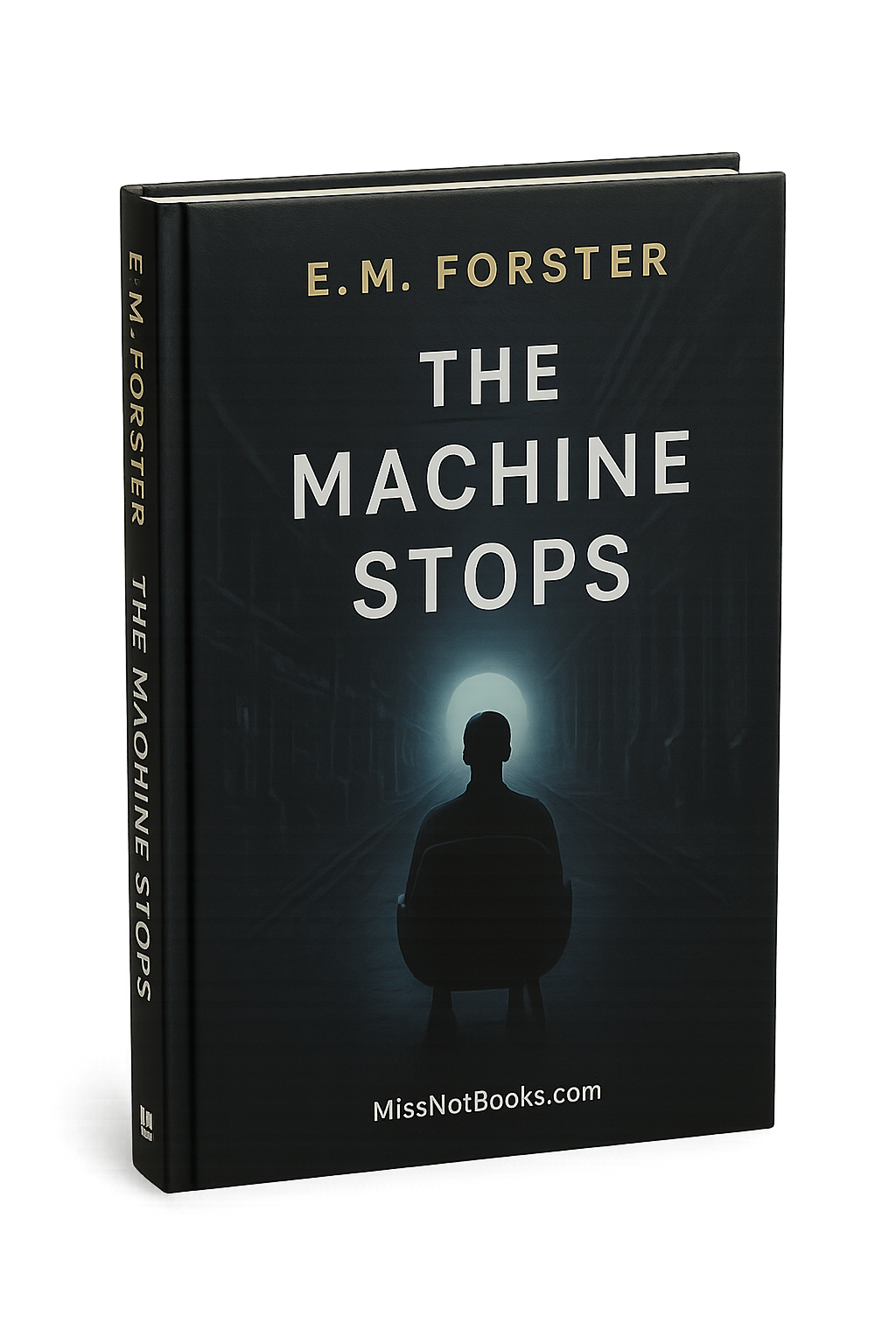
The Machine Stops
In a world gripped by rapid technological advancement and societal transformation, one profound narrative dares to question the consequences of an overly mechanized existence. It compellingly challenges readers to reconsider the balance between human connection and the conveniences offered by machines, serving as a prescient cautionary tale that continues to resonate with contemporary audiences. This groundbreaking work reshaped discussions around technology's role in human society, anticipating dilemmas that are all too familiar in our present age of digital dependency and social isolation.
Core Ideas and Main Arguments:
- Isolation vs. Connection: The narrative posits that in a society increasingly reliant on technology, true human interaction is diminished, leading to a profound sense of loneliness and alienation.
- The Fallibility of Technology: It critiques the blind faith in technological progress, emphasizing that reliance on machines can lead to catastrophic failures when human agency is abdicated.
- Cautionary Vision: The book presents a dystopian future where human beings are fully dependent on a vast, unseen machine that regulates all aspects of life, urging readers to reflect on the implications of such dependence.
- Individualism vs. Collectivism: It interrogates the tension between personal freedom and societal conformity, showcasing the struggle of an individual yearning for authenticity in a standardizing environment.
Author’s Intentions and Context:
E.M. Forster wrote this work during the early 20th century, a period marked by immense technological progress and the burgeoning influence of industrialization. The interwar years were rife with existential questions about humanity's trajectory in an age where mechanization threatened traditional social structures. Forster sought to provoke critical thinking about the value of human experiences that machines cannot replicate, addressing a cultural need to examine the implications of technological advancement on the human spirit.
Structure of the Book:
The book is organized into sections that reflect the journey of its characters through a society dominated by machine control:
- Introduction to the Machine: Establishes the omnipresence of technology in daily life.
- Character Exploration: Focuses on central characters and their individual struggles against societal expectations.
- Climactic Awakening: Challenges the norms as the protagonist confronts the limitations and failures of the machine.
- Conclusion and Reflection: Brings forth a sobering realization of the fragility of human connection in the face of overwhelming mechanization.
Key Takeaways:
- The reliance on technology can lead to a loss of individuality and personal agency.
- Genuine human connection is irreplaceably valuable, highlighting the importance of relationships over convenience.
- Critical reflection on technological dependency can guide more ethical uses of innovation in society.
Why It’s Important to Read:
This book holds incredible relevance today, as our world grapples with the dualities of technology's benefits and its potential to alienate. It invites readers of all backgrounds—students, technologists, philosophers, and storytellers—to reflect on the implications of a digitally driven society on their lives. Understanding the themes within can inspire readers to advocate for a balanced relationship with technology that emphasizes human connection and ethical considerations.
Impactful Quotes and Analysis:
-
“The Machine is there to serve us.”
- This phrase captures the prevailing belief in the utility of technology, yet subtly foreshadows the troubling implications of such servitude becoming authoritarian.
-
“We are not meant to live alone.”
- This poignant statement underscores the inherent human need for connection, resonating deeply in a time when social media and digital communication often lead to isolation rather than companionship.
-
“The end is not what you think.”
- A cryptic yet powerful reflection on the finality of reliance on technology, suggesting that the consequences of our choices often exceed our expectations, both positively and negatively.
About the Author:
E.M. Forster (1879–1970) was an English novelist, essayist, and social critic known for his incisive exploration of class and human relationships. His literary legacy is marked by a profound questioning of societal norms, and he is celebrated for works that explore the intersection of personal morality and broader social issues. Forster's insights into the human condition and the complexities of society have endured, reinforcing his status as a pivotal figure in 20th-century literature.
Don’t miss the opportunity to engage with one of the most influential works of all time. Buy it today and explore the profound warnings of technological dependence and its implications for the human experience. This monumental work is The Machine Stops by E.M. Forster, brought to you for educational purposes by MissNotBooks.com.