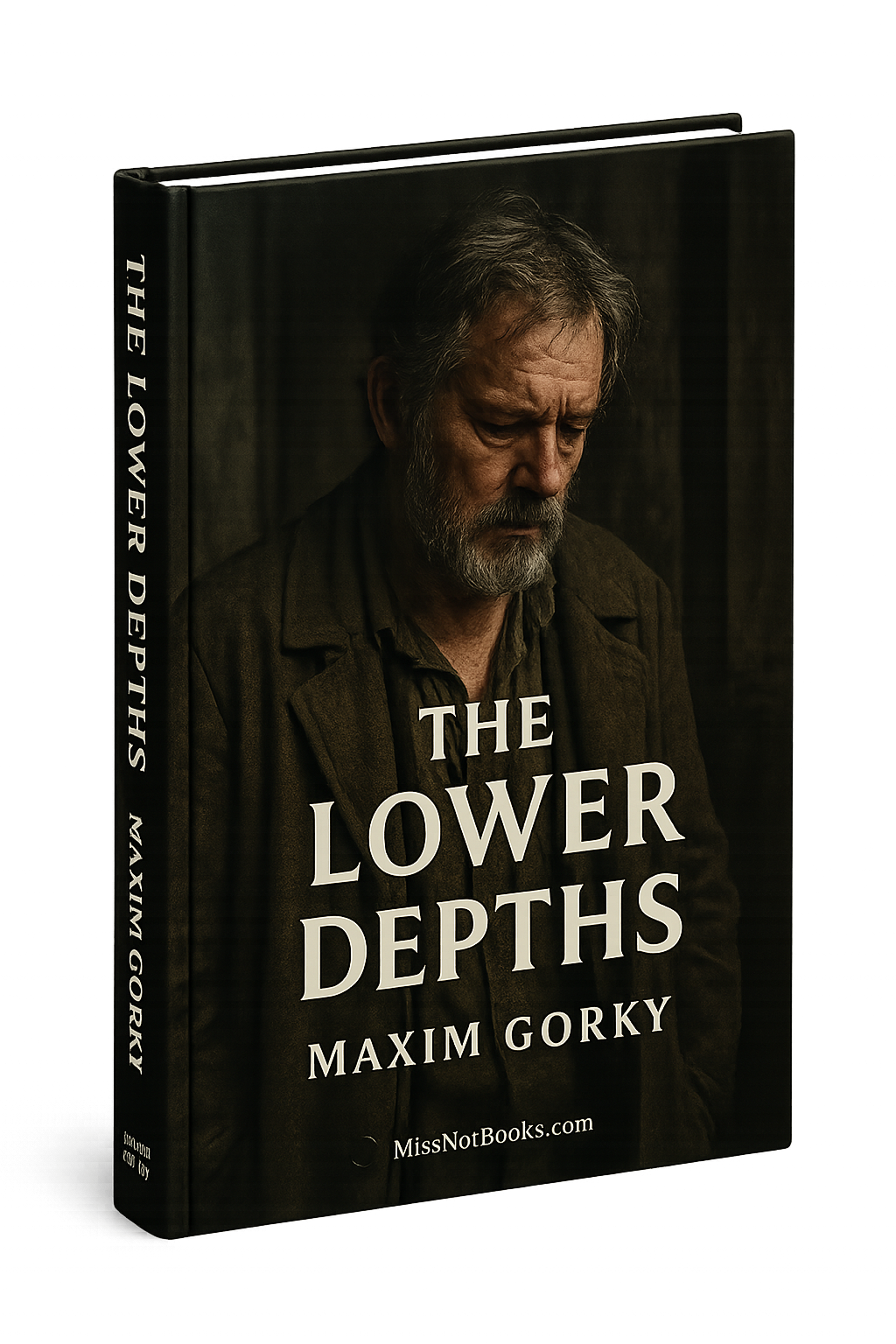
The Lower Depths
In a world where the human condition is often obscured by societal norms and superficial expectations, one work dares to strip away the veneer and expose the stark realities of life on the fringes. This groundbreaking text revolutionized the depiction of the marginalized, challenging contemporary perspectives and introducing a raw authenticity that continues to resonate profoundly. By capturing the essence of despair, hope, and the struggle for dignity, it opened a door to understanding the complexities of social class and the human experience, making it an essential part of literary and cultural discourse.
Core Ideas and Main Arguments
- The Human Condition: The book provides an unflinching exploration of poverty, addiction, and suffering while also revealing moments of tenderness and camaraderie among its characters.
- Class Struggle: It critiques social hierarchies and exposes the dehumanizing effects of capitalism on the working class, urging readers to reconsider their views on society and ethics.
- Hope and Despair: The narrative illustrates the duality of despair and hope, suggesting that even in the darkest moments, the human spirit can cling to dreams of a better future.
- Existential Reflections: It delves into existential themes, probing questions about purpose, identity, and the essence of humanity, thereby challenging readers to reflect on their own lives.
Author’s Intentions and Context
Maxim Gorky penned this work in the context of a rapidly changing Russia during the early 20th century, a time marked by social upheaval and the burgeoning of revolutionary sentiments. He sought to articulate the struggles of the disenfranchised and to bring their stories into the public consciousness, thereby advocating for social reform. In doing so, he confronted the romanticized notions of poverty and elevated the voices of the marginalized, challenging the complacent middle-class audiences of his time to awaken to the realities faced by their fellow citizens.
Structure of the Book
The narrative unfolds in a series of vignettes, each revealing different aspects of life in a communal lodging house. Key components include:
- Character Introductions: Each section introduces unique characters, representing a broad spectrum of Russian society and their individual struggles.
- Thematic Development: As the story progresses, themes of despair, survival, and hope are interwoven, culminating in a profound commentary on the human spirit.
- Climactic Revelations: The structure supports a crescendo of tension and despair, leading to critical moments of revelation that challenge or reinforce the convictions of the characters.
Key Takeaways
- The fragility of human dignity in the face of socioeconomic hardship.
- An exploration of human connections that emerge in the direst situations.
- A powerful critique of the societal structures that perpetuate suffering and ignorance.
- The acknowledgment that hope endures even when circumstances seem bleak.
Why It’s Important to Read
This work remains relevant today as it continues to speak to the experiences of the marginalized and disenfranchised in our modern societies. Readers from all backgrounds will benefit from the profound insights into human nature, empathy, and the collective struggle for dignity and justice. By engaging with this text, one is equipped to confront contemporary issues of inequality and social injustice with a more profound understanding of their historical roots.
Impactful Quotes and Analysis
- “Man is what he believes.” This poignant assertion highlights the intrinsic connection between belief and identity, suggesting that our perceptions shape our realities.
- “There is no greater sadness than the happiness of a man who is losing everything.” This quote encapsulates the bittersweet nature of temporary joy amidst suffering, illustrating the complex emotional landscape portrayed throughout the book.
- “We are all like the earth—we must be made to suffer before we can bring forth a flower.” This metaphor suggests that growth often arises from pain, reinforcing the themes of resilience and hope that permeate the narrative.
About the Author
Maxim Gorky, born Aleksei Maximovich Peshkov (1868–1936), was a prominent Russian writer and political activist known for his commitment to social justice and revolutionary ideals. Through his works, he sought to uplift the voices of the oppressed, leaving an indelible mark on the literary world and influencing generations of writers and thinkers. Gorky’s legacy is firmly rooted in his ability to portray the dignity of the downtrodden and his unwavering belief in the potential for social change.
Don’t miss the opportunity to engage with one of the most influential works of all time. Buy it today and explore the beauty of human resilience and the struggle for dignity. This monumental work is The Lower Depths by Maxim Gorky, brought to you for educational purposes by MissNotBooks.com.