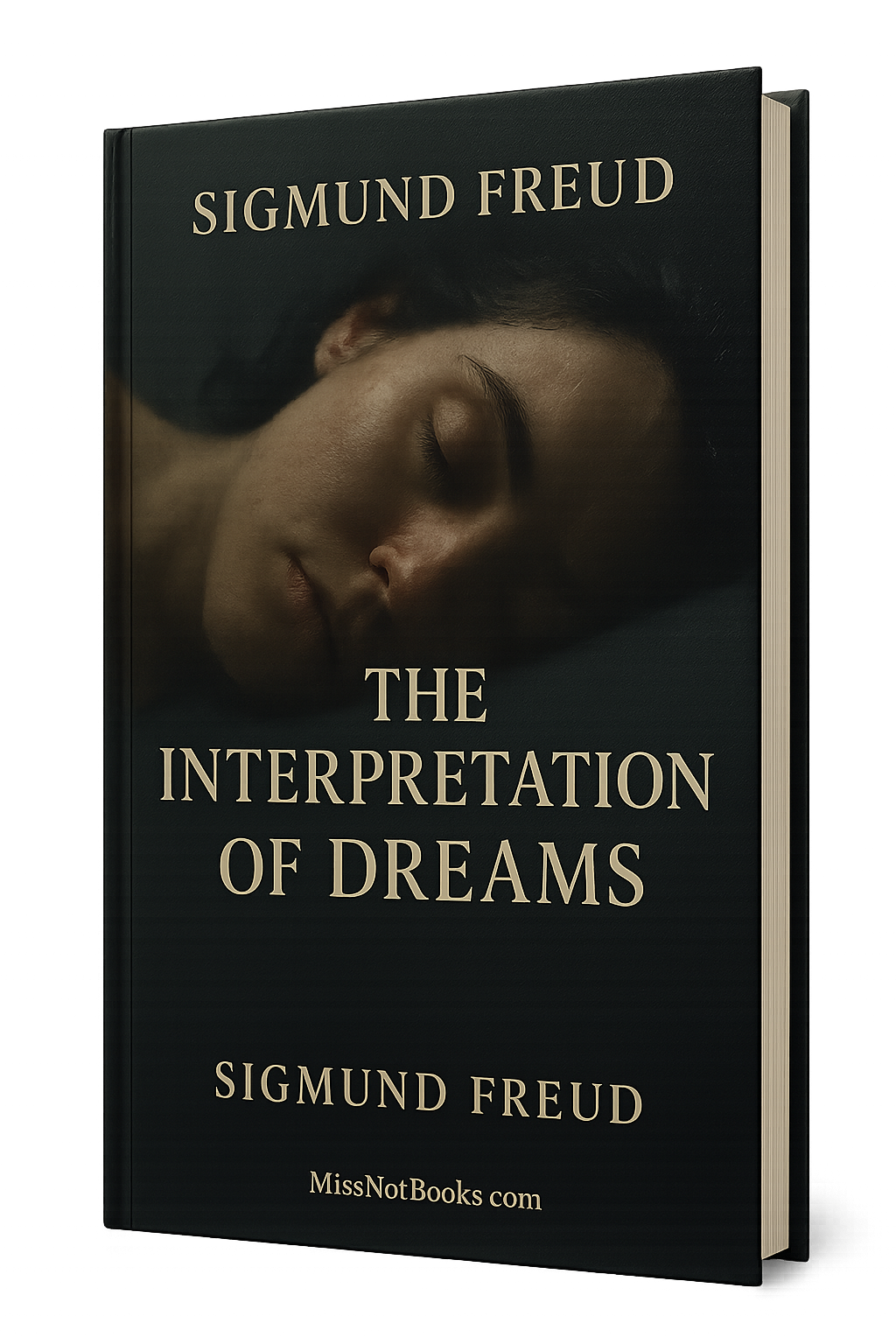
The Interpretation of Dreams
At the turn of the 20th century, a seismic shift occurred in the understanding of the human mind, one that challenged long-held beliefs and unveiled the primal forces underpinning thought and behavior. This pivotal work shattered the illusion of rationality often ascribed to human action, ushering in a new era in psychology and laying the groundwork for what we now recognize as psychoanalysis. By illuminating the mysteries of the subconscious, this profound text revolutionized the intellectual landscape, inviting readers to explore the depths of their own psyche and reconsider the nature of dreams—a realm once thought to be mere shadows of reality.
Core Ideas and Main Arguments:
- The Unconscious Mind: Introduces the concept of the unconscious, arguing that repressed desires and fears influence our behavior and thoughts.
- Dream Analysis: Proposes that dreams are a window into the unconscious, serving as a means to fulfill repressed wishes and explore hidden anxieties.
- The Structure of Personality: Outlines the tripartite model of the psyche, comprising the id, ego, and superego, and how these components interact to shape human experience.
- Symbolism in Dreams: Discusses how dreams utilize symbols that can be interpreted to unveil deeper meanings of feelings and thoughts.
- Childhood Influences: Emphasizes the importance of early childhood experiences in shaping adult personality and subconscious motivations.
Author’s Intentions and Context: The author entered a world marked by rigid societal norms and burgeoning scientific inquiry. Sigmund Freud, troubled by the limitations of previous psychological theories, sought to delve deeper into the human experience. His groundbreaking work responded to an era ripe for psychological exploration, grappling with the complexities of human behavior in a rapidly changing society. By introducing a framework that emphasized the significance of the subconscious, he aimed to provide a therapeutic means to help individuals understand and navigate their inner lives.
Structure of the Book: The composition of the book is methodical, comprising distinct sections that gradually build upon one another:
- The Scientific Method in Dream Interpretation – Establishes the groundwork for understanding dreams as a psychological phenomenon.
- The Dream Work – Explores the processes involved in dream formation, including condensation, displacement, and symbolization.
- The Functions of Dreams – Addresses the various roles dreams play in psychic life, from wish fulfillment to emotional regulation.
- Practical Applications – Provides insight into how dream interpretation can be used therapeutically in the clinic setting. Each section contributes to a comprehensive understanding of the dream as a vital aspect of the human condition, reinforcing Freud’s overarching thesis about the interplay between conscious awareness and the unconscious mind.
Key Takeaways:
- Dreams are essential to understanding the unconscious mind and reveal hidden desires.
- The formulation of the id, ego, and superego offers insight into the internal conflicts that drive behaviors.
- Analyzing dreams can serve as a therapeutic tool for self-discovery and emotional healing.
- The interplay of childhood experiences shapes adult behavior and mental states.
Why It’s Important to Read: This work remains timeless in its exploration of the intricate mosaic of human thought and behavior. Its relevance continues in modern psychology, therapy, literature, and cultural studies, providing invaluable insights into the workings of the human mind. Readers from varied fields—be it psychology, literature, philosophy, or art—will find a treasure trove of ideas that challenge their perceptions and deepen their understanding of the complexities of human nature.
Impactful Quotes and Analysis:
-
"Dreams are the royal road to the unconscious." This phrase encapsulates the book's central thesis: that through dreams we can access and understand our innermost fears and desires.
-
"The interpretation of dreams is the via regia to a knowledge of the unconscious element in our mental life." Here, Freud emphasizes the interpretative act as a crucial method for gaining insight into the hidden aspects of our psyche.
-
"What we call personality is not a mere coincidence of thoughts and acts, but a living entity of inner forces." This highlights the book's insight that our personalities are shaped by deep, often unseen psychological processes, urging readers to consider a more profound view of human behavior.
About the Author: Sigmund Freud (1856-1939) was an Austrian neurologist who is best known as the founding father of psychoanalysis. His revolutionary theories on the unconscious mind and mechanisms of repression laid the foundation for modern psychology. His work has transcended disciplines, influencing not just psychology and psychiatry, but also literature, art, and cultural studies, establishing a legacy that continues to provoke discussion and inspire new generations of thinkers.
Don’t miss the opportunity to engage with one of the most influential works of all time. Buy it today and explore the foundations of modern psychological thought. This monumental work is The Interpretation of Dreams by Sigmund Freud, brought to you for educational purposes by MissNotBooks.com.