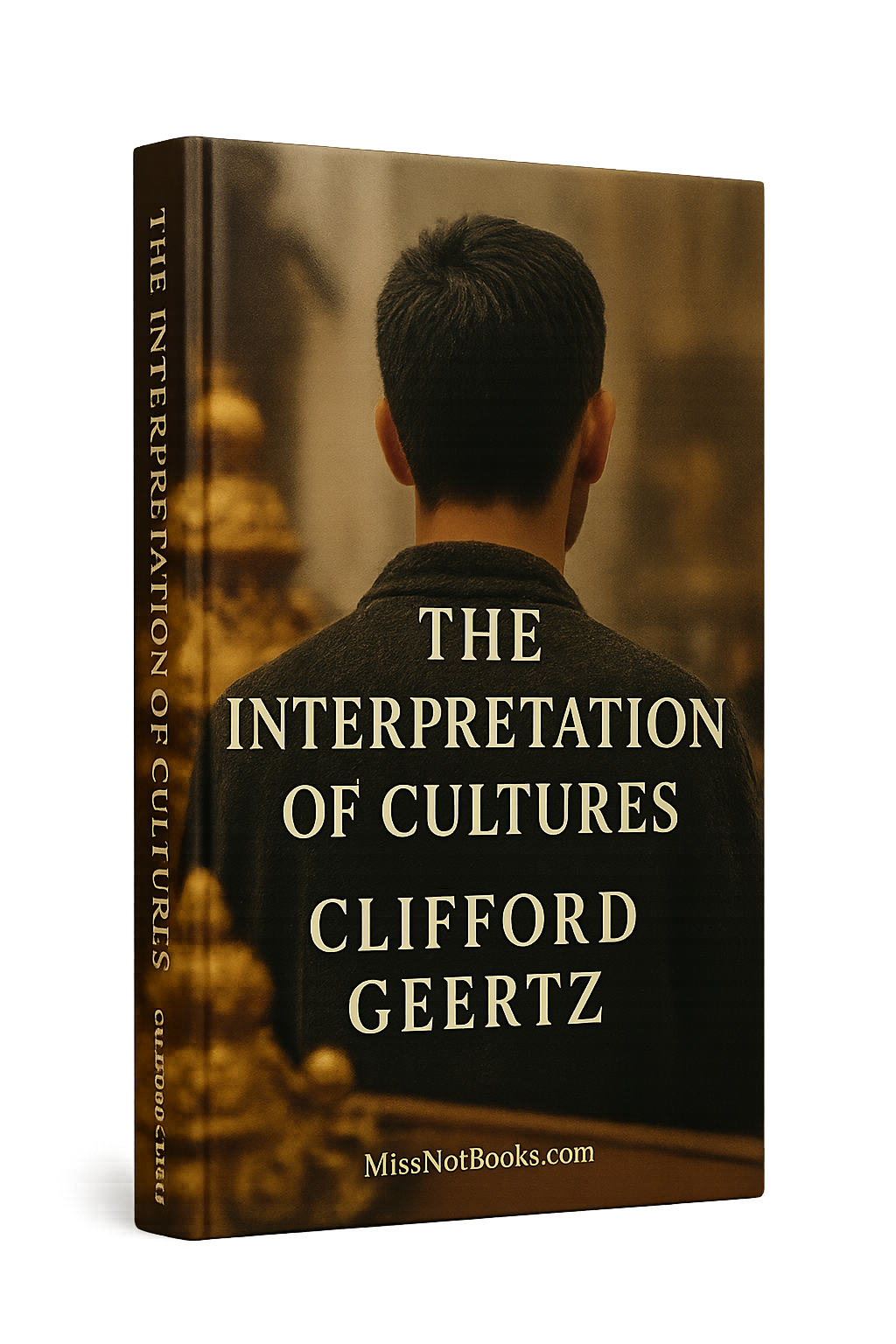
The Interpretation of Cultures
In a world increasingly shaped by intricate cultural interactions and shifting social dynamics, one book emerged as a beacon that illuminated the unseen but deeply woven threads of meaning within human societies. This seminal work revolutionized how we understand cultures by asserting that cultures are not merely systems of behavior but rather texts that require interpretation. It challenged prevailing paradigms of social science, insisting that the richness of cultural expression must be analyzed for its significance and context. This transformative perspective forged new paths in anthropology, sociology, and the humanities, forever altering our intellectual landscape.
Core Ideas and Main Arguments:
- Culture as Text: The author posits that culture should be analyzed as a text, rich in symbols and meanings that can be deciphered to understand social practices.
- Thick Description: Emphasizing the method of ‘thick description,’ the book advocates for a detailed, nuanced view of social actions, moving beyond mere observation to situating them within their cultural contexts.
- Symbolism: It explores how symbols shape our realities and influence human behavior, turning our attention to the subtleties that govern human interaction.
- Interpretative Approach: The author argues for an interpretative model over positivist approaches in social sciences, suggesting that understanding human culture requires insight into the subjective meaning that individuals associate with their lives.
Author’s Intentions and Context: The author set out to bridge the gap between the observable and the interpretive, responding to a mid-20th-century intellectual climate that often dismissed qualitative insights in favor of quantitative data. Faced with the limitations of traditional empirical methods, the work aimed to reframe these discussions by emphasizing the importance of understanding the underlying meanings that people attribute to their actions. This approach turned a critical lens upon anthropological methodologies, calling for a deep engagement with the narratives that define societies.
Structure of the Book: The book is meticulously organized into thematic parts that progressively build upon one another:
- Introduction to Cultural Interpretation: Lays the foundational concepts of culture and its implications for social research.
- Case Studies: Through a series of ethnographic examples, it illustrates the method of thick description, demonstrating how various cultures navigate their unique symbolisms.
- Methodological Reflections: Discusses the implications of the interpretative framework on anthropological research, emphasizing the need for a reflexive and engaged approach.
- Culmination of Ideas: Concludes with reflections on the broader impact of this cultural analysis on the fields of social science and humanities.
Key Takeaways:
- Understanding culture requires looking beyond behaviors to the symbolic meanings that shape them.
- The interpretive method can unlock deeper insights into the motivations and meanings behind social practices.
- The work fosters a profound respect for the complexity of human societies and the narratives that inform them.
Why It’s Important to Read: This book continues to resonate in our contemporary world, where cultural misunderstandings and conflicts abound. It serves as a vital resource for students, scholars, and anyone seeking to grasp the intricacies of human societies. Its insights are essential for anthropologists, sociologists, educators, human rights advocates, and all who engage in cross-cultural dialogue. By navigating the rich tapestry of culture, readers are equipped to foster empathy and understanding across diverse contexts.
Impactful Quotes and Analysis:
- "Man is an animal suspended in webs of significance he himself has spun."
- This quote encapsulates the essence of human existence as intricately tied to the cultural narratives we create. It highlights how our identities and realities are shaped by the meanings we impart to our surroundings.
- "The goal of a thick description is to convey the unique details of a culture's life, revealing how actions are rooted in meanings."
- This statement underscores the importance of depth in cultural analysis, reminding us that superficial understanding often leads to misinterpretations and oversimplifications of complex societies.
About the Author: Clifford Geertz (1926-2006) was an influential American anthropologist and a key figure in the development of symbolic anthropology. With a career spanning over five decades, he contributed to the understanding of culture as a system of symbols and meanings, profoundly impacting the fields of anthropology, sociology, and cultural studies. His legacy is characterized by his commitment to humanistic approaches in social analysis, setting the stage for new methodologies that continue to inspire scholars worldwide.
Don’t miss the opportunity to engage with one of the most influential works of all time. Buy it today and explore the deep complexities of human culture. This monumental work is The Interpretation of Cultures by Clifford Geertz, brought to you for educational purposes by MissNotBooks.com.