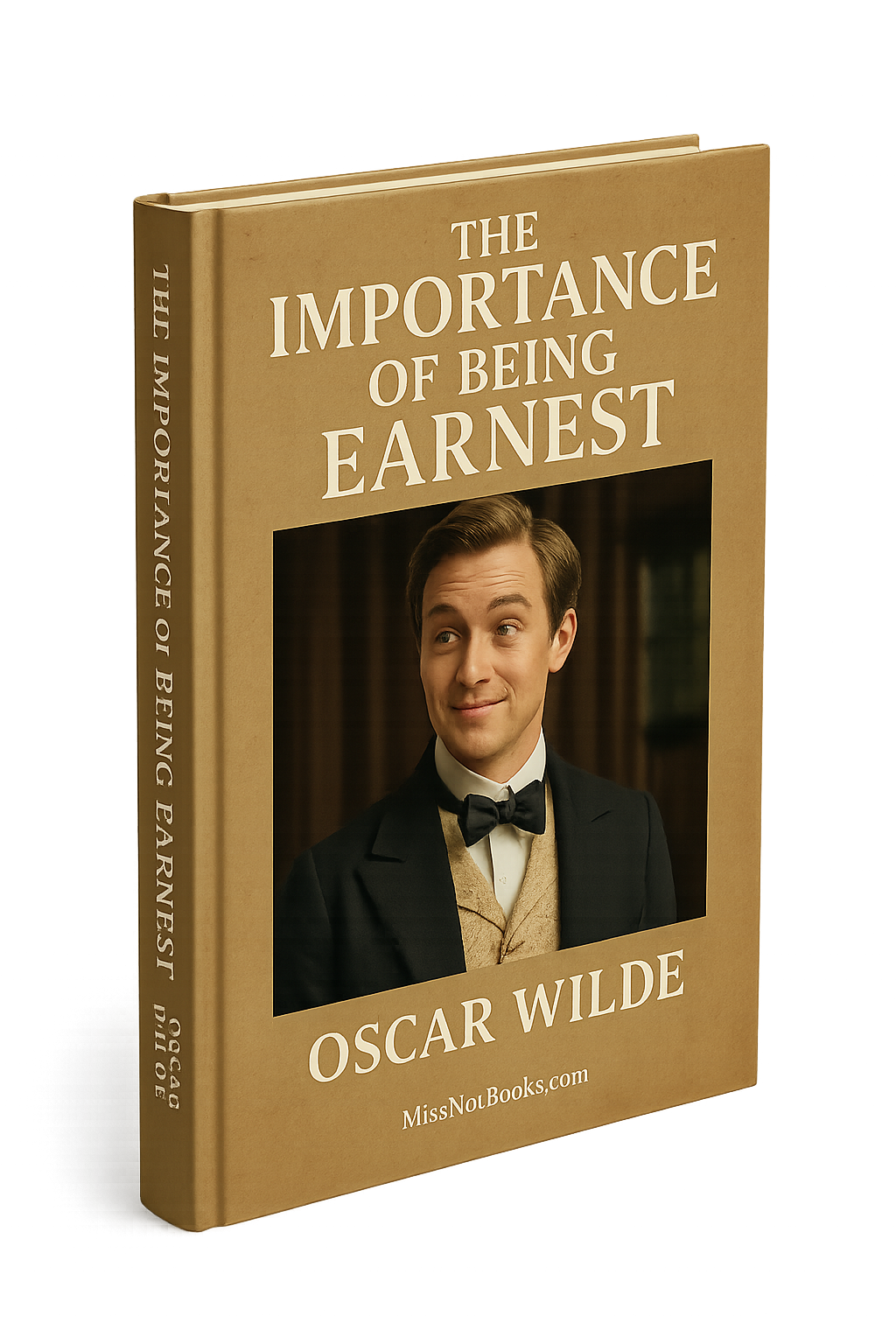
The Importance of Being Earnest
At the heart of literature’s examination of societal norms and personal identity lies a book that revolutionized the way comedy and societal critique intersected. With its sharp wit and brilliant absurdity, this transformative work dared to challenge the conventions of its time, exposing the facades upheld by the upper class while simultaneously defining a new realm of humor. By blending intricate character dynamics with incisive social commentary, this masterpiece became a cornerstone in the canon of English literature, influencing countless writers, playwrights, and thinkers in the process. Don’t miss the opportunity to engage with one of the most influential works of all time. Buy it today and explore the delicate interplay of identity, morality, and the trivialities of life.
Core Ideas and Main Arguments
- Identity and Deception: The narrative intricately examines how individuals construct and maintain identities, often through layers of deception that reflect societal expectations.
- Critique of Victorian Society: It boldly highlights the absurdities and contradictions of Victorian ethics, particularly regarding marriage, social conventions, and moral hypocrisy.
- The Nature of Truth: It proposes that truth is often subjective, shaped by personal desires and societal pressures, leading to comedic yet enlightening moments.
- Dual Lives: The protagonists embody dual identities that allow them to explore freedom outside societal constraints, showcasing the conflict between personal desires and societal obligations.
Author’s Intentions and Context
The author set out to create a satire that scrutinizes the rigid structures of Victorian society, a period marked by strict moral codes and a superficial emphasis on propriety. In an era when one's societal status heavily dictated personal interactions and relationships, this work sought to liberate the conversation around identity and personal freedom. By infusing humor into serious social critiques, the author aimed to engage audiences in a deeper reflection on the absurdity of societal conventions that governed their lives.
Structure of the Book
The work is crafted in three acts, each contributing to the unfolding drama and escalating tensions between characters:
- Act One introduces the key figures and their dual lives, setting the stage for the ensuing conflicts and misunderstandings.
- Act Two heightens the comedic elements as misunderstandings and mistaken identities come to the fore, turning societal norms on their head.
- Act Three culminates in a series of revelations that challenge the characters' perceptions of truth, duty, and love, leading to a resolution that reflects the underlying themes of the narrative.
Key Takeaways
- The Facade of Society: Readers will gain an understanding of how societal roles can both confine and liberate individuals.
- Humor as a Tool for Reflection: The book illustrates how comedy can serve as a lens through which serious societal issues can be examined and critiqued.
- The Complexity of Love and Relationships: It reveals the multifaceted nature of romantic relationships and the often arbitrary boundaries imposed by societal norms.
Why It’s Important to Read
This work maintains its relevance today as it continues to resonate within discussions of identity, authenticity, and societal expectations. Its exploration of the absurdities of social customs provides profound insights into the human condition, making it essential reading for those interested in the intersections of literature, sociology, and philosophy. Those who engage with this text will find themselves not only entertained but invigorated with new perspectives on personal freedom and societal critique.
Impactful Quotes and Analysis
-
"The truth is rarely pure and never simple."
This quote encapsulates the central theme of the book, suggesting that reality is often obscured by our perceptions and societal facades. -
"To be natural is such a very difficult pose to keep up."
Here, the author witty critiques the artificiality of social conventions, highlighting the irony of striving for authenticity in an inauthentic world. -
"In matters of grave importance, style, not sincerity, is the vital thing."
This statement challenges the reader to consider the superficial underpinnings of social interactions, revealing the hollow nature of societal values.
About the Author
Oscar Wilde (1854–1900) was a renowned Irish playwright, poet, and author known for his flamboyant style and sharp wit. His works are celebrated for their insightful commentary on social norms and human behavior. Wilde’s legacy is marked by his significant contributions to literature and his enduring influence on the aesthetics of the modernist movement. Despite facing personal trials, his works continue to inspire and provoke thought across generations.
This monumental work is The Importance of Being Earnest by Oscar Wilde, brought to you for educational purposes by MissNotBooks.com.