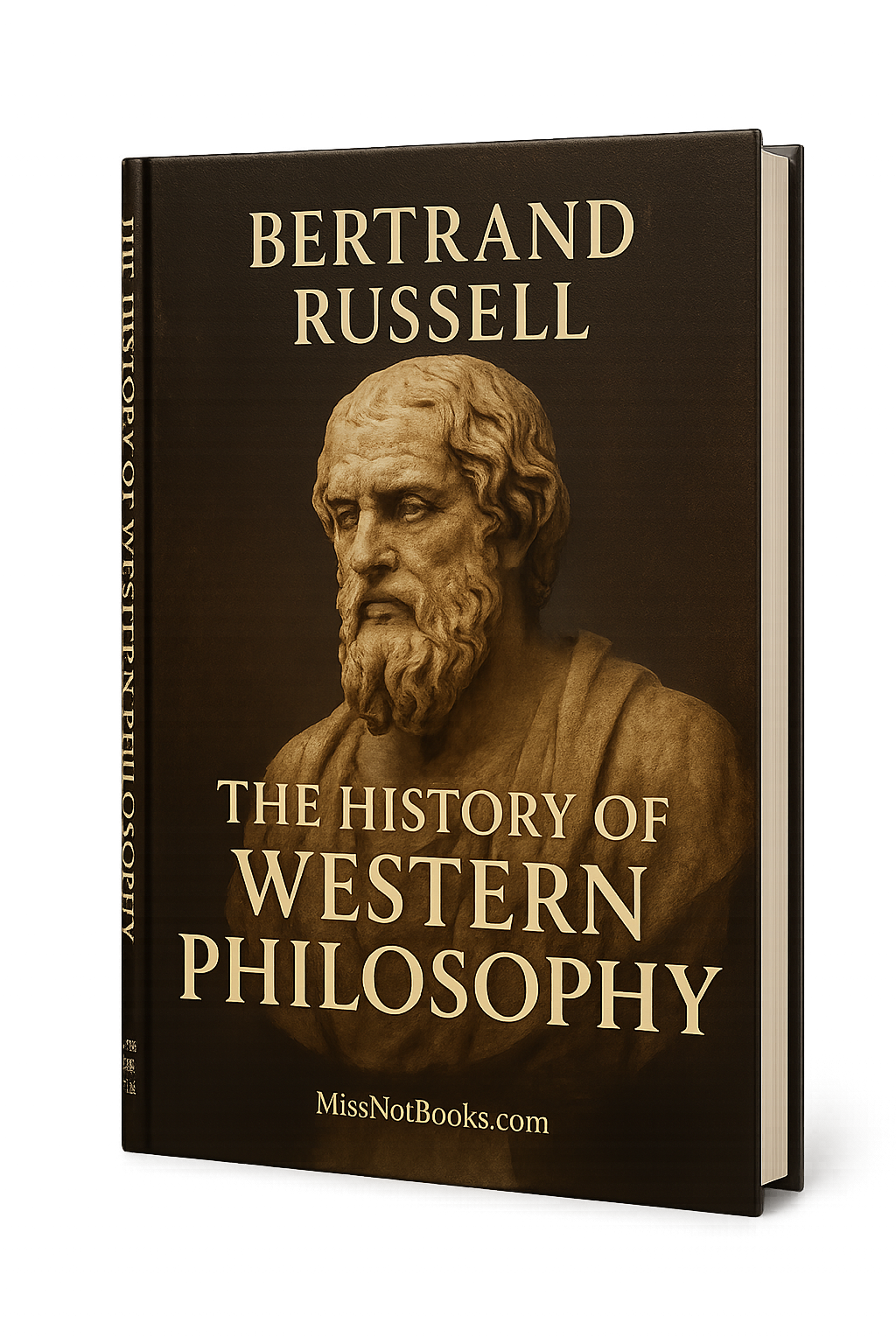
The History of Western Philosophy
In the annals of intellectual history, few works have managed to encapsulate the vast expanse of human thought across ages with such clarity and depth as this remarkable book. By successfully bridging the gap between intricate philosophical theories and the wider public, it has transformed the way we engage with the history of ideas. This work revolutionized the understanding of philosophy not as a mere academic pursuit but as a dynamic conversation that challenges, inspires, and guides every facet of human existence. It remains a seminal text that invites readers to reflect critically on the philosophical foundations that shape contemporary thought.
Core Ideas and Main Arguments
- Philosophy as a Historical Narrative: The book presents philosophy not as an isolated topic but as an evolving dialogue influenced by historical events, societal changes, and cultural shifts.
- Critical Examination of Key Philosophers: It provides insightful critiques of significant figures from Plato and Aristotle to more modern thinkers, illustrating their contributions and limitations.
- Interplay Between Science and Philosophy: The author examines how scientific advancements have influenced philosophical discourse, especially regarding ethics, politics, and epistemology.
- Philosophy's Practical Relevance: It emphasizes the importance of philosophical inquiry in addressing contemporary moral and existential questions, urging readers to appreciate its relevance beyond academia.
- Skepticism and Rational Inquiry: A dominant theme is the promotion of rational thought and skepticism as essential tools for understanding both the world and our place within it.
Author’s Intentions and Context
The author undertook this work to illuminate the rich tapestry of Western philosophical thought while challenging prevailing dogmas of his time. Emerging from a tumultuous period marked by world wars, political upheaval, and rapid technological change, the book addresses the intellectual disconnect between traditional philosophy and contemporary inquiries. The author sought not only to document philosophical evolution but to engage readers in a dialogue about issues that were increasingly pressing in the cultural and political sphere.
Structure of the Book
This profound work is systematically organized into thematic parts that encompass the breadth of philosophical inquiry:
- Ancient Philosophy: Exploration of foundational figures and their enduring impacts.
- Medieval and Renaissance Thought: Examination of how theology and reason were reconciled.
- Modern Philosophy: A focus on the Enlightenment and its aftermath, where reason began to dominate over tradition.
- Contemporary Philosophy: Discussion of existentialism, pragmatism, and analytic philosophy, leading to current debates. Each section builds on the previous one, offering readers a cohesive understanding of how ideas evolved and influenced one another.
Key Takeaways
- Philosophy is a conversation, deeply intertwined with history and culture.
- Critical engagement with philosophical texts encourages informed skepticism and open-mindedness.
- The work illustrates the importance of philosophical inquiry in contemporary society.
- Readers are equipped to apply philosophical concepts to modern dilemmas.
Why It’s Important to Read
Engaging with this book provides invaluable insights into the evolution of Western thought and the myriad ways in which philosophy intersects with daily life. Its lively narrative and accessible style make it suitable for scholars and novices alike. Students of philosophy, history, and cultural studies will find it particularly beneficial as it offers a lens through which to understand the challenges and triumphs of human reasoning over centuries. The ongoing relevance of the issues discussed ensures that every reader will walk away with a renewed perspective on their own beliefs and assumptions.
Impactful Quotes and Analysis
-
“Philosophy is to be studied, not for the sake of any definite answers to its questions, since no definitive answers can (for the most part) be known, but rather for the sake of the questions themselves.”
- This quote captures the essence of philosophical inquiry as an ongoing exploration rather than a quest for absolute truths, encouraging readers to embrace the complexity of thought.
-
“The greatest problem of our time is to take our ideas seriously.”
- Here, the author emphasizes the urgency for individuals and society to engage thoughtfully with ideas, reminding us that intellectual engagement can lead to more profound personal and societal transformations.
-
“There is much more to life than the mere use of the senses.”
- This statement highlights the philosophical belief in the significance of intellectual and emotional experiences beyond the empirical, a reminder that human existence encompasses a rich interior life that shapes our reality.
About the Author
Bertrand Russell (1872–1970) was a renowned British philosopher, logician, mathematician, and social critic. He is best known for his contributions to analytical philosophy and for his influential work across various fields, including political theory and social thought. Russell’s legacy includes advocating for peace, rational thinking, and the importance of questioning established norms, making him one of the most significant intellectual figures of the 20th century.
Don’t miss the opportunity to engage with one of the most influential works of all time. Buy it today and explore the foundations of Western philosophy. This monumental work is The History of Western Philosophy by Bertrand Russell, brought to you for educational purposes by MissNotBooks.com.