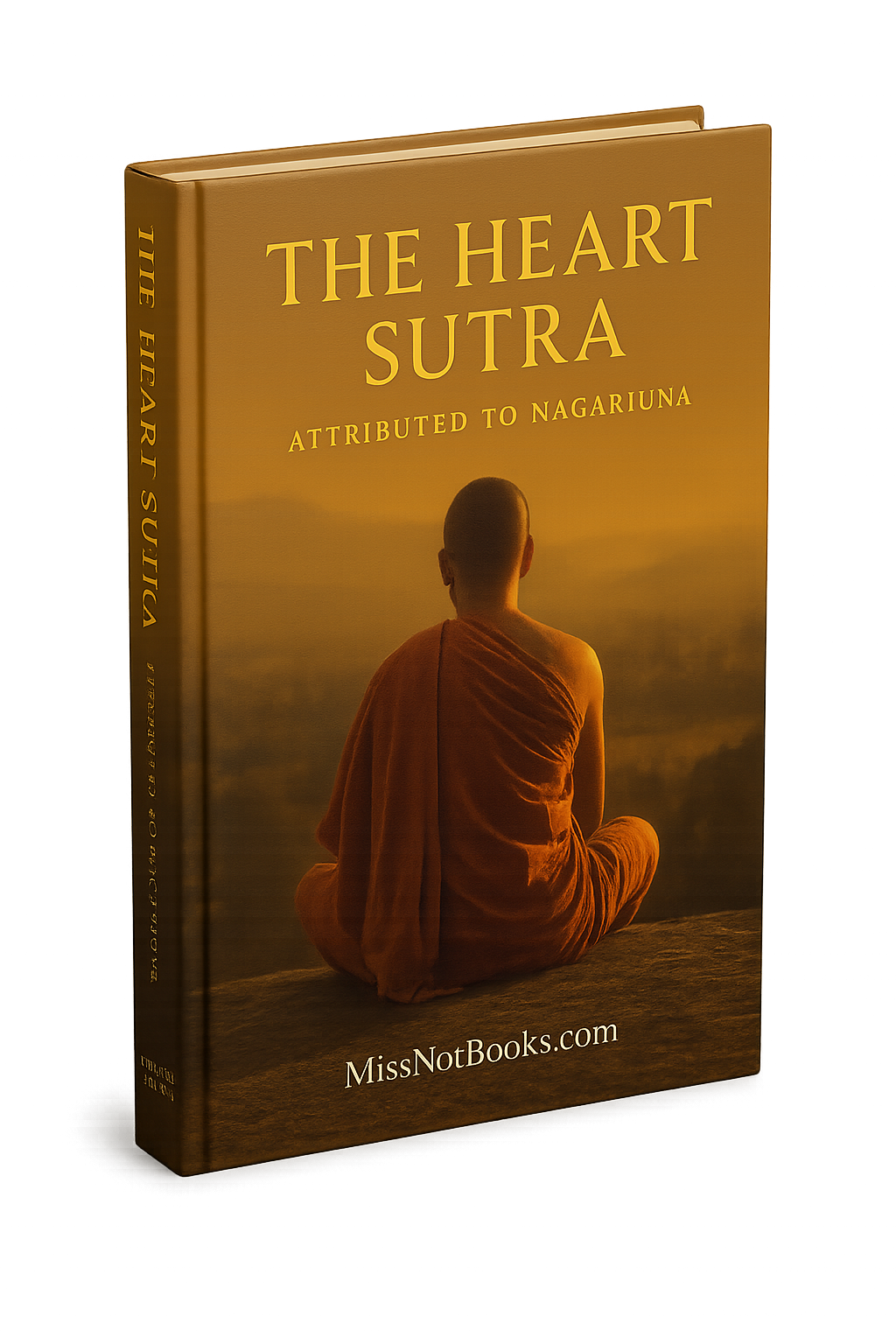
The Heart Sutra (Prajnaparamita Hridaya)
In an age marked by profound existential questions and a quest for deep understanding, one text has emerged as a beacon of clarity and insight, reshaping the contours of philosophical inquiry and spiritual exploration. Its concise yet profound meditations on the nature of reality revolutionized the discourse surrounding compassion, emptiness, and the very essence of enlightenment. This work has not only challenged established doctrines but has also inspired new pathways of thought that bridge the realms of Eastern and Western philosophies. Its teachings continue to resonate across centuries, inviting readers to delve into the depths of understanding that lie beyond conventional wisdom.
Core Ideas and Main Arguments:
- Emptiness as Reality: The primary thesis presents the concept of 'śūnyatā' (emptiness), articulating that all phenomena lack inherent existence and are interdependent.
- Non-Dualism: The work challenges dichotomous thinking, emphasizing the interconnectedness of concepts such as form and emptiness, self and other.
- The Path of Compassion: It underscores the importance of bodhicitta—compassionate intention—as essential for the pursuit of wisdom and enlightenment.
- Transcending Conventional Knowledge: The text posits that ultimate truth transcends intellectual understanding and language, inviting a direct experience of reality.
Author’s Intentions and Context: The author, responding to an era ripe with philosophical inquiry and spiritual seeking, aimed to articulate a nuanced understanding of existence that resonates with the fundamental principles of Mahayana Buddhism. At a time when diverse spiritual traditions were emerging and competing, this work sought to unify and distill complex philosophical ideas into an accessible form. It challenged the rigid notions of self and permanence that were prevalent in contemporary thought, addressing the need for a compassionate approach to understanding suffering and enlightenment.
Structure of the Book: The text is elegantly structured as a short sutra, encapsulating profound teachings in a compact format. It begins with an invocation and swiftly moves into a series of dialogues that explore the nature of perception, wisdom, and the role of a Bodhisattva. Each section builds upon the previous, leading the reader through layers of understanding that culminate in the transformative realization of emptiness.
Key Takeaways:
- The concept of emptiness is foundational to understanding life and existence.
- True wisdom arises not from scholarly knowledge but from experiential insight.
- Compassionate action is essential for personal and collective liberation.
- Engaging with the text requires not just intellectual engagement but a deep, reflective practice that embodies its teachings.
Why It’s Important to Read: Reading this work is vital in today’s world, where polarized thinking and disconnection abound. Its insights encourage readers to bridge differences and cultivate empathy, offering tools to navigate the complexities of existence with grace and clarity. Philosophers, spiritual seekers, and anyone interested in the intersection of culture and insight will find valuable reflections relevant to the challenges of modern life.
Impactful Quotes and Analysis:
- “Form is emptiness, emptiness is form.” This encapsulates the work's central theme, reminding us that our perceptions are deeply intertwined and relational, urging a transformation in how we view existence itself.
- “The Bodhisattva sees the world as it truly is.” This phrase emphasizes the importance of wisdom in conjunction with compassion, suggesting that true understanding leads to altruistic action and deeper connection.
About the Author: The teachings of this profound text are often attributed to Nagarjuna (circa 150-250 CE), a central figure in Mahayana Buddhism known for his development of the philosophy of emptiness and non-duality. His work laid the groundwork for generations of Buddhist thought, and his legacy continues to influence philosophical discourse, meditation practices, and spiritual inquiries throughout the world.
Don’t miss the opportunity to engage with one of the most influential works of all time. Buy it today and explore the beauty of human language woven into the fabric of reality. This monumental work is The Heart Sutra (Prajnaparamita Hridaya) by Nagarjuna, brought to you for educational purposes by MissNotBooks.com.