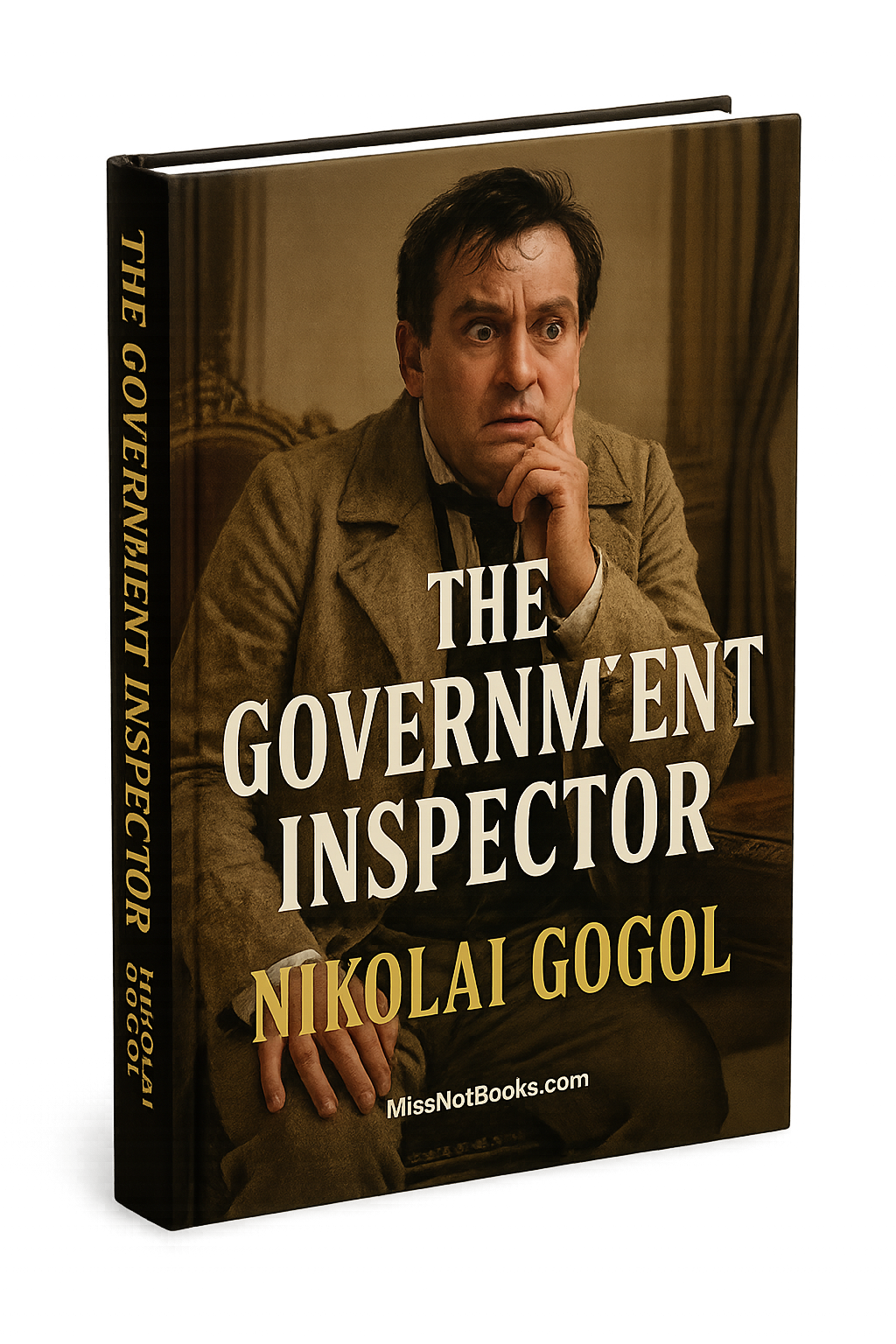
The Government Inspector
In a world often plagued by bureaucracy and corruption, a searing examination of human folly and the absurdity of authority transcends its time to illuminate the dark corners of the human condition. This groundbreaking work revolutionized the realm of satirical literature, challenging norms and exposing the systemic flaws within society and governance. With its sharp wit and piercing insights, the narrative compels readers to confront uncomfortable truths while engaging them in a hilariously absurd journey. Don’t miss the opportunity to engage with one of the most influential works of all time. Buy it today and explore the beauty of human folly in the farcical dance of power and deception that remains all too relevant today.
Core Ideas and Main Arguments
- The Nature of Corruption: The narrative intricately unveils the pervasive and often ludicrous nature of corruption within government and society, encouraging readers to reflect on their own realities.
- Identity and Deception: Themes of mistaken identity and the absurdity of social status underscore the fragility of truth and the multiplicity of human experience.
- Critique of Authority: The work serves as a bold critique of the bureaucratic machinery, revealing how authority is susceptible to whim and incompetence.
- Absurdity and Humor: Through humor, Gogol unveils deeper truths about existence and societal structures, enabling laughter amid serious critiques.
Author’s Intentions and Context
Nikolai Gogol wrote this masterwork during a period of significant change in Russia, where the burgeoning influence of bureaucracy was shaping society's dynamics. His intention was to craft a pointed satire that not only entertains but also provokes thought about governance and the moral decay of societal structures. Responding to the challenges of his time—where corruption was rampant and the individual's voice often silenced—Gogol aimed to illuminate these issues using humor as both a lens and a weapon.
Structure of the Book
- Act One: Introduces the main characters and sets up the premise of mistaken identity leading to a cascading series of comical misunderstandings.
- Act Two: Deepens the comedic conflict as the town's officials confront their fears and ambitions, exposing their weaknesses and delusions.
- Act Three: Climax and resolution; the chaotic unraveling leads to a potent reflection on human nature and governance, wrapping the narrative in a farcical yet poignant conclusion.
Key Takeaways
- Understanding Human Nature: Readers will gain insights into the absurdity of closely held beliefs about honor and status in a corrupt society.
- Critical Thinking on Governance: The narrative encourages contemplation on the relationship between the individual and authority, inspiring a questioning of accepted norms.
- Reflection on Identity: Themes of mistaken identity prompt reflections on self-perception, social roles, and the fluidity of truth in personal and public spheres.
Why It’s Important to Read
This work remains a timeless exploration of societal flaws, making it essential reading for anyone interested in literature, political science, or sociology. Its rich commentary on the absurdity of bureaucratic systems resonates in today's world, where similar themes echo throughout contemporary governance. Students, scholars, and general readers alike will find themselves enriched by Gogol’s uncanny ability to blend humor with sharp social critique.
Impactful Quotes and Analysis
-
“In a word, he was a man of a very special education.”
This line brilliantly encapsulates the absurdity of social elevation based on superficial attributes, poking fun at societal pretensions that still exist today. -
“If only the world were to breathe its last! What would happen to us then?”
Here, Gogol reflects on existential dread and human ignorance, reminding readers of the ephemeral nature of existence and the foolishness of human aspirations. -
“Take care of your reputation, it will take care of you.”
This statement resonates powerfully in an age obsessed with image and reputation, revealing the lengths to which individuals go to maintain appearances, often at the cost of integrity.
About the Author
Nikolai Gogol (1809-1852) was a Russian novelist, playwright, and short story writer, widely regarded as a precursor to later literary realism. Born in the Ukrainian countryside, he later moved to St. Petersburg, where he began his literary career. His remarkable ability to blend the humorous with the profound has secured his legacy as one of the pioneering figures in Russian literature, influencing generations of writers and thinkers. Gogol’s works often explore themes of identity, absurdity, and societal critique, establishing him as a foundational figure in both the satirical and theatrical landscape of modern literature.
This monumental work is The Government Inspector by Nikolai Gogol, brought to you for educational purposes by MissNotBooks.com.