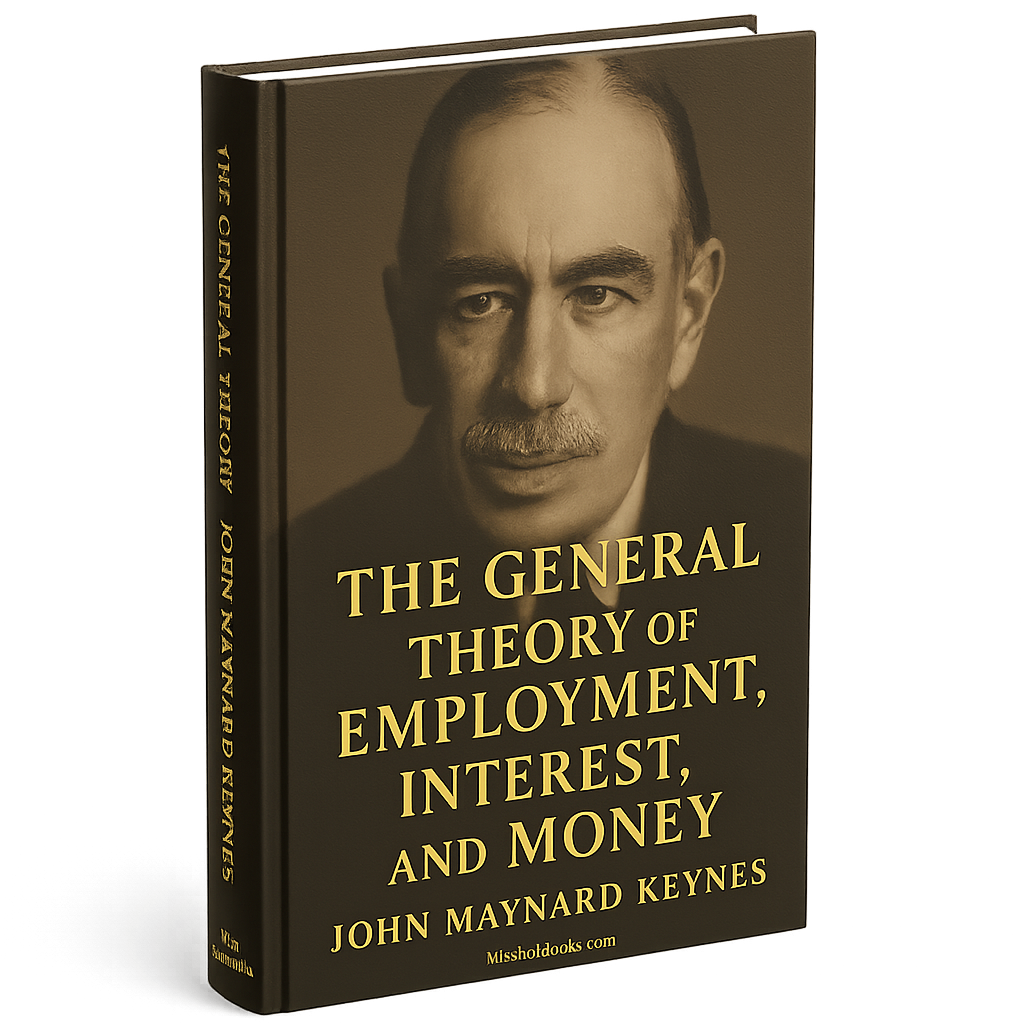
The General Theory of Employment, Interest, and Money
In a world still reeling from the economic upheavals of the early 20th century, a singular text emerged that would challenge conventional wisdom and reshape economic thought forever. This book not only revolutionized the way we understand economic cycles and government intervention but also questioned the very foundations of capitalist theory. By advocating for a new perspective on employment, interest rates, and the role of money, it provided a framework that would guide policymakers through economic tumult and define the discipline of macroeconomics. Its arguments have reverberated through decades, making it a cornerstone of modern economic theory and practice.
Core Ideas and Main Arguments:
- Demand-Driven Economics: The notion that aggregate demand is the primary driver of economic activity, challenging the classical notion that supply always creates its own demand.
- Role of Government: A bold proposition that government intervention is necessary to stabilize the economy during periods of recession or high unemployment, fundamentally altering the relationship between state and market.
- Liquidity Preference: An exploration of how people prefer to hold cash or liquid assets, affecting interest rates and investment, introducing a more nuanced understanding of monetary theory.
- Effective Demand: The concept that insufficient demand leads to unemployment, which shifts the focus from overproduction to underconsumption as a cause of economic downturns.
Author’s Intentions and Context: This pioneering work emerged during the Great Depression, a time when traditional economic theories seemed inadequate to explain the widespread suffering and prolonged economic downturn. John Maynard Keynes sought to provide a framework that addressed the inadequacies he identified in classical economics. He intended to empower governments to adopt proactive fiscal policies that could alleviate unemployment and stimulate economic recovery. By advocating for a more active role of the state in economic affairs, he aimed to create a new paradigm that addressed contemporary issues without the constraints of outdated doctrines.
Structure of the Book: The book is organized into several parts, each building upon the last to create a comprehensive economic theory:
- Introduction of Key Concepts: Outlining the underlying concepts of aggregate demand and economic equilibrium.
- Detailed Examination of Employment and Unemployment: Analyzing labor markets and the factors influencing employment levels.
- Interest, Money, and Its Functions: Discussing the roles played by monetary policy and interests in economic stability.
- General Principles of Economic Theory: Expanding on the overall framework and implications for policy and practice.
Each section contributes to a cohesive understanding of economic dynamics, enabling readers to grasp complex interactions between different economic factors.
Key Takeaways:
- Economic stability relies on maintaining effective demand through government intervention.
- Traditional economic theories do not sufficiently account for the nuances of consumer behavior and market realities.
- Understanding liquidity preference is essential for effective monetary policy.
- The insights provided can guide both economic policymakers and individual investors.
Why It’s Important to Read: This book maintains its relevance in contemporary discussions surrounding economic policy, especially in times of crisis. Economists, policymakers, and students of economic theory will find value in its insights as they continue to grapple with pressing issues such as unemployment, inflation, and government fiscal responsibility. Moreover, anyone interested in understanding the interplay of politics and economics will discover profound lessons that resonate across time and context.
Impactful Quotes and Analysis:
-
"The difficulty lies, not in the new ideas, but in escaping from the old ones."
This quote speaks to the challenge of shifting entrenched economic beliefs, a theme that remains pertinent as economic paradigms evolve. -
"In the long run, we are all dead."
A striking reminder that policy must focus on immediate solutions rather than deferring action, emphasizing the urgency of addressing economic crises head-on. -
"The state is a great economic co-ordinator."
Here, Keynes asserts the essential role of government in orchestrating economic activity, challenging the belief in laissez-faire economics.
About the Author: John Maynard Keynes (1883–1946) was a British economist whose ideas fundamentally changed economic theory and policy. Renowned for his influential work in macroeconomics, Keynes is credited with laying the foundation for modern economic thought and advocating for state intervention during economic downturns. His legacy continues to shape discussions around fiscal policy and economic strategy in contemporary economics.
Don’t miss the opportunity to engage with one of the most influential works of all time. Buy it today and explore the foundation of modern economic theory. This monumental work is The General Theory of Employment, Interest, and Money by John Maynard Keynes, brought to you for educational purposes by MissNotBooks.com.