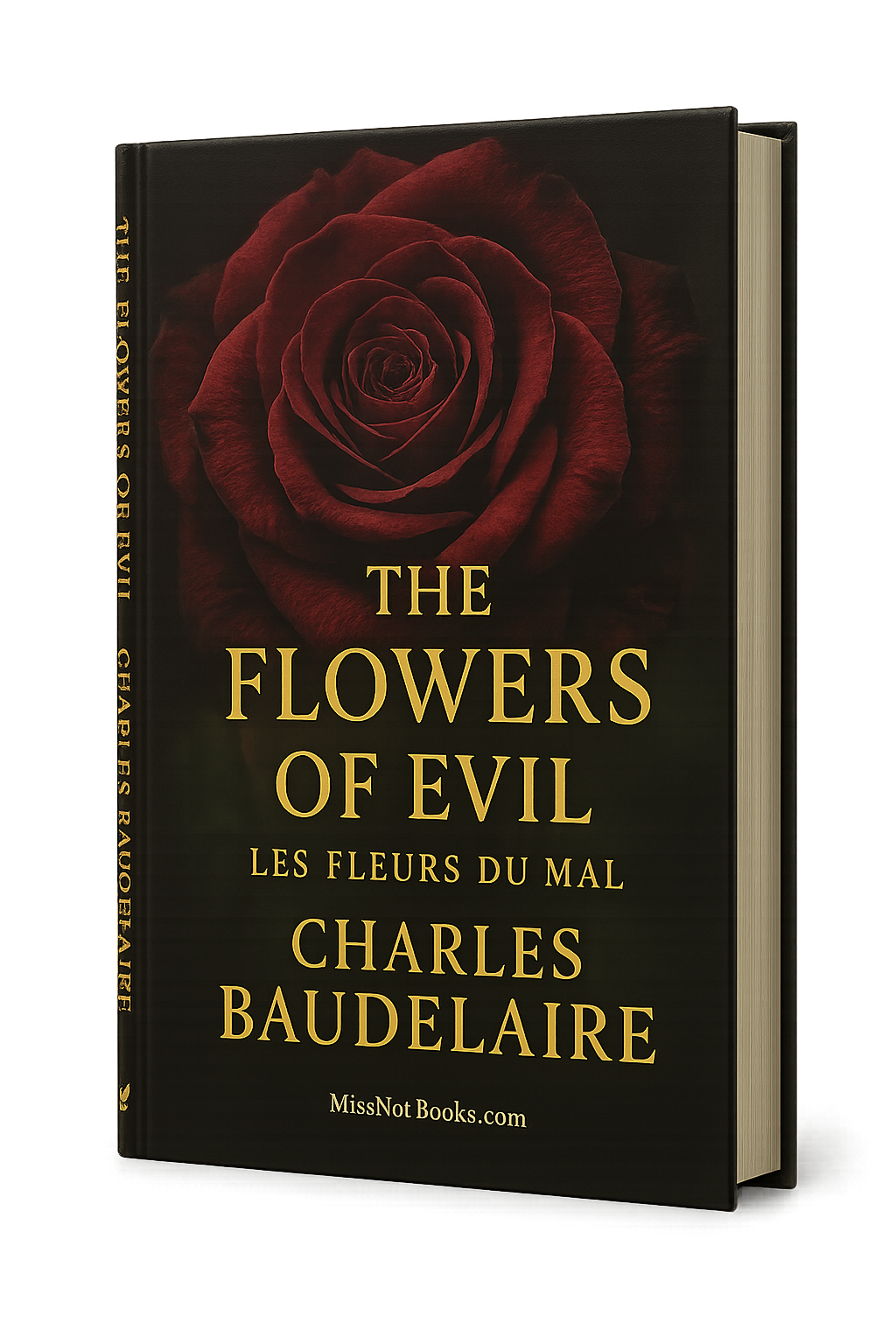
The Flowers of Evil (Les Fleurs du mal)
In a world desperate for meaning, beauty, and understanding, one book emerged to challenge societal norms and explore the very depths of human experience. This monumental work offered a radical redefinition of aesthetics and morality, laying the groundwork for modern poetry and provoking a fierce debate concerning the nature of good and evil. With its fearless exploration of desire, decay, and the darker aspects of existence, the book not only reshaped literary discourse but also ignited a cultural revolution, influencing countless artists, thinkers, and movements that followed.
Don’t miss the opportunity to engage with one of the most influential works of all time. Buy it today and explore the haunting beauty of human experience.
Core Ideas and Main Arguments
- The Duality of Experience: The text presents a nuanced understanding of human nature, embracing the coexistence of beauty and ugliness, love and hatred, sin and salvation.
- Symbolism and Modernity: The use of rich imagery and symbolism marks a shift toward modernity, reflecting the complexities of contemporary urban life and personal turmoil.
- Exploration of Mortality: Themes of death, decay, and the passage of time are pervasive, inviting readers to contemplate their own mortality and the transient nature of beauty.
- Revolt Against Conventional Morality: The text boldly confronts established moral paradigms, asserting the legitimacy of exploring taboo subjects and emotions in art.
- The Poet's Role: It articulates a vision of the poet as a visionary who, through their suffering, can reveal profound truths about society and the human condition.
Author’s Intentions and Context
The author sought to illuminate the darker corners of human existence during an era marked by moral rigidity and societal constraint. His intent was to challenge the sanitized notions of beauty that dominated the literary scene; instead, he sought to embrace life's contradictions and complexities. Responding to the rapid transformations of 19th-century France—marked by industrialization, urbanization, and shifting cultural values—this work addresses the philosophical and aesthetic dilemmas of its time, advocating for a more expansive understanding of art and experience.
Structure of the Book
The book is organized into several parts, each delineating different thematic explorations:
- Spleen and Ideal: This section contrasts the beauty of idealism with the despair of human existence, serving as a foundation for the book’s exploration of duality.
- Parisian Scenes: A collection of observations of urban life, this part captures the vibrancy and decay of the city, reflecting the complexities of modern existence.
- The Erotic and the Grotesque: These poems delve into the realms of desire and moral ambiguity, challenging readers to confront their own passions and darker inclinations.
- Death: In this final thematic section, the author grapples with mortality, ultimately suggesting that beauty can emerge even from decay.
Each part contributes to the overarching thesis of the work, creating a rich tapestry that reflects the complexities of life and art.
Key Takeaways
- The interplay of beauty and horror reveals the complexity of existence.
- Artistic expression must encompass the full spectrum of human emotions, including those deemed socially unacceptable.
- The notion of the poet as an essential guide through despair and joy invites a reevaluation of the role of art in society.
- Confrontation with mortality can foster deeper appreciation for the fleeting nature of beauty and life itself.
Why It’s Important to Read
Reading this work is not merely an academic exercise; it is a vital exploration of the human condition that remains relevant today. Its powerful themes resonate across cultures and eras, urging readers to engage with their own complexities and questions about morality, beauty, and existence. Students of literature, philosophy, psychology, and art will find invaluable insights within its pages, as will anyone seeking a deeper understanding of their own life experiences amidst a modern landscape that often glorifies superficiality.
Impactful Quotes and Analysis
-
“The greatest artist is the one who knows how to transform the commonplace into the sublime.”
This quote encapsulates the essence of the author’s philosophy, emphasizing the transformative potential of art and the everyday struggles that inform creativity. -
“Behind every beauty, there is a shadow.”
Here, the author acknowledges the inextricable link between beauty and sorrow, inviting readers to accept the darker aspects of existence rather than shun them. -
“To be a poet is to be a prisoner of your own soul.”
This poignant reflection on the burdens and gifts of artistic creation speaks to the profound emotional struggles faced by those who seek to articulate the complexities of life through their work.
About the Author
Charles Baudelaire (1821–1867) was a French poet, critic, and translator whose work played a significant role in the development of modern literature. His groundbreaking exploration of beauty and moral ambiguity laid the foundation for the Symbolist movement and had lasting effects on subsequent literary and artistic paradigms. Baudelaire's innovative style and thematic boldness position him as a pivotal figure in the history of poetry and the exploration of human emotion.
This monumental work is The Flowers of Evil by Charles Baudelaire, brought to you for educational purposes by MissNotBooks.com.