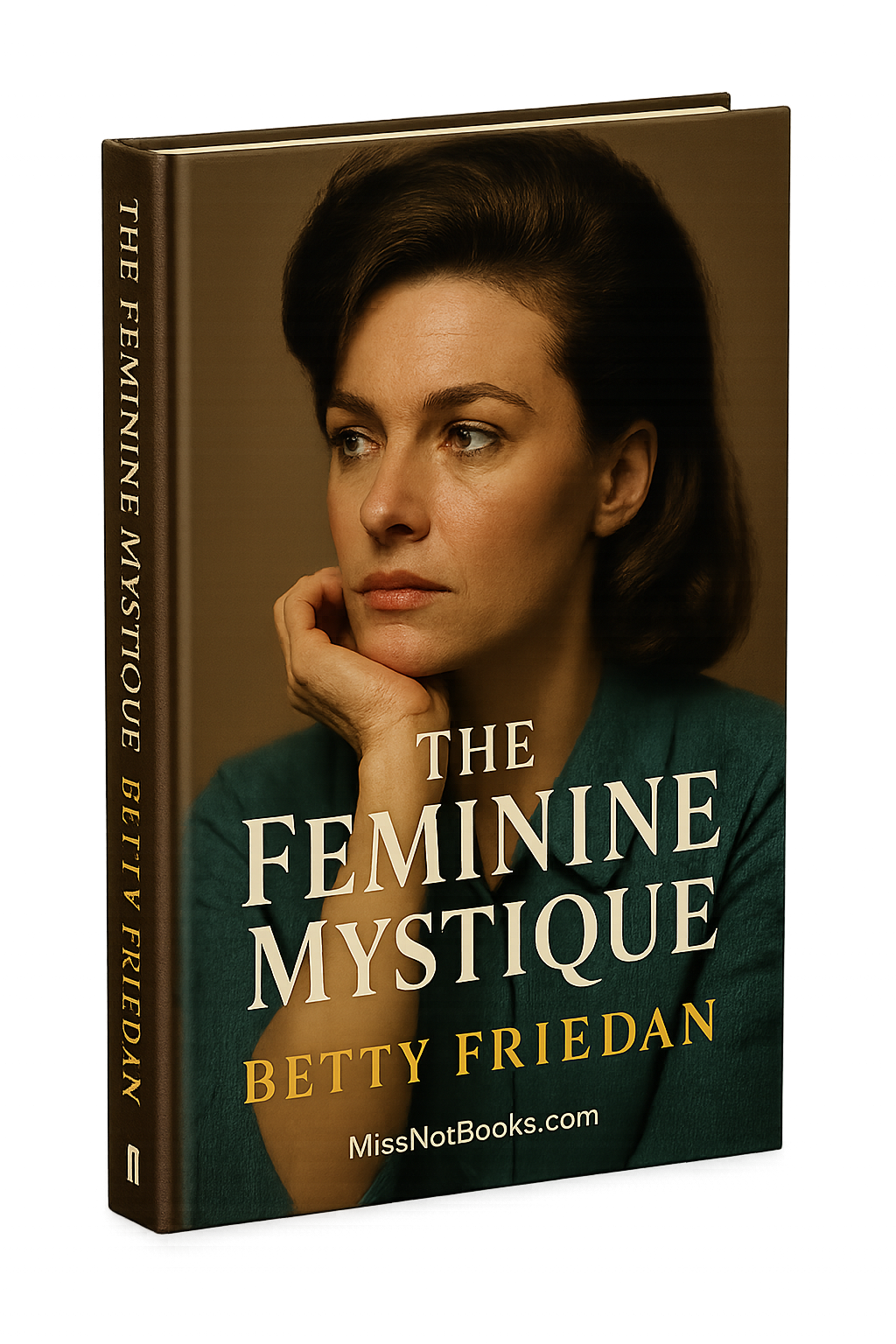
The Feminine Mystique
In an era marked by rigid societal norms and limited visions of women's roles, a groundbreaking text emerged that transformed not only the landscape of gender relations but also sparked a revolution in women's rights and identity. This seminal work dissected the societal expectations placed upon women and illuminated the discontent simmering beneath the surface of domesticity. By challenging the notion that fulfillment could solely be found within the confines of home and motherhood, it opened the floodgates for a new wave of feminist thought and activism, catalyzing a movement that would reshape cultural, social, and political dynamics for generations to come. Don’t miss the opportunity to engage with one of the most influential works of all time. Buy it today and explore the roots of contemporary feminism.
Core Ideas and Main Arguments:
- The Problem That Has No Name: The book articulates the widespread sense of dissatisfaction experienced by many women in post-war America, questioning the ideal of domesticity that society had enforced.
- Critique of Traditional Gender Roles: It challenges the culturally prescribed roles of women as solely homemakers and caregivers, arguing that these roles undermine women's potential and aspirations.
- Call for Feminine Liberation: Emphasizes the necessity for women to seek personal and professional fulfillment outside of traditional domestic realms.
- Intersection of Personal and Political: It presents the idea that personal experiences of women are not isolated but are reflective of broader societal structures and injustices.
Author’s Intentions and Context: Written in the early 1960s, the author aimed to articulate the feelings of discontent that women experienced in a post-war society that glorified the domestic sphere as the pinnacle of female achievement. Responding to a historical moment characterized by the rise of suburban life and a resurgence of traditional gender roles post-World War II, the book sought to confront the philosophical challenges of identity and purpose that many women faced. It was a courageous call to action against the stagnation of women's roles and emphasized that liberation and fulfillment could be found through self-actualization and societal change.
Structure of the Book: The book is organized into several thematic sections that systematically explore various aspects of women's lives:
- The Problem That Has No Name: An exploration of women's dissatisfaction.
- The Happy Housewife Myth: A critique of the idealized image of women's roles.
- The Feminine Mystique: An analysis of how society’s values devalue women's aspirations.
- The Feminine Solution: Proposes paths toward personal fulfillment and liberation.
- A New Vision of Womanhood: Envisions a future where women can redefine their identities beyond traditional confines.
Key Takeaways:
- The realization that many women shared similar feelings of discontent, suggesting systemic issues rather than individual failings.
- An understanding of how societal structures influence personal identity and fulfillment.
- The imperative for women to resist traditional roles and strive for broader definitions of success and personal satisfaction.
Why It’s Important to Read: The relevance of this book endures in today's discussions surrounding gender, identity, and equality. It remains a vital text for anyone seeking to understand the roots of modern feminism and women's rights movements. Activists, scholars, and everyday readers alike will benefit from engaging with its powerful ideas, as they are not just historical artifacts but livelong lessons and calls for recognition of ongoing gender disparities.
Impactful Quotes and Analysis:
- “The problem that has no name has found its name.” This quote captures the essence of the widespread dissatisfaction women faced and signifies the beginning of a dialogue about women's roles in society.
- “To be a woman in America is to have a dual identity.” Here, the author encapsulates the conflict many women feel between societal expectations and their personal desires, revealing the complexity of identity in a patriarchal society.
About the Author: Betty Friedan (1921–2006) was an American feminist writer, activist, and co-founder of the National Organization for Women (NOW). Often credited with sparking the second wave of feminism in the United States, her writings and activism challenged norms surrounding gender roles and significantly influenced the women’s liberation movement. Friedan’s legacy continues to inspire new generations to advocate for gender equality and women's rights.
This monumental work is The Feminine Mystique by Betty Friedan, brought to you for educational purposes by MissNotBooks.com.