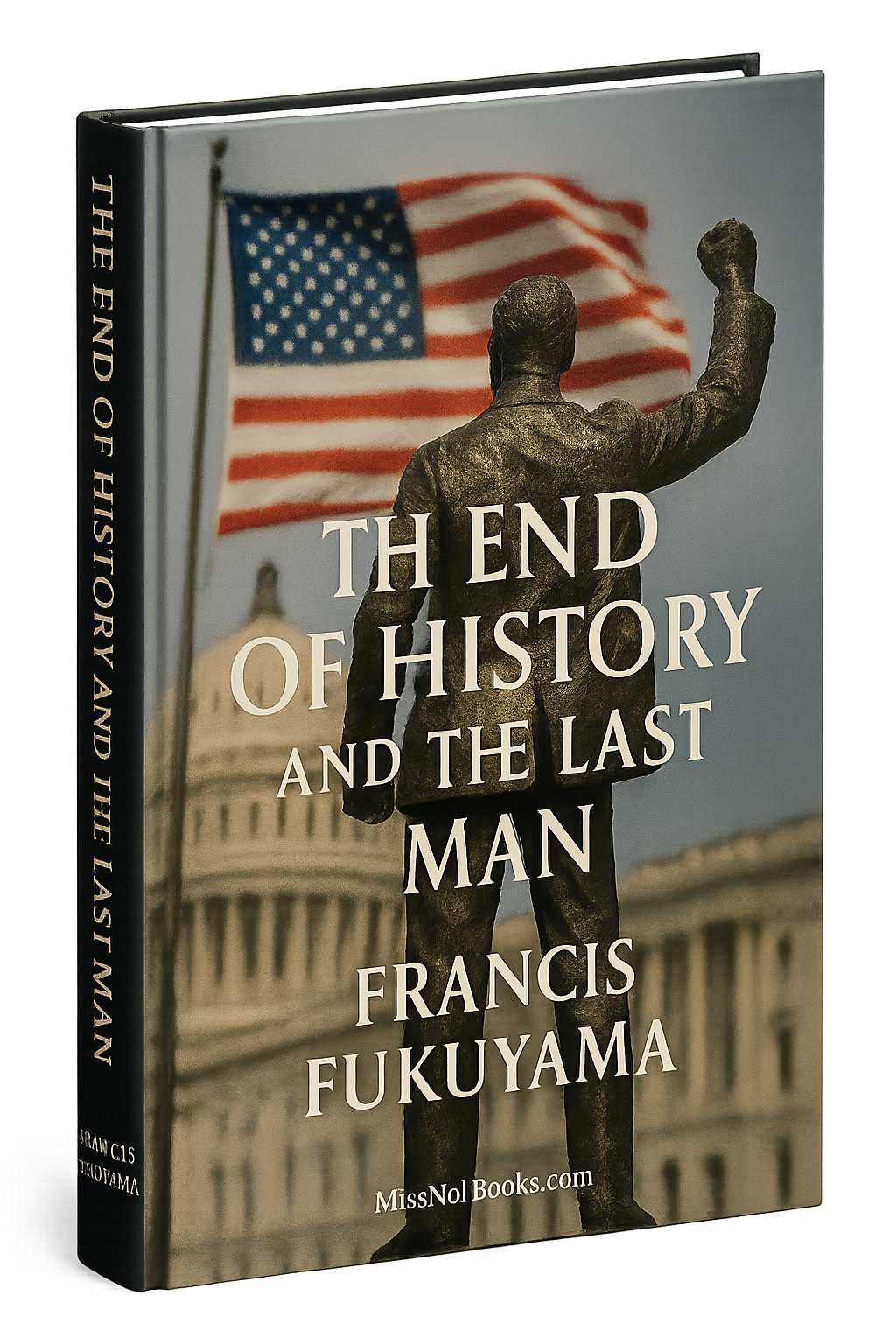
The End of History and the Last Man
In an era marked by profound ideological battlefields, one book emerged that fundamentally reframed our understanding of political philosophy, history, and the very nature of progress. Challenging the prevailing notions of existential conflict and totaling modernity, this text posited a controversial thesis that not only sparked vigorous debate but also transformed the intellectual landscape of the late 20th century. It suggested that the end of political evolution had arrived, wherein liberal democracy stood as the final, triumphant form of government. This book altered how we view history, governance, and human aspiration, making its arguments timeless and poignantly relevant even today.
Core Ideas and Main Arguments:
- The End of Ideological Evolution: The author argues that the historical progression of governance culminates in liberal democracy, suggesting a cessation of ideological evolution.
- Historical Materialism Reconsidered: By refuting Marx's historical materialism, the text posits that ideas, rather than material conditions, drive history and its developments.
- Universal Recognition of Rights: It emphasizes the idea that human beings inherently seek recognition and that liberal democracy fulfills this deep-rooted desire for dignity.
- Post-Historical Society: The author speculates on the implications of a society where liberal democracy prevails, contemplating what it means for human fulfillment and potential.
Author’s Intentions and Context:
Written in the aftermath of the Cold War, the author sought to articulate a vision for a world that had witnessed the collapse of totalitarian regimes, reflecting on what this meant for future governance and human rights. In an age where faith in ideologies was being rekindled, the work aimed to quell the mystique surrounding historical determinism by insisting that democratic governance was not the end but a necessary foundation for a thriving civilization. The author challenged us to reflect on the human condition and the implications of living in a world without competing ideologies.
Structure of the Book:
The book is systematically divided into several thematic sections:
- Historical Context and Philosophical Foundations: This section lays the groundwork, presenting a synthesis of historical and philosophical perspectives.
- Analysis of Modern Ideologies: Here, the text critically examines competing ideologies, assessing their relevance and sustainability in the post-Cold War landscape.
- The Consequences of Liberal Democracy: The author explores the social, political, and economic implications of a world dominated by liberal democracy.
- Future Speculations: The final chapter reflects on the potential challenges facing a post-historical world and the quest for meaning in a seemingly settled society.
Key Takeaways:
- Liberal democracy is portrayed as the culmination of human political evolution.
- The need for recognition and dignity is fundamental to human nature and politics.
- The concept of a 'post-historical' society raises questions about human fulfillment and engagement.
Why It’s Important to Read:
This work continues to resonate in our tumultuous political landscape, providing insights into the complexities of democracy, governance, and the human condition. Students, scholars, and anyone engaged in political discourse will find value in its arguments. The book challenges readers to confront the unsettling yet transformative reality of living in a world where ideological debates are receding, urging them to consider what comes next for humanity when history seems to settle into a single narrative.
Impactful Quotes and Analysis:
-
"What we may be witnessing is not just the end of the Cold War, but the end of history as such."
This statement encapsulates the book's thesis and challenges readers to reflect on the implications of ideological supremacy. It provokes discussion on whether history is indeed progressing toward an endpoint or continues to evolve. -
"A man who is deprived of his identity and individuality will eventually find a way to assert himself."
This quote speaks to the human struggle for recognition, emphasizing the role of individual dignity in political discourse. It underscores the intrinsic need for personal affirmation within the societal structure.
About the Author:
Francis Fukuyama (born October 27, 1952) is an American political scientist, political economist, and author known for his contributions to international relations and political theory. He gained prominence with his 1989 essay "The End of History?", which laid the groundwork for the arguments presented in this foundational work. Fukuyama's insights into democracy, governance, and societal progress have positioned him as a key figure in contemporary political analysis, leaving a lasting legacy that continues to inspire and provoke intellectual discourse.
Don’t miss the opportunity to engage with one of the most influential works of all time. Buy it today and explore the foundation of modern political thought. This monumental work is The End of History and the Last Man by Francis Fukuyama, brought to you for educational purposes by MissNotBooks.com.