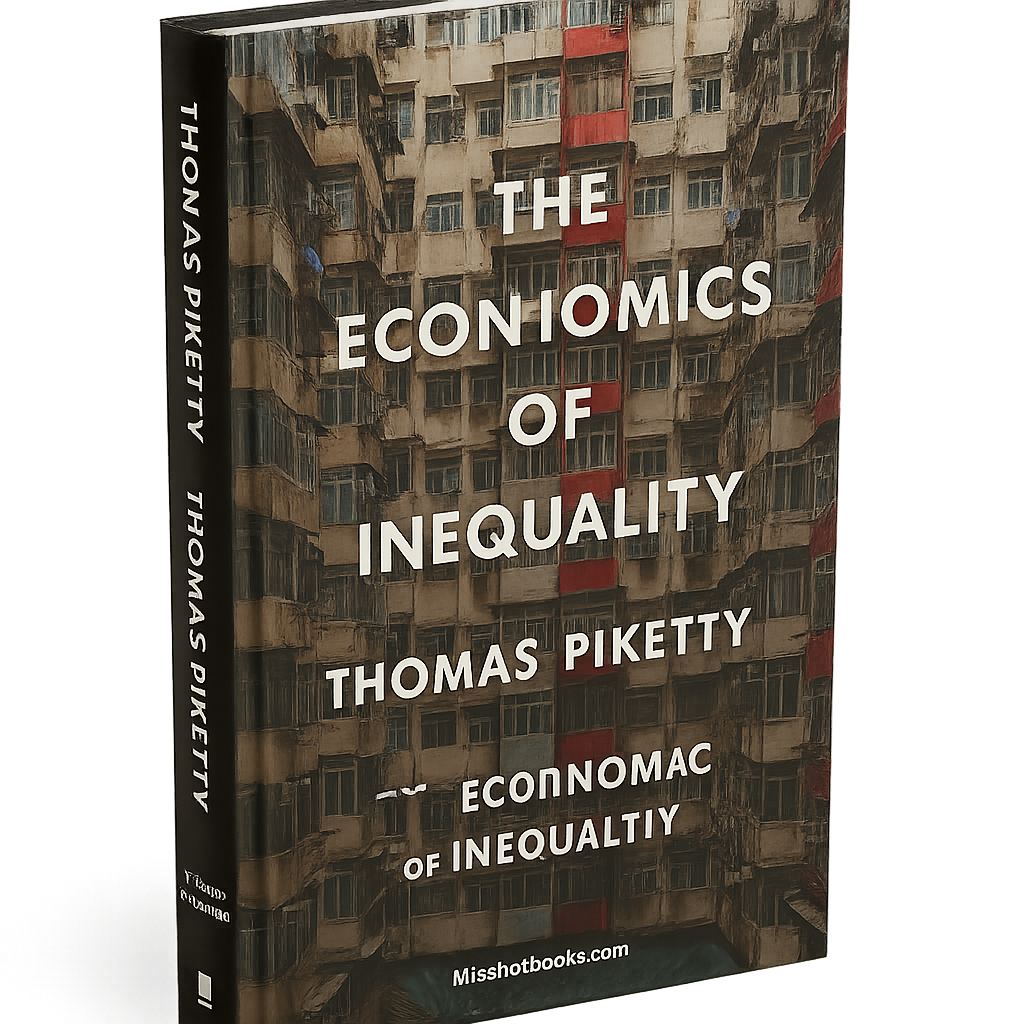
The Economics of Inequality
In an era marked by soaring disparities in wealth and income, a groundbreaking volume has emerged, compelling societies to confront the often-ignored realities of economic imbalance. This book fundamentally revolutionized the discourse surrounding economic inequality, shedding light on its systemic roots rather than individual failings. By illuminating the mechanisms that perpetuate inequality, it challenged entrenched beliefs and catalyzed a global conversation about wealth distribution, offering a clarion call for economic justice and reform. Don’t miss the opportunity to engage with one of the most influential works of all time. Buy it today and explore the foundation of modern economic thought.
Core Ideas and Main Arguments
- Historical Context of Wealth Distribution: The book chronicles wealth distribution across centuries and illuminates the patterns and cycles of economic inequality.
- The Role of Capital: It posits that accumulated capital tends to yield returns that outpace economic growth, thus exacerbating inequality.
- Data-Driven Analysis: Extensive empirical research and data analysis substantiate its claims, providing a solid foundation for its arguments.
- Policy Proposals: The work suggests progressive taxation, transparency in financial markets, and rethinking capital ownership as mechanisms to combat inequality.
- Global Perspective: It not only addresses the historical context of inequality in developed nations but also extends the analysis to understanding global inequalities.
Author’s Intentions and Context
The author, responding to a historical moment marked by rising concerns over wealth concentration and the socio-political upheavals it causes, set out to provoke dialogue on the urgent need for systemic change. The book emerges against a backdrop of financial crises and populist movements, aiming to challenge the dominant narratives of meritocracy and deregulation that have ruled economic thought for decades. By grounding his arguments in historical data, the author seeks to reveal that economic inequality is not merely a product of contemporary policy but a persistent feature of capitalism that requires active management.
Structure of the Book
The book is organized into a series of thematic chapters that progressively build its argument.
- Introduction to Inequality: Outlines the historical evolution of wealth distribution.
- Capital in the Twenty-First Century: Explains the dynamics of capital accumulation and its implications.
- The Share of Capital: Discusses the growing concentration of wealth among the elite.
- Distribution of Income and Wealth: Analyzes the divergence of labor income and capital income.
- Policy Responses and Global Solutions: Offers insightful policy recommendations and ethical considerations.
Each section not only contributes to an overarching narrative but also serves as a building block in understanding the comprehensive architecture of economic inequality.
Key Takeaways
- Understanding inequality is crucial for addressing social and economic stability.
- The mechanisms of capital accumulation can exacerbate wealth disparities if left unchecked.
- Historical insights reveal that inequality is not a modern phenomenon but a long-standing issue.
- Empirical evidence shows how policy reforms can significantly affect wealth distribution.
- Collective political will is necessary to implement effective measures against inequality.
Why It’s Important to Read
This transformative work remains vital for anyone seeking to understand the complexities of our modern economy and the socio-political ramifications of economic disparities. Economists, policymakers, social scientists, and engaged citizens alike will find that it not only elucidates the causes and effects of inequality but also inspires a concerted call for systemic solutions. By engaging with this text, readers will gain the analytical tools to contribute meaningfully to one of the most pressing issues of our times.
Impactful Quotes and Analysis
-
"The history of inequality is intimately bound up with the history of property."
- This insight emphasizes the foundational role that property rights play in shaping socio-economic structures, urging readers to reconsider the narratives surrounding ownership and privilege.
-
“The future of our societies will depend on our ability to govern capital and ensure its compatibility with democracy.”
- Highlighting the tension between democratic ideals and capitalist practices, this quote underscores the necessity of reconciling economic systems with social values to safeguard democratic institutions.
-
"The return of capital is greater than the rate of economic growth."
- This provocative claim encapsulates the core argument: wealth can grow independently of broader economic prosperity, deepening the divide between the rich and the poor, thereby challenging the fairness of capitalist systems.
About the Author
Thomas Piketty, born in 1971, is a French economist known for his research on wealth and income inequality. He garnered global acclaim for his pioneering analysis in economic history and his advocacy for progressive taxation policies. Piketty’s work has significantly influenced contemporary debates on capitalism and social justice, positioning him as a leading figure in economic thought and policy reform.
This monumental work is The Economics of Inequality by Thomas Piketty, brought to you for educational purposes by MissNotBooks.com.