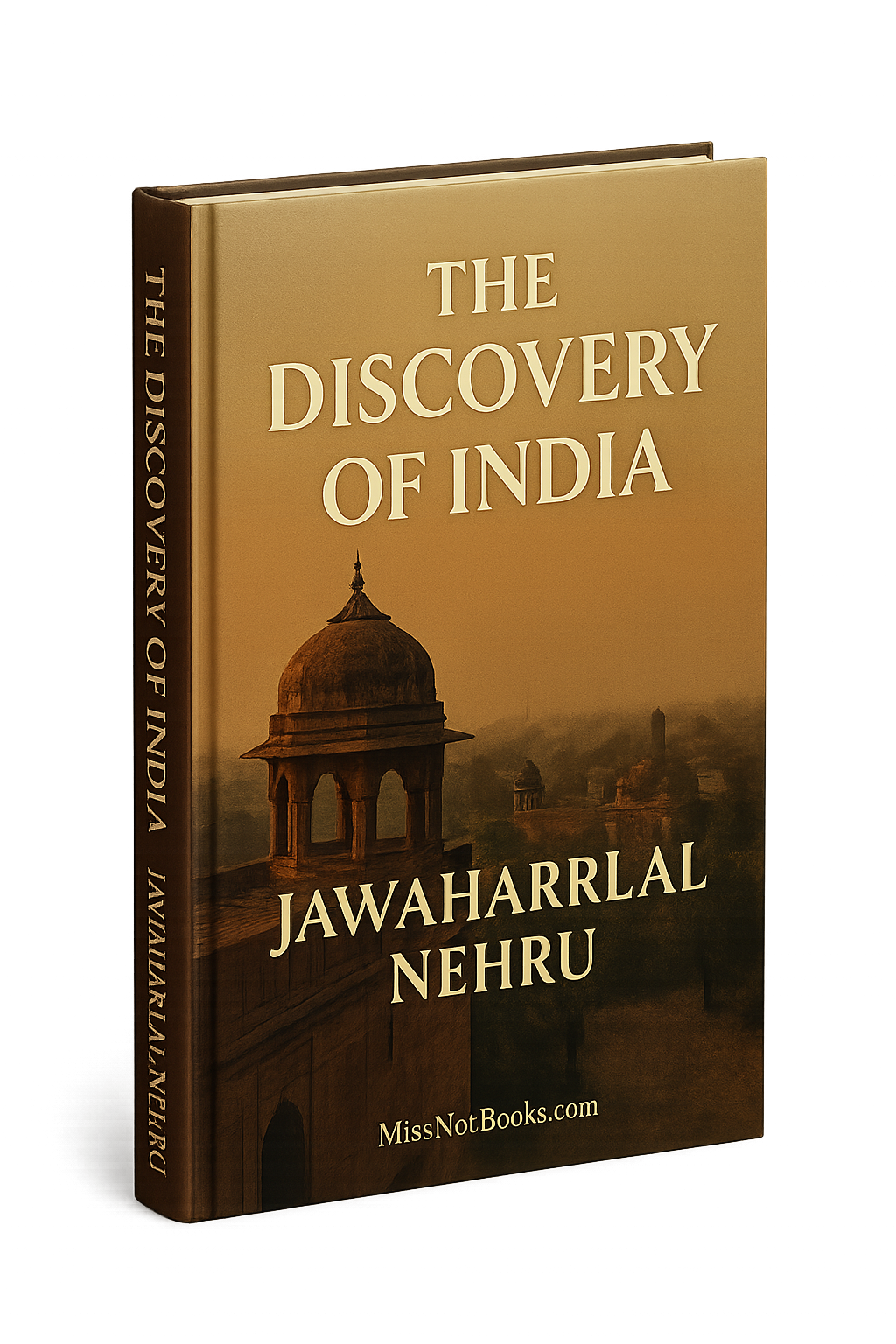
The Discovery of India
Transforming Perspectives: An Overview of a Landmark Exploration
In an era marked by colonial dominance and cultural upheaval, one remarkable work emerged to challenge perceptions, ignite introspection, and foster a sense of national identity. This book serves as a reflective tapestry, weaving together the rich historical, cultural, and philosophical fabric of a nation, allowing readers to experience the profound and diverse legacy of its civilization. By boldly confronting colonial narratives and providing a voice to centuries of indigenous thought and culture, it revolutionized not only how the world viewed this land but also how its own people might understand their past, present, and future. Don’t miss the opportunity to engage with one of the most influential works of all time. Buy it today and explore the roots of national identity.
Core Ideas and Main Arguments
- Cultural Heritage: The book intricately discusses the vast history and cultural plurality of a region, emphasizing its contributions to the world in terms of art, philosophy, and science.
- Colonial Critique: It provides a fervent critique of colonialism, challenging the perspectives imposed by foreign rulers and advocating for an understanding rooted in indigenous narratives.
- National Identity: The author argues for a collective identity formed through shared history and cultural experiences, inspiring a sense of unity and purpose among his readers.
- Philosophical Reflection: It delves into the philosophical underpinnings of spirituality and materialism, illustrating the complexities of life and thought in relation to modernity.
- Vision of Independence: Ultimately, the narrative serves as a clarion call for independence and self-determination, fostering hope amidst a landscape dominated by oppression.
Author’s Intentions and Context
In crafting this compelling narrative, the author sought to convey not merely historical facts but to resurrect the spirit of a civilization that had endured centuries of fragmentation and subjugation. He wrote at a time when the fight for independence was gaining momentum, acutely aware of the importance of cultural pride in the struggle against colonial powers. By engaging with the philosophical and spiritual dimensions of society, he addressed broader existential questions, positioning his manifesto not just as a call to arms but as a celebration of identity, philosophy, and cultural richness.
Structure of the Book
The book is organized into thematic segments, each contributing to a continuous flow of ideas that build upon one another:
- Historical Overview: A sweeping narrative that begins with the ancient foundations and progresses through key civilizations and transformations.
- Cultural Insights: Sections dedicated to art, literature, and religion, illustrating the diversity and depth of the region’s cultural landscape.
- Philosophical Explorations: Engaging discussions that intersect spirituality with the material realities of life, emphasizing the quest for meaning.
- Vision for the Future: A concluding vision that proposes a pathway toward self-determination and revitalization of national pride.
Key Takeaways
- Understanding the intricate past of a region is crucial to any discussions about its future.
- The power of cultural identity can galvanize movements for change and solidarity.
- Colonial narratives can be deconstructed to reveal a more nuanced understanding of history.
- Philosophy and spirituality remain vital in grappling with modernity and its challenges.
Why It’s Important to Read
This book remains profoundly relevant in today’s world, where questions of identity, culture, and self-determination are ever more pressing. Its insights resonate not just within the context of its own nation, but in many modern contexts grappling with the aftereffects of colonialism and the quest for a cohesive identity. Scholars, students, and anyone interested in the interplay of culture and politics will find themselves enriched by the breadth of knowledge and insight offered between its covers.
Impactful Quotes and Analysis
-
“What we really are matters more than what we say.”
This quote captures the essential theme of authenticity and the significance of cultural truths over imposed identities, a reminder of the power of self-perception and self-realization. -
“A great adventure is a part of life.”
Here, the author encapsulates the spirit of exploration, both literal and intellectual, urging readers to embrace the journey of understanding history and oneself as intricately connected. -
“Freedom is not merely the absence of bondage, but the presence of a creative life.”
This assertion moves beyond the conventional definition of freedom, advocating for a richer, engaged existence that fosters creativity and agency, vital for any nation seeking autonomy.
About the Author
Jawaharlal Nehru (1889–1964) was a central figure in India’s struggle for independence and served as the nation’s first Prime Minister. A prominent political leader, he was a key architect of modern India and played an instrumental role in shaping its democratic and secular character. Nehru’s writings reflect his deep philosophical insights and are instrumental in articulating the aspirations of a nation seeking its rightful place in the world.
This monumental work is The Discovery of India by Jawaharlal Nehru, brought to you for educational purposes by MissNotBooks.com.