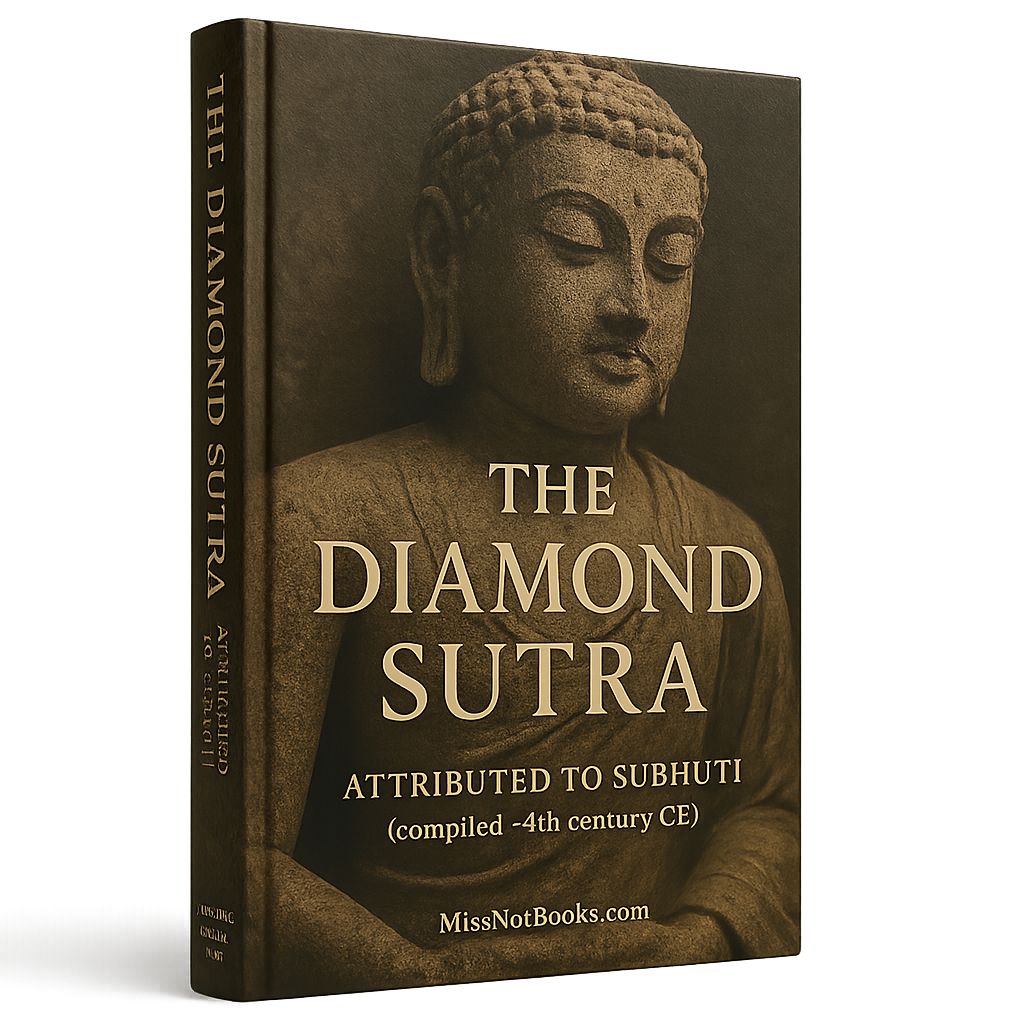
The Diamond Sutra
In an age marked by dogma and disputation, a seminal text emerged that would transform spiritual, philosophical, and even ethical thought within the ancient world and beyond. This profound scripture introduced groundbreaking concepts of emptiness, perception, and enlightenment, ultimately challenging the very nature of reality and existence. The work, with its assertive questioning of the self and the conventional understanding of phenomena, acted as a catalyst for a multitude of traditions, shaping the spiritual landscape in ways that continue to resonate today. Don't miss the opportunity to engage with one of the most influential works of all time. Buy it today and explore the profound depths of human consciousness and the nature of perception.
Core Ideas and Main Arguments
- Emptiness (Śūnyatā): At its core, the text elucidates the concept of emptiness, asserting that phenomena lack intrinsic existence, thereby reshaping perceptions of reality.
- Non-Attachment: It teaches that attachment to the self and to phenomena leads to suffering, encouraging readers to cultivate non-attachment and compassion.
- Transience of Identity: The work asserts the fluid nature of identity, encouraging a perspective that transcends the dichotomies of self and other.
- The Nature of Wisdom: It emphasizes that true insight transcends intellectual understanding, advocating for wisdom that arises from direct experience of reality.
- Bodhisattva Ideal: The text promotes the aspiration to become a Bodhisattva, emphasizing altruism and the commitment to aiding all beings in achieving enlightenment.
Author’s Intentions and Context
The author, historically attributed to Subhuti, aimed to provide clarity in a time when Buddhism was experiencing various interpretations and practices. Responding to a burgeoning interest in the philosophical underpinnings of enlightenment, this text sought to strip away complexities and superfluous doctrines, guiding practitioners toward an immediate realization of their potential. The work serves as a counterpoint to the materialistic views of the era, confronting the philosophical challenges posed by varying beliefs around the self and reality.
Structure of the Book
The text is organized into multiple chapters, each revealing vivid dialogues and teachings that build upon one another:
- Introduction of Key Concepts: Sets the tone with initial discussions around perception and understanding.
- Dialogues: Engaging dialogues between the Buddha and his disciples, illustrating complex ideas through direct discourse.
- Practical Applications: Concrete methods and thoughts for practitioners to apply the teachings in daily life.
- Concluding Insights: Synthesizes the core messages, urging readers to internalize and embody the teachings.
Key Takeaways
- Questioning Reality: Understand that reality is not fixed but shaped by perception.
- Selflessness as Strength: Cultivate a sense of selflessness to engage more profoundly with the world.
- Wisdom Beyond Words: Recognize that true wisdom often lies beyond intellectual discourse.
- Altruism as a Path: Embrace the Bodhisattva path as a means to achieve personal and collective enlightenment.
Why It’s Important to Read
This ancient scripture holds a mirror to humanity's ongoing quest for deeper understanding beyond material existence. Its teachings transcend time, inviting scholars, spiritual seekers, and lay readers alike to contemplate their own existence and purpose. In a world grappling with identity, suffering, and interconnectivity, the insights presented offer profound guidance for personal transformation and ethical engagement. Those interested in philosophy, literature, and spirituality will find the work transformative and essential.
Impactful Quotes and Analysis
-
“A single thought of enlightenment is superior to all other thoughts.”
This quote highlights the power of the moment of awakening, suggesting that profound realization can eclipse countless mundane distractions. -
“All conditioned phenomena are like a dream, an illusion, a bubble, a shadow.”
With this imagery, the text poignantly conveys the transient nature of life, urging readers to look beyond illusions. -
“If one wishes to see me, one should understand that I have no form; for such is the nature of the Dharma.”
This reflective statement invites contemplation on the essence of existence and the limitations of physicality, rooting enlightenment in the understanding of emptiness.
About the Author
Attributed to Subhuti, who is estimated to have lived around the 4th century CE, he is recognized as a key figure in early Buddhist philosophy. His teachings have left a lasting legacy, influencing numerous generations of thinkers and spiritual practitioners. His insights into the nature of wisdom and perception have become foundational to various Buddhist schools, ensuring that his work remains a cornerstone of Eastern philosophy.
This monumental work is The Diamond Sutra by Attributed to Subhuti, brought to you for educational purposes by MissNotBooks.com.