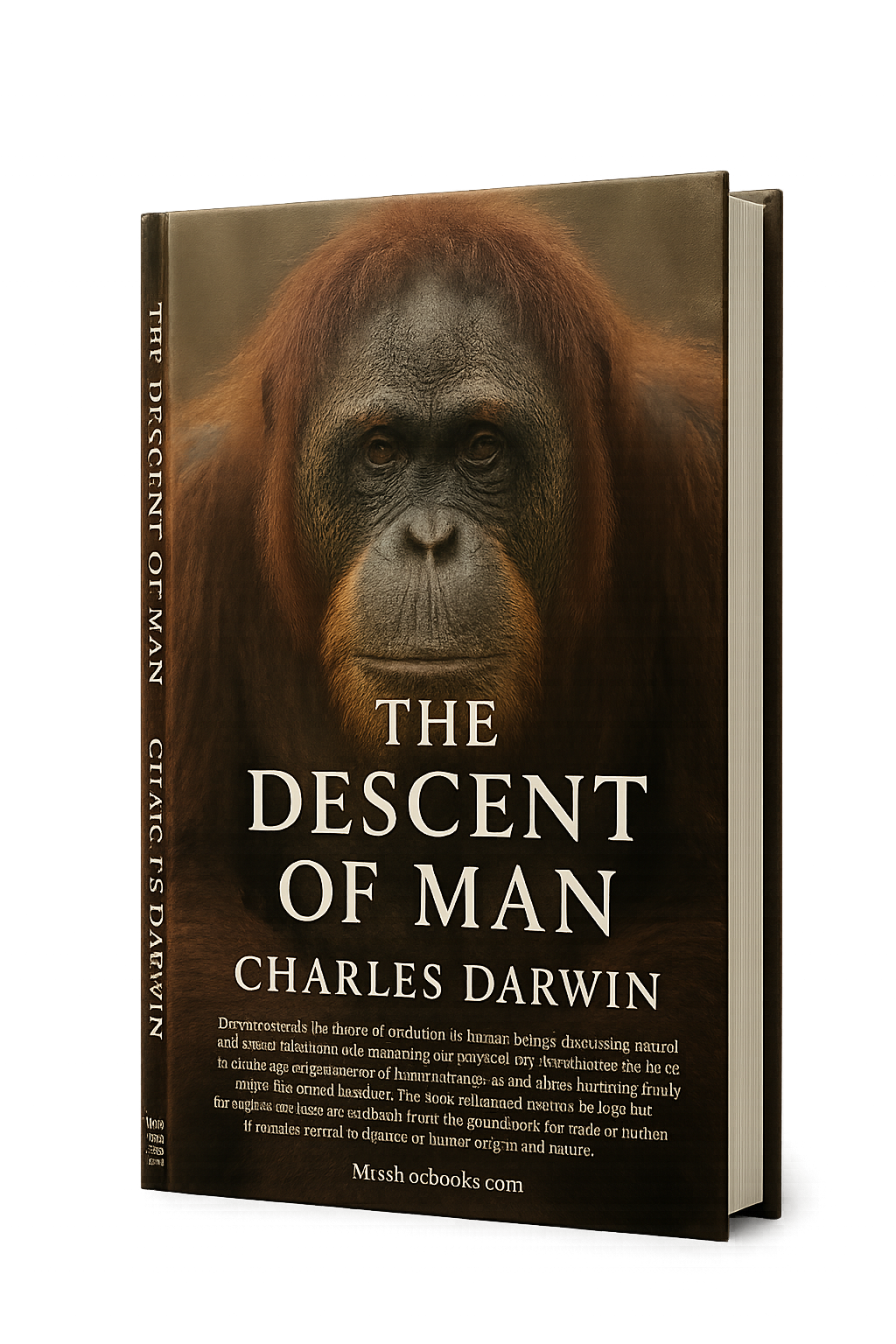
The Descent of Man
In a world where the boundaries of understanding and belief are constantly tested, a groundbreaking text emerged that not only reshaped the landscape of scientific thought but also challenged the very foundations of societal norms. This book revolutionized the way humanity perceives its own place in the universe, introducing a paradigm shift in the fields of biology, anthropology, and philosophy, while also igniting fervent debates that resonate to this day. The perspectives it offers on evolution and the interconnectedness of life have profoundly influenced various disciplines, inspiring generations of thinkers to reevaluate the essence of our existence and the origins of diversity.
Core Ideas and Main Arguments
- The Theory of Evolution: The book articulates the mechanisms of evolution, including natural selection, presenting it as the driving force behind the diversity of species.
- Human Ancestry: It argues that humans share a common ancestry with other primates, challenging long-held beliefs and cultural narratives about human uniqueness.
- Sexual Selection: It introduces the concept of sexual selection, illustrating how mate choice influences evolutionary processes, adding nuance to the understanding of evolutionary dynamics.
- Implications for Religion and Philosophy: The work invites a reexamination of religious explanations for the origin of humanity and the moral implications of a scientifically grounded understanding of human nature.
Author’s Intentions and Context
In the mid-19th century, when conceptual and scientific revolutions were slowly unraveling traditional worldviews, the author set out to substantiate and expand upon his earlier theories regarding natural selection. Responding to rigid doctrines of the time, he sought to validate empirical observation and rational inquiry as cornerstones of knowledge, thus confronting prevailing religious and philosophical paradigms that resisted change. This book aimed not only to enlighten but also to provoke, challenging readers to confront uncomfortable truths about the biological underpinnings of human behavior and society.
Structure of the Book
The book is systematically organized into several key sections:
- Introduction to Evolution: Laying the groundwork for understanding evolution and natural selection.
- Human Variation: Exploring the traits of humans and their similarities with other species.
- Comparative Anatomy: Drawing parallels between human and animal structures to illustrate evolutionary connections.
- Social Behaviors: Discussing how evolutionary principles apply to social structures in humans and other species.
- Consequences of Evolution: Reflecting on the ethical and philosophical dilemmas stemming from the acceptance of evolutionary theory.
Each section builds upon the previous one, gradually leading readers toward a comprehensive understanding of humanity’s place in the natural world.
Key Takeaways
- Revolutionary Understanding of Life: Readers will grasp the profound implications of evolution, recognizing humanity as part of the broader tapestry of life.
- Challenge to Traditional Beliefs: Delve into how this work questions established doctrines, inviting critical thought and dialogue.
- Framework for Modern Biology: Appreciate the foundational principles that continue to shape biological and social sciences.
Why It’s Important to Read
This book remains essential reading for anyone seeking to understand the origins of contemporary thought in evolution, ethics, and philosophy. Its insights are pivotal for students, educators, and anyone interested in the natural sciences, social sciences, or the philosophy of science. Engaging with its content not only enhances knowledge but also inspires critical thinking about our identity and our place within the natural order.
Impactful Quotes and Analysis
-
"Man selects only for his own good; Nature only for that of the being which she tends."
This quote encapsulates the dual forces of human choice and natural selection, highlighting the limitations of human agency in the face of larger biological imperatives. It challenges individuals to consider the broader consequences of their actions. -
"The highest possible stage in moral culture is when we recognize that we ought to control our thoughts."
Here, the author emphasizes the responsibility that comes with knowledge and understanding. It speaks to the ethical dimensions of human development, advocating for mindfulness and conscious choice. -
"We are all descended from the same primordial form."
This profound statement underscores the unity of life and serves as a fundamental principle that bridges the gap between species, fostering a sense of shared identity among all living beings.
About the Author
Charles Darwin (1809-1882) was an English naturalist, geologist, and biologist, best known for his contributions to the understanding of evolutionary biology. His observations and ideas laid the groundwork for the modern theory of evolution, profoundly influencing science, philosophy, and society. Darwin’s legacy endures as a cornerstone of biological science, sparking ongoing discourse about humanity's place in the natural world.
Don’t miss the opportunity to engage with one of the most influential works of all time. Buy it today and explore the foundation of modern biology. This monumental work is The Descent of Man by Charles Darwin, brought to you for educational purposes by MissNotBooks.com.