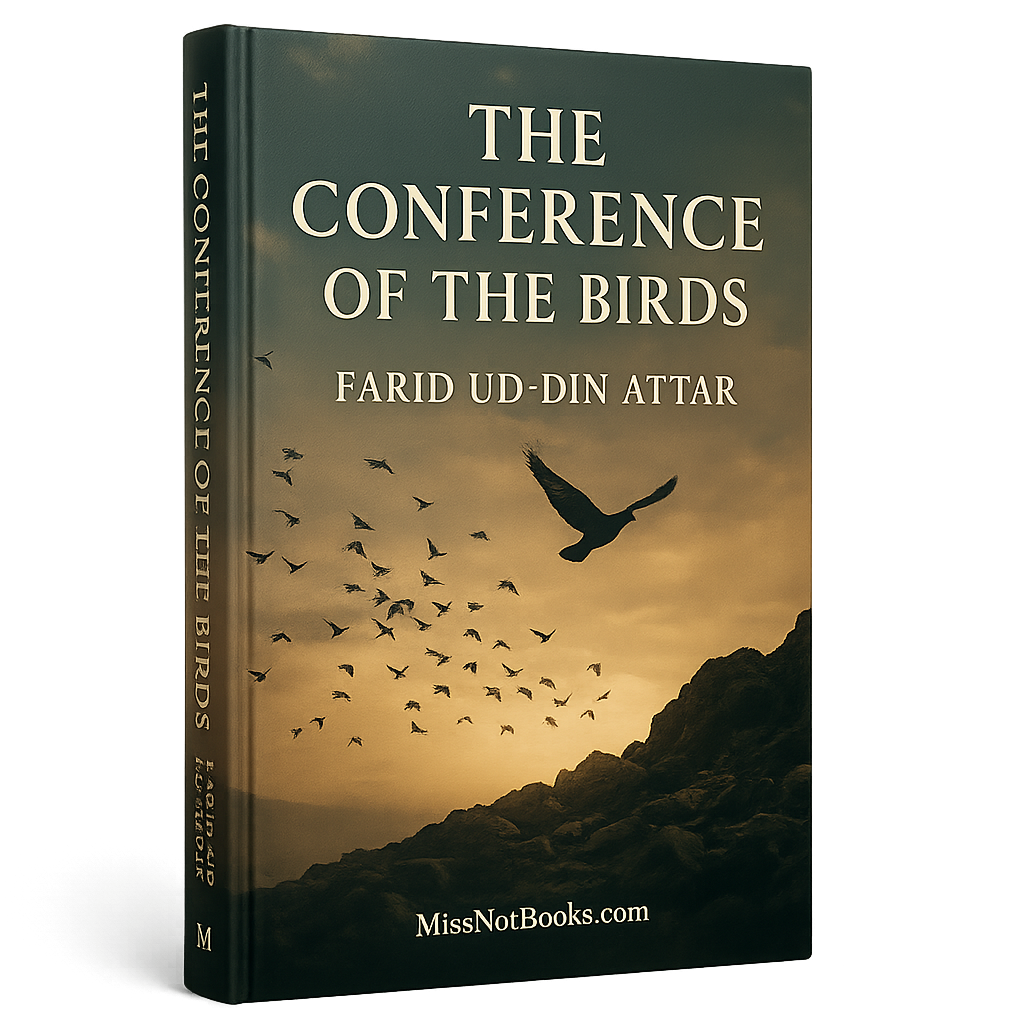
The Conference of the Birds
In a world constantly searching for meaning and a deeper connection between the finite and the infinite, one literary masterpiece has emerged as a beacon of spiritual enlightenment and allegorical wisdom. This work transcends mere storytelling, revolutionizing the understanding of the human condition and the pursuit of truth. It challenges readers to embark on a profound inner journey, exploring profound themes of self-discovery, faith, and the essence of existence itself. Its impact resonates through centuries, inviting seekers of wisdom from all walks of life to ponder the complexities of their souls.
Core Ideas and Main Arguments
- Spiritual Quest: Central to the narrative is the allegorical journey of birds seeking their king, symbolizing humanity's quest for self-awareness and divine connection.
- Unity of Existence: The work posits that all entities are interconnected, emphasizing a universal oneness and the search for truth that transcends individuality.
- Obstacles to Enlightenment: It explores various personal and societal barriers — such as ego, ignorance, and material desires — that hinder individuals from reaching their true potential.
- Divine Love: At its heart lies the concept of divine love as the motivator for spiritual awakening, portraying love as the bridge to unity with the divine.
- Personal Transformation: The narrative stresses the importance of self-reflection and personal growth on the journey toward enlightenment.
Author’s Intentions and Context
The author, composing this work during a time of intellectual and spiritual flourishing in the medieval Persian Empire, sought to address the flourishing Sufi currents of thought. He aimed to distill complex philosophical ideas into a narrative accessible to a wider audience, challenging both the established religious orthodoxy and the mundane realities of everyday life. Farid ud-Din Attar sought to uplift the human soul by encouraging readers to confront their inner turmoil while guiding them toward a deeper understanding of their spiritual essence.
Structure of the Book
The book is structured as a poetic quest, comprised of multiple sections or “stages” that the birds traverse:
- Introduction of Characters: Initial tales of the birds and their grievances, setting the context for their quest.
- The Journey Begins: Each bird represents a different type of human experience and perspective, with parables that reflect their challenges.
- Trials and Tribulations: As the journey progresses, they face various tests that symbolize the struggles of self-discovery.
- Epilogue of Enlightenment: Culminating in a profound revelation, the final section depicts the culmination of their quest and the realization of unity and divine love.
Key Takeaways
- The pursuit of understanding oneself is a sacred journey filled with pitfalls and revelations.
- True enlightenment requires overcoming the limitations of the self and embracing the interconnectedness of all beings.
- Love, both divine and human, is the catalyst for spiritual awakening and transformation.
Why It’s Important to Read
This timeless work offers invaluable insights that remain relevant today, as individuals grapple with the ever-present search for meaning amidst life’s chaos. Its rich allegories are not just for those on spiritual quests; anyone grappling with questions of existence, identity, and purpose will find resonance within its lines. Scholars, spiritual leaders, and seekers alike will benefit immensely from engaging with its profound wisdom and artistic expression.
Impactful Quotes and Analysis
-
"The road to the heart is a long one, littered with twists and turns."
This quote poignantly encapsulates the nature of one's spiritual journey, acknowledging that the quest for the heart—or truth—is fraught with challenges, reflecting the internal struggles faced by seekers. -
"The moment you accept what troubles you've been given, the door will open."
This statement emphasizes the importance of acceptance in the path to enlightenment, encouraging readers to embrace their struggles as opportunities for growth and understanding. -
"We are all just a drop in the ocean; when we find our King, we shall understand."
Here, the author eloquently expresses the idea of universal interconnection and the necessity of seeking something greater than oneself, underscoring the fundamental Sufi belief in unity.
About the Author
Farid ud-Din Attar, born around 1145 and passing in 1221, was a prominent Persian poet, mystic, and philosopher renowned for his works on Sufism and spirituality. His allegorical tales blend literary artistry with deep spiritual insights, significantly influencing Persian literature and Sufi thought. Attar's legacy endures as one of the greatest spiritual thinkers of medieval Islam, inspiring generations of seekers with his exploration of the soul’s purpose.
This monumental work is The Conference of the Birds by Farid ud-Din Attar, brought to you for educational purposes by MissNotBooks.com.