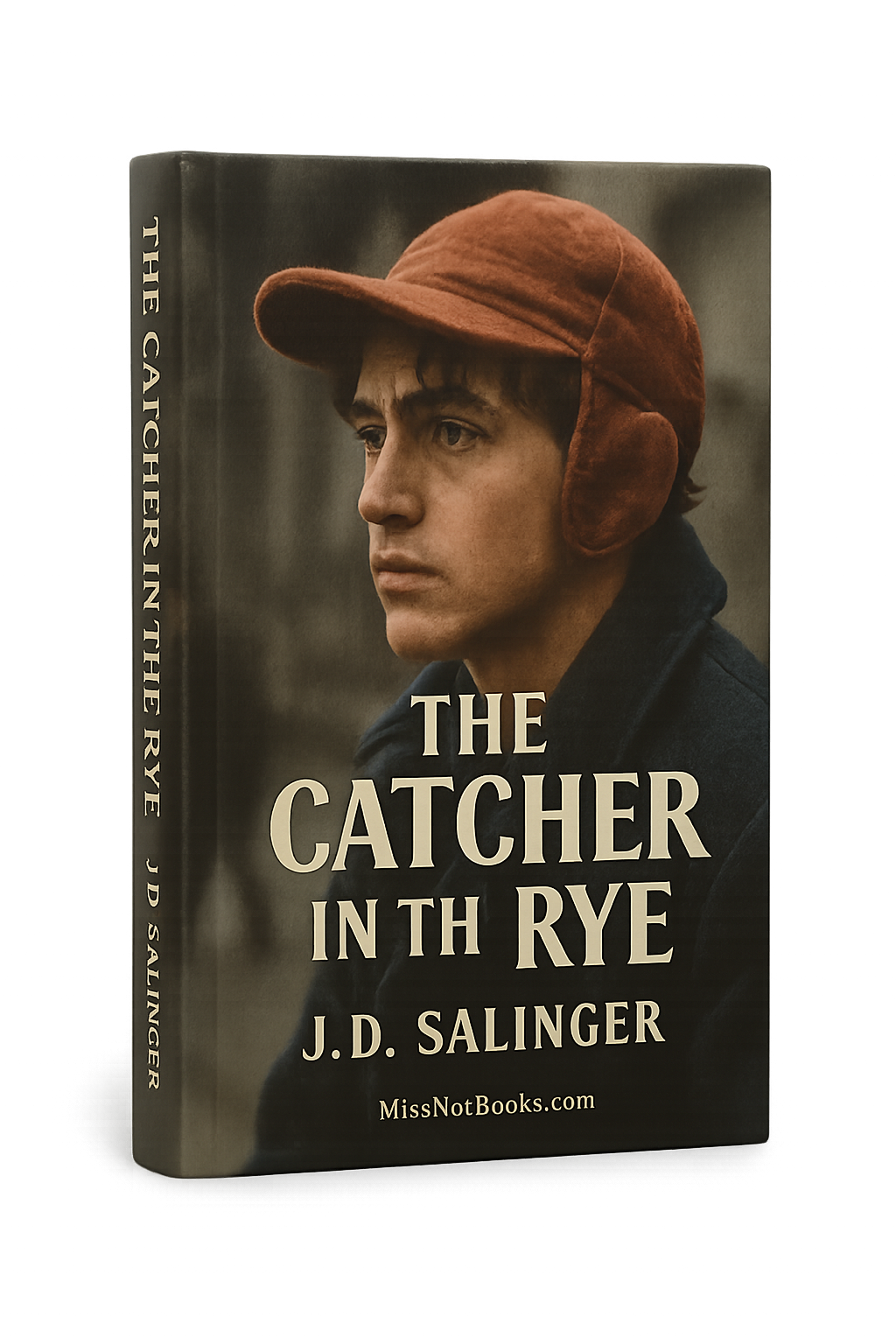
The Catcher in the Rye
In an era fraught with disillusionment and burgeoning societal change, a seminal work emerged that would redefine the narrative of adolescence and the complexities of human experience. This book challenged conventional notions of morality, identity, and the journey from innocence to experience, capturing the essence of youth's struggles against an often cynical adult world. Its audacity and authenticity have made it a cultural touchstone, shaping how generations view teenage angst and rebellion. The profound insights contained within its pages continue to resonate with readers, drawing them into a world that is simultaneously familiar and profoundly reflective.
Core Ideas and Main Arguments:
- Alienation and Isolation: The protagonist vividly illustrates the profound sense of disconnection felt by many young people as they navigate an often unkind, adult-centric world.
- Critique of Phoniness: The narrative sharply critiques the superficiality of societal norms, championing authenticity in a landscape rife with pretense.
- Loss of Innocence: The story powerfully articulates the transition from childhood innocence to the complicated realities of adulthood, making readers question what it means to grow up.
- The Search for Identity: Central to the protagonist's journey is the quest for self-discovery, a theme that resonates with anyone grappling with their own identity.
Author’s Intentions and Context:
The author, writing in the post-World War II United States, sought to articulate the existential angst that accompanied the rise of consumerism and conformity. This period was marked by a longing for authenticity amid the sheen of post-war prosperity. The book serves as both a mirror and a critique of that era, addressing themes of mental health, the pressures of societal expectations, and the often isolating feeling of not fitting in. The author's intentions were to voice the unfiltered thoughts of a generation, offering a raw and unvarnished perspective on the trials of growing up.
Structure of the Book:
The narrative is constructed as a first-person account, allowing readers to intimately experience the protagonist’s thoughts and emotions. The book is divided into distinct sections, with each chapter representing a different episode in the protagonist's life as he wanders through New York City. This episodic structure enhances the feeling of fragmentation and disconnection, mirroring the internal turmoil faced by the protagonist.
Key Takeaways:
- The profound impact of societal values on individual identity.
- The recognition of mental health struggles as legitimate and worthy of discussion.
- The timeless nature of the quest for authenticity in an increasingly alienating world.
- The emotional resonance of adolescent feelings, which transcend specific contexts.
Why It’s Important to Read:
This book remains a crucial read for anyone seeking to understand the complexities of youth and the perennial battle for self-identity in a rapidly changing world. Students, educators, and anyone interested in the nuances of human connection will find value in its pages. Its themes are universal, appealing to those who have ever felt out of place or questioned their place in society. By engaging with this work, readers can glean insights into their own lives and the broader human experience.
Impactful Quotes and Analysis:
-
"People always think something's all true."
This quote highlights the complexities of truth and perception, urging readers to reflect on their own beliefs and biases. -
"It's full of phonies, and all you do is study so that you can learn enough to be smart enough to be able to buy a goddam Cadillac some day."
This statement encapsulates the protagonist’s disdain for materialism and the pressures of conforming to societal expectations, inviting deeper inquiry into personal values and motivations. -
"The mark of a good book is that it probably is affecting you on an emotional level."
This assertion emphasizes the book's capacity to evoke genuine emotions, reminding readers that literature is often about emotional truths rather than mere storytelling.
About the Author:
Jerome David Salinger (1919–2010) was an American author known for his profound influence on modern literature, particularly surrounding themes of adolescent angst and identity. He garnered fame for his craftsmanship in character development and dialogue, and his works often reflect his own reclusive nature. Salinger’s legacy endures as a reflection of the struggles associated with growing up and the quest for authenticity, making him a pivotal figure in 20th-century literature.
This monumental work is The Catcher in the Rye by J.D. Salinger, brought to you for educational purposes by MissNotBooks.com.