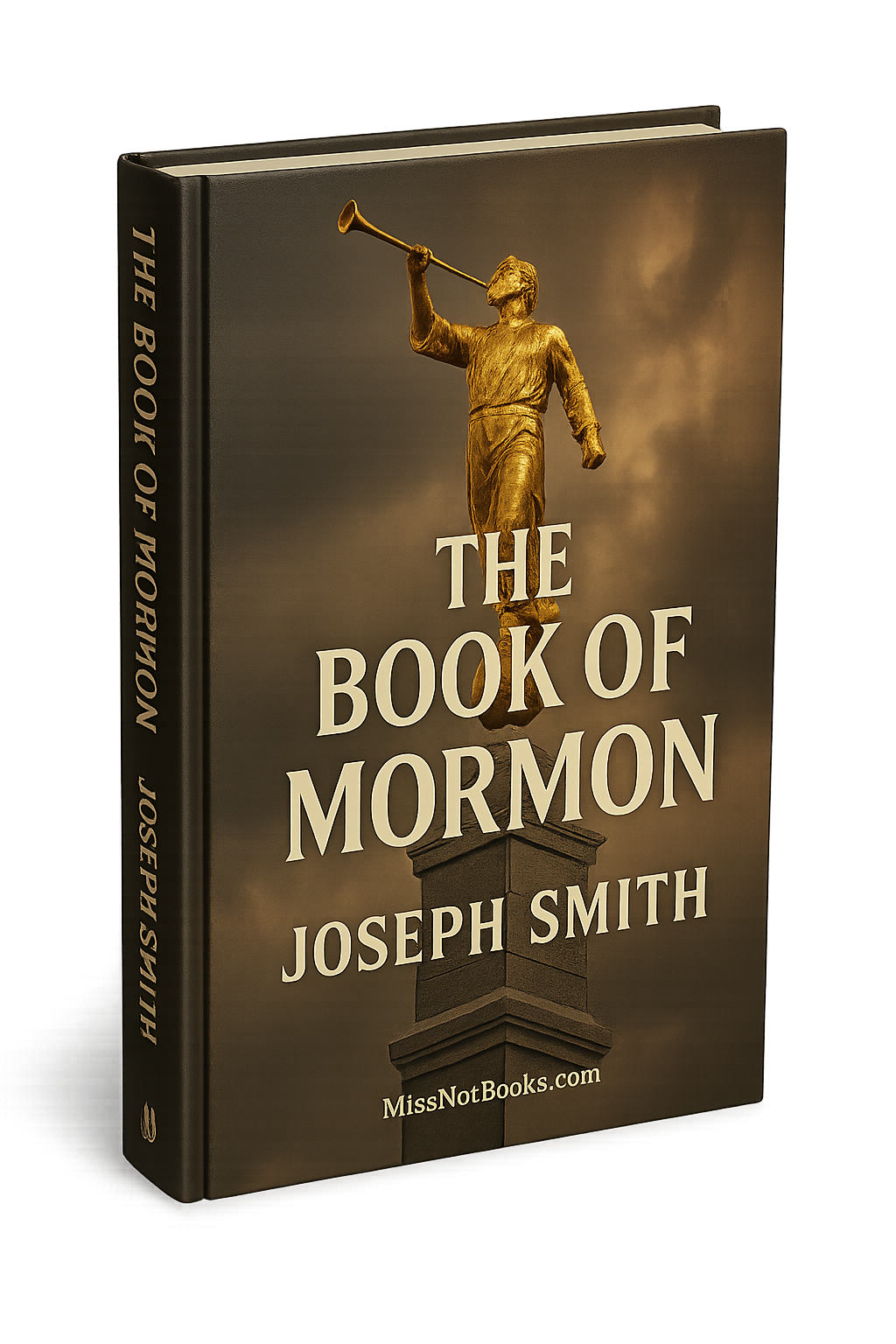
The Book of Mormon
In the landscape of religious literature, few texts stand as monuments of transformative impact, challenging both spiritual and cultural paradigms. This book has played a crucial role in shaping new religious movements, offering fresh interpretations of faith, prophecy, and divine revelation. Its teachings have not only galvanized a global community but have also revolutionized the discourse on the connection between ancient scriptures and modern belief systems, compelling readers to reconsider the nature of divinity, human purpose, and the potential for revelation in contemporary society.
Don’t miss the opportunity to engage with one of the most influential works of all time. Buy it today and explore the roots of American religious thought that continue to resonate in today's spiritual landscape.
Core Ideas and Main Arguments
- Faith and Revelation: The book presents the idea that God continues to speak to humanity, which challenges traditional religious views that suggest divine communication has ceased.
- Divine History: It chronicles a narrative of ancient American civilizations and their interactions with God, thus offering a new context of prophecy and divine guidance.
- Restoration of True Christianity: It argues for a restoration of the original Christian teachings, positioning itself as a corrective to what it views as the corrupted practices of mainstream Christianity.
- Moral and Ethical Framework: The text provides a comprehensive moral philosophy that emphasizes charity, repentance, and the pursuit of personal holiness.
Author’s Intentions and Context
The author, inspired by a vision of religious reformation, aimed to create a foundational text for a new church movement in the early 19th century—a time when America was experiencing a surge in religious fervor and innovation. Responding to the socio-religious landscape filled with revivals and new religious movements, the author intended to articulate a faith that was both distinct from and more inclusive than the prevailing denominations of the time. The work sought to address existential questions of salvation, divine justice, and community.
Structure of the Book
- Historical Accounts: The first sections recount the history of ancient American peoples and their interactions with God, offering a narrative framework for the theological explorations that follow.
- Teachings and Doctrines: Subsequent parts delve into spiritual teachings, ethical principles, and the workings of the divine in the world, establishing the moral underpinning of the faith heralded by the text.
- Covenants and Prophecies: The latter chapters engage with the notions of covenants between God and humanity, emphasizing ongoing revelation and the role of modern-day prophets.
Key Takeaways
- The concept of ongoing revelation challenges static definitions of faith.
- The book's unique historical narrative invites readers to explore their own spiritual heritage.
- Its moral teachings encourage a life of service and purity, inviting reflection on personal values and ethics in a modern context.
Why It’s Important to Read
This book possesses ongoing relevance due to its rich narrative and profound spiritual insights, making it essential reading for anyone interested in the evolution of American religious thought or spiritual questing. Scholars, believers, and seekers alike will find its themes pertinent to discussions surrounding faith, community, and identity. Its influence permeates not only religious contexts but extends to broader cultural conversations about morality and human purpose.
Impactful Quotes and Analysis
-
“And thus we see that by small means the Lord can bring about great things.”
This phrase encapsulates the core belief in divine agency and the power of humble beginnings to yield profound change, echoing through the ages as a message of hope and action. -
“The glory of God is intelligence.”
This assertion challenges the notion that faith and intellect are separate realms, urging readers to embrace knowledge as a key aspect of their spiritual journey. -
“All men are created equal.”
This statement invites a reflection on equality and justice, underscoring the book's commitment to social harmony and the intrinsic value of every individual.
About the Author
Joseph Smith (1805-1844) was a religious leader and the founder of a major world religion. His perceived prophetic experiences and revelations led him to establish a new religious framework that has since grown into a global movement. His contributions to spiritual thought and the establishment of a community centered on his teachings have left an indelible mark on American history and religious discourse.
This monumental work is The Book of Mormon by Joseph Smith, brought to you for educational purposes by MissNotBooks.com.