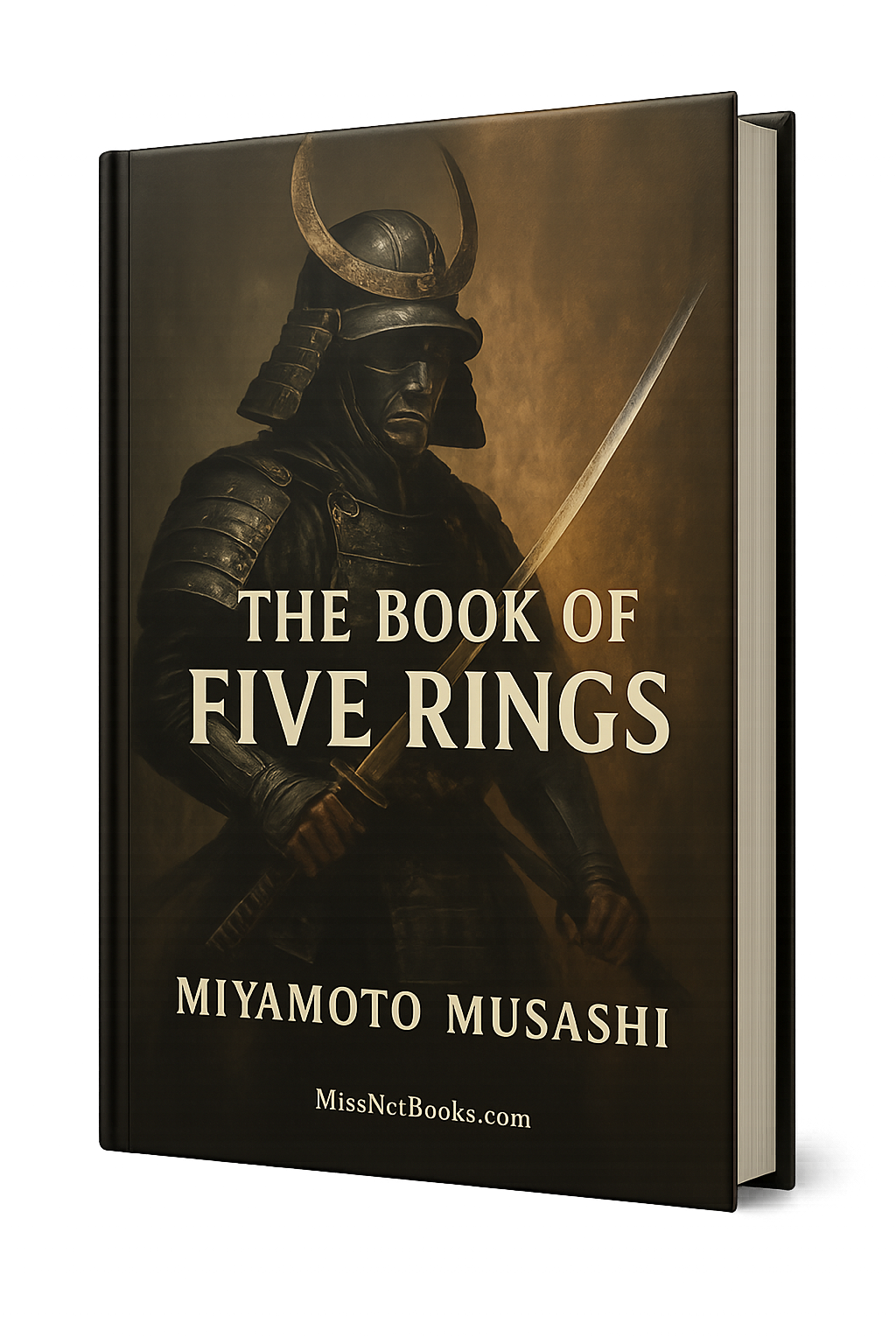
The Book of Five Rings
In the realm of martial arts and strategic thinking, few works have had as profound a legacy as the one that delineates the philosophies and principles surrounding the art of combat, transcending mere physicality to touch on the essence of human experience. The ideas encapsulated within this book revolutionized perceptions of discipline, focus, and self-mastery. By challenging conventional views on training and combat, it introduced a nuanced approach that continues to inform not only martial artists but also leaders and thinkers across diverse fields.
Don’t miss the opportunity to engage with one of the most influential works of all time. Buy it today and explore the beauty of living with purpose and strategy.
Core Ideas and Main Arguments
- The Concept of Mindfulness in Combat: The text emphasizes the critical importance of being fully present and aware in every moment, not just in battle but in life's everyday encounters.
- Strategies Beyond Physicality: It posits that true victory is often achieved through mental superiority and strategic foresight, rather than sheer strength and skill alone.
- Emphasizing Adaptability: The author discusses the necessity of being flexible and adapting one’s approach to circumstances, underscoring the dynamic nature of combat and life.
- The Interconnection of Life and Combat: This work illustrates how principles of martial arts can be extended into broader philosophical reflections about existence and human endeavor.
Author’s Intentions and Context
Written in the early 17th century during a time of political fragmentation in Japan, the book reflects the turmoil of the samurai era and the author's desire to articulate a coherent philosophy of combat that goes beyond the battlefield. Musashi sought to instill an understanding that mastery of martial arts involves deep psychological and spiritual dimensions. He aimed to equip future warriors with insights that foster personal growth and transformation, making it clear that the mind is as crucial as the sword.
Structure of the Book
The text is meticulously organized into five scrolls, each focusing on a specific aspect of combat and strategy:
- The Ground Book: Establishes the foundations of the strategy and the mindset needed for combat.
- The Water Book: Discusses adaptability and fluidity in strategy.
- The Fire Book: Explores aggressive tactics and the importance of decisiveness.
- The Wind Book: Examines the tactics of others and the significance of understanding opponents.
- The Book of the Void: Philosophical reflections on the nature of existence and the concept of nothingness in relation to combat and life.
Each of these scrolls contributes to the cumulative understanding of Musashi's philosophy, enriching the reader's comprehension of both martial and personal strategy.
Key Takeaways
- The essence of true mastery lies in an integrated approach of mind, body, and spirit.
- Strategic thinking is a lifelong pursuit that transcends mere techniques.
- Understanding oneself and one’s environment is the foundation of any successful endeavor.
- Flexibility and adaptability are critical in both combat and life challenges.
Why It’s Important to Read
This work remains invaluable for its profound insights into the nature of discipline, strategy, and personal development. Readers from various backgrounds—whether martial artists seeking to deepen their practice, business leaders wanting to cultivate strategic acumen, or individuals striving for personal growth—will find that the lessons contained within resonate deeply in contemporary life. Its timeless wisdom offers guidance in navigating the complexities of modern existence.
Impactful Quotes and Analysis
-
"The ultimate aim of martial arts is not having to use them."
- This quote encapsulates the ethos of self-mastery as the ultimate form of strength; true power lies in restraint.
-
"Perception is strong; sight is weak."
- Here, Musashi emphasizes the importance of intuition and insight over superficial observation, urging readers to cultivate deeper awareness in every aspect of life.
-
"A warrior is a master of the self."
- This statement underscores the idea that control over oneself is the true essence of mastery, extending beyond combat into the realm of personal integrity and purpose.
About the Author
Miyamoto Musashi (1584-1645) was a legendary Japanese swordsman, philosopher, and strategist, recognized for his distinctive dual-wielding techniques and undefeated record in his 61 duels. He is best remembered for his profound insights into martial arts through his writings, which have not only influenced warriors but have also shaped philosophies relevant to various fields, including leadership, business, and personal development. Musashi’s legacy exceeds the martial arts, marking him as a pivotal figure whose thoughts continue to inspire for centuries.
This monumental work is The Book of Five Rings by Miyamoto Musashi, brought to you for educational purposes by MissNotBooks.com.