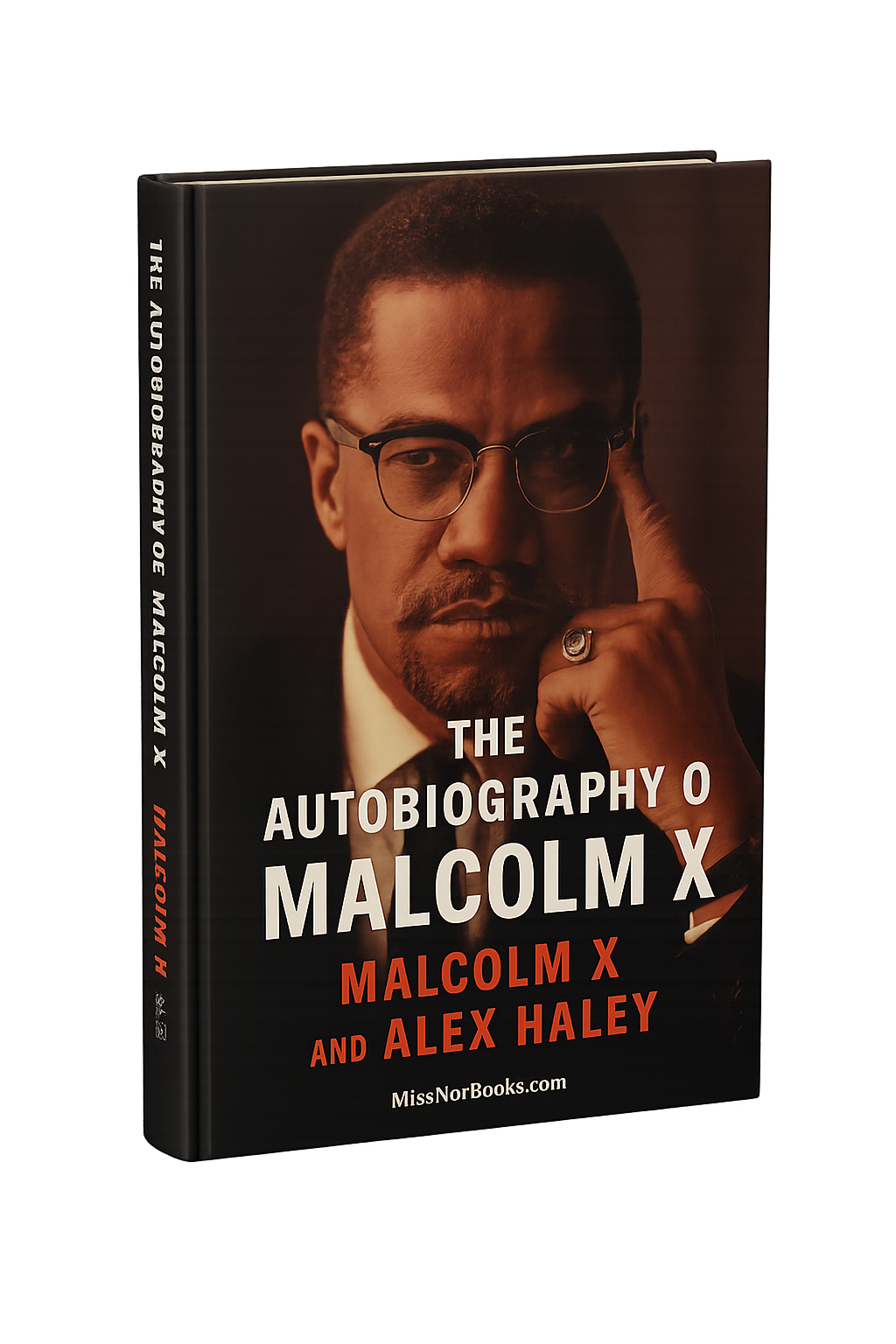
The Autobiography of Malcolm X
In the annals of American literature and social thought, few works stand as prominently as a transformative narrative that not only chronicles the life of an extraordinary individual but also serves as a profound critique of systemic injustice. This gripping account challenges readers to confront the harsh realities of race, identity, and empowerment in a society fraught with inequality. It revolutionizes our understanding of the personal and political dimensions of the struggle for civil rights, offering an unflinching view of the complexities surrounding race relations in 20th-century America.
Core Ideas and Main Arguments
- Identity and Transformation: The narrative illustrates a powerful journey of self-discovery, showcasing Malcolm's evolution from a street hustler to a prominent leader in the civil rights movement.
- Critique of Systemic Racism: It exposes the deep-rooted racism in American society and the pervasive impact it has on individuals and communities.
- Empowerment through Knowledge: The book emphasizes the importance of education and self-awareness as tools for personal and collective empowerment.
- Religious and Spiritual Awakening: Malcolm's transformation is intertwined with his spiritual journey, exploring the role of faith in shaping identity and purpose.
- Political Activism: It advocates for a vigorous form of activism that challenges passive resistance, urging readers to consider the radical measures necessary for social change.
Author’s Intentions and Context
The author embarks on this project during a pivotal moment in U.S. history, as the civil rights movement gains momentum and racial tensions heighten. Malcolm X intended to articulate the frustrations of African Americans, advocating for a more assertive stance against oppression. His compelling narrative challenges the romanticization of the civil rights struggle, offering a more militant perspective that was often sidelined in mainstream discourse. In doing so, he sought to provoke thought and inspire action among those who felt disenfranchised and marginalized.
Structure of the Book
The book is organized thematically, with each chapter detailing significant events in Malcolm's life and integrating broader societal issues:
- Early Life and Upbringing: Detailing Malcolm's childhood and the influence of his family's experiences with racism.
- Life of Crime and Imprisonment: Exploring his descent into crime and the transformative experience of incarceration.
- Rise to Prominence: Chronicling his ascent within the Nation of Islam and the development of his revolutionary ideology.
- Global Perspective: Discussing his travels and interactions with other anti-colonial movements, broadening his vision for justice.
- Legacy and Reflection: Concluding with a discussion on his assassination and the lasting impacts of his ideas and activism.
Key Takeaways
- Self-Identity: The importance of understanding and embracing one's roots in the pursuit of justice.
- Activism: A call for active resistance against oppression rather than passive acceptance.
- Complexity of Race Relations: An intricate portrayal of the multifaceted nature of race in America and the challenges it poses.
- Empathy through Experience: A reminder of the strength found in personal stories, urging readers to foster understanding across divides.
Why It’s Important to Read
This powerful book remains deeply relevant today, resonating with contemporary struggles for justice and equality across the globe. It offers essential insights into the ongoing conversations about race, identity, and activism. Readers ranging from students of history, sociology, and politics, to those interested in personal growth and societal change, will find value in Malcolm X's honest reflections and thought-provoking challenges.
Impactful Quotes and Analysis
- “By any means necessary.” This iconic phrase encapsulates Malcolm's commitment to justice, reinforcing the urgency of action in combating systemic oppression.
- “You can’t separate peace from freedom because no one can be at peace unless he has his freedom.” This quote highlights the intrinsic link between personal liberation and societal tranquility, serving as a poignant reminder of the ongoing fight for civil rights.
- “I am not a racist. I am not a man who wants to oppress or discriminate against anybody.” In this declaration, Malcolm speaks to his nuanced understanding of race, challenging oversimplified narratives and advocating for unity among oppressed peoples.
About the Author
Malcolm X, born Malcolm Little on May 19, 1925, was a prominent American civil rights leader and activist until his assassination on February 21, 1965. Known for his eloquence and fierce advocacy for the rights of African Americans, he emerged as a powerful voice for the Nation of Islam before pursuing a broader vision of human rights. His legacy endures through his contributions to the dialogue on race relations in America and his influence on subsequent social justice movements.
This monumental work is The Autobiography of Malcolm X by Malcolm X and Alex Haley, brought to you for educational purposes by MissNotBooks.com.