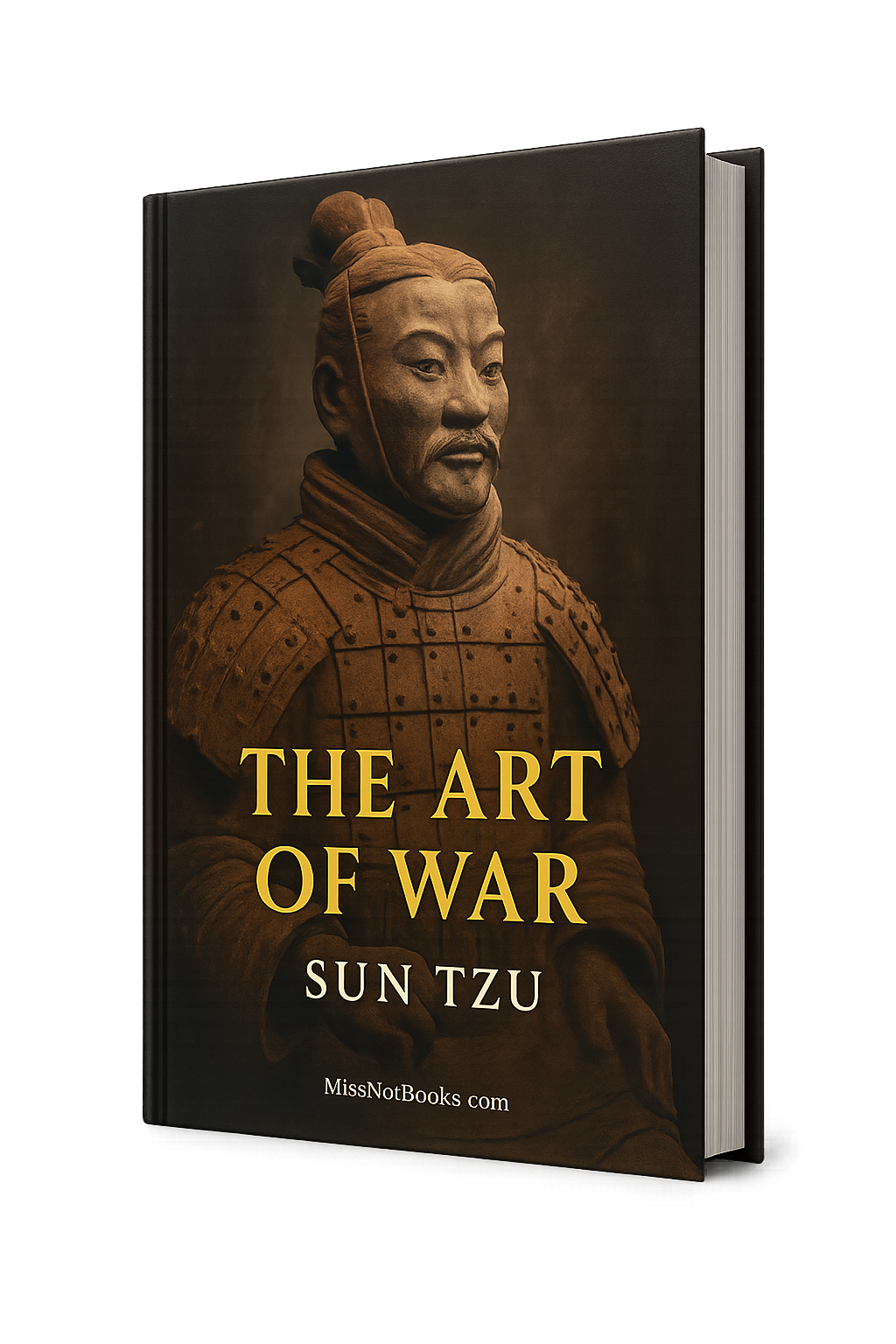
The Art of War
In a world where the balance of power can shift with a single decision, one profound work has transcended time and culture, providing enduring wisdom on strategy, leadership, and warfare. This timeless manuscript revolutionized not only military thought but also offered profound insights into the human condition and the art of competition in myriad domains of life. Challenging conventional wisdom, it invites readers to reconsider conflict, strategy, and the psychology of victory. Its transformative impact resonates across disciplines, from business to politics to personal development. Don’t miss the opportunity to engage with one of the most influential works of all time. Buy it today and explore the foundations of strategic thinking that remain relevant even today.
Core Ideas and Main Arguments
- Strategy Over Strength: The text emphasizes the superiority of intelligent strategy over brute force, arguing that one can achieve victory without unnecessary conflict.
- Know Thyself and Thy Enemy: A central tenet is the importance of self-awareness and understanding one’s opponents to achieve success.
- Adaptability and Flexibility: It advocates for the necessity of adapting to changing situations and encourages leaders to be fluid in their strategies.
- Psychological Warfare: The manuscript discusses the significance of morale and perception in gaining an advantage over adversaries.
- Resource Management: The importance of efficient resource allocation and logistics is highlighted as crucial to sustaining efforts in any endeavor.
Author’s Intentions and Context
Written during a time of constant war in ancient China, the author sought to provide insight into the intricacies of military strategy and leadership. Sun Tzu responded to the chaotic nature of his world, reflecting on the need for strategic thought amidst the violence. This historical moment required not just warriors but thinkers who understood the deeper dynamics of power, conflict, and human behavior. The text aims to challenge the impulsive tactics of war and instead propose a disciplined, intellectual approach to both combat and competition.
Structure of the Book
The work is organized into 13 chapters, each dedicated to different aspects of warfare and strategy:
- Laying Plans: Discusses assessment and planning.
- Waging War: Explores the economic implications of prolonged conflict.
- Attack by Strategy: Examines the importance of understanding one’s strategy in relation to the enemy.
- Tactical Dispositions: Addresses the arrangement and maneuvering of forces.
- Energy: Focuses on the management of resources and momentum.
- Weak Points and Strong: Teaches the significance of taking advantage of opportunities.
- Maneuvering: Analyzes the complexities of moving in various terrains.
- Variation in Tactics: Advocates for adaptable strategies based on circumstances.
- The Army on the March: Reviews logistics and troop movement.
- Terrain: Discusses the different types of terrain and their strategic implications.
- The Nine Situations: Outlines various situations encountered during warfare.
- Attack by Fire: Introduces unconventional methods of warfare.
- Use of Spies: Highlights intelligence and deception in warfare.
Each chapter builds on the last, culminating in a comprehensive examination of how to approach conflict intellectually rather than purely physically.
Key Takeaways
- Understanding oneself and one’s adversaries is foundational to achieving success.
- Victory can often be achieved through cunning and strategic maneuvering rather than sheer force.
- Adaptability and efficient resource management are essential for sustained success in any endeavor.
- The psychological landscape of competition is as critical as the physical one.
Why It’s Important to Read
The teachings of this work remain vital in contemporary society, where strategic thinking permeates various aspects of life—from business negotiations to personal relationships and conflict resolution. Readers, including business leaders, strategists, educators, and anyone interested in personal growth or leadership, will find invaluable insights. Its lessons transcend fields and can be applied to improve decision-making, enhance leadership skills, and cultivate a nuanced understanding of conflict and resolution.
Impactful Quotes and Analysis
-
“All warfare is based on deception.”
This quote underscores the fundamental nature of strategy, suggesting that misdirection can be a stronger weapon than mere physical might. -
“The greatest victory is that which requires no battle.”
Here, the author advocates for the ideal of achieving one's objectives without conflict, emphasizing that true success lies in strategic foresight and skillful negotiation. -
“If you know the enemy and know yourself, you need not fear the result of a hundred battles.”
This powerful statement highlights the importance of self-awareness and intelligence, asserting that understanding both sides can lead to assured victory.
About the Author
Sun Tzu, a Chinese general, military strategist, and philosopher, is believed to have lived during the Eastern Zhou period of ancient China, around the 5th century BC. His legacy endures through his profound insights on strategy and tactics that have influenced countless leaders and thinkers throughout history. His work has transcended its martial origins, becoming a classic reference for strategic thinking in various fields.
This monumental work is The Art of War by Sun Tzu, brought to you for educational purposes by MissNotBooks.com.